Tensei: The Reborn NSX That Keeps the Manual
JAS Motorsport and Pininfarina rebuild the Honda NSX: carbon bodywork, naturally aspirated V6, six-speed manual. A restomod that takes the analogue seriously.

 //DRIVE
JAS Motorsport and Pininfarina rebuild the Honda NSX: carbon bodywork, naturally aspirated V6, six-speed manual. A restomod that takes the analogue seriously.
The Tensei takes a Honda NSX from the early nineties, gives it an all-new carbon body, and deliberately keeps what almost no one dares today: a naturally aspirated engine and a gearstick you move yourself.
Tensei means rebirth in Japanese. It sounds like marketing, but in this case, it’s the most honest description of what’s happening here. Because the NSX that JAS Motorsport and Pininfarina are bringing back isn’t the second, tech-laden NSX with its hybrid system. It’s the first. The one from 1990. The car that taught Honda a supercar doesn’t need drama to be special.
That’s what makes the Tensei so compelling. It doesn’t ask how much you can add to an old car. It asks how much you can keep without being nostalgic. And JAS’s answer is surprisingly uncompromising.
JAS Motorsport is a well-known name in motorsport. The team near Milan has spent years developing and racing Honda touring cars-machines built not for glossy brochures, but to win laps. The Tensei is their first foray onto the road. You can hear that in the concept. No one here is thinking about seat heaters or screens first; it’s all about track width, wheelbase, and weight distribution.
The design comes from Pininfarina, and that’s no afterthought. The design house from Cambiano has enough carrozzeria history to know when a line should stay quiet. You see that restraint in the Tensei. No one wanted to make the NSX louder than it was.
The body is entirely carbon and completely redrawn. Yet you’d recognise the NSX instantly. The pop-up headlights remain, as do the rectangular side air intakes and the integrated rear wing. These are the anchors of memory a car needs so a reinterpretation doesn’t become a costume.
But beneath the surface, JAS is clearly working on substance. The wheelbase grows, the track widens significantly, the car sits lower and rides on larger wheels. This isn’t just about looks. These changes shift the centre of gravity and handling without betraying the old silhouette. The body looks familiar; the stance is all new.
A car should function through a direct connection to driver and passenger. That’s the 1990 idea the Tensei takes seriously again.
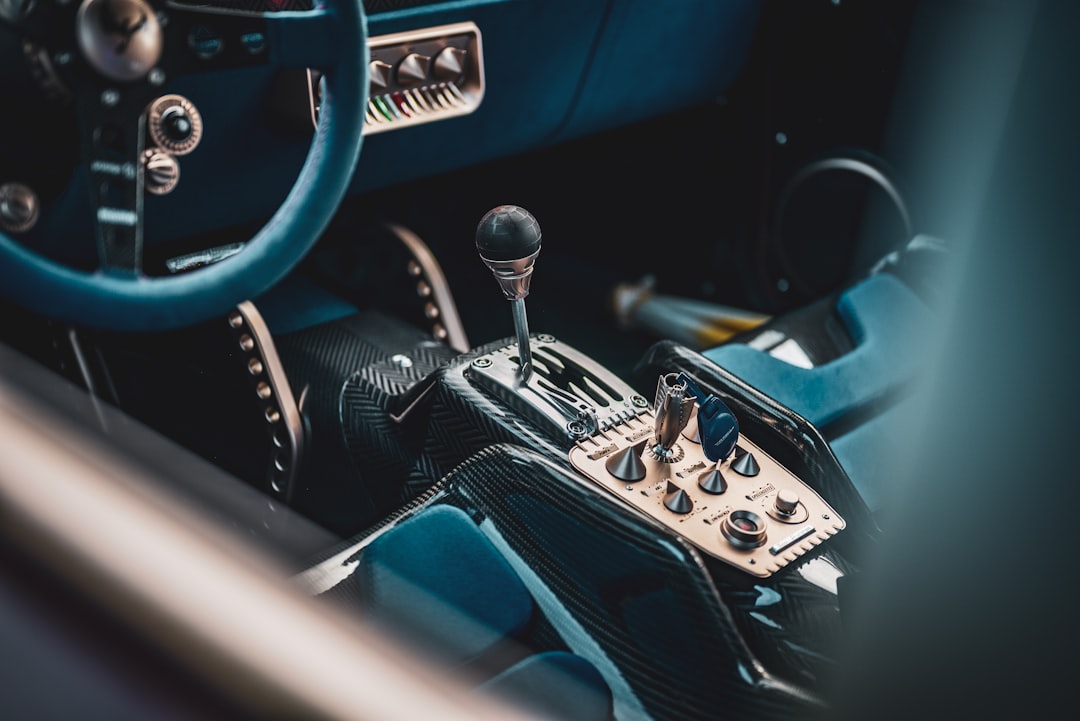
This is where the Tensei parts ways with most modern restomods. Instead of turbocharging, hybrid systems, or electric powertrains, JAS sticks with a naturally aspirated V6 that stays true to the original engine architecture. And then there’s the six-speed transmission-one you shift yourself.
That’s a statement. A naturally aspirated engine revs differently, breathes differently, responds more directly to your right foot. A proper manual gearbox forces you to engage with the car, not just operate it. Both are inconvenient to develop today, expensive to tune, and difficult to reconcile with modern emissions standards. That JAS insists on them anyway says more about the vision than any spec sheet ever could.
Inside, the Tensei stays true to the original NSX’s layout – and refines it. The focus is on ergonomics, visibility, and driving clarity. It sounds matter-of-fact, but that’s exactly the strength. The first NSX was so brilliant in 1990 because it combined the everyday usability of a regular car with the precision of a sports car. You sat inside and immediately felt in control, not overwhelmed.
The Tensei builds on that, elevating execution alone. Better materials, higher perceived quality, greater attention to detail. But no attempt to turn the cabin into a lounge. Luxury here isn’t about plush upholstery-it’s about nothing coming between you and the road.
A lot is still under wraps. JAS unveiled the Tensei at Milan Design Week on April 22, 2026, with the full reveal-including production numbers and pricing-coming later in the year. It would be easy to invent figures now. But that would only make the car smaller than its own idea.
Because right now, the Tensei isn’t selling performance-it’s selling a stance. A counterpoint to today’s heavy, isolated, over-assisted supercar concept. It’s about driving that *feels* like driving again. Anyone who’s ever sat in an old NSX knows exactly what this means. And for those who haven’t? Maybe this carbon-clad reimagining is a second chance.
For more on what hand-formed sheet metal and analog engineering bring to a restomod, check out our piece on hand-formed sheet metal in restomods. And for the opposite approach-how a restomod can look untouched while being completely rethought under the skin-see our panel reconstruction feature.
No. The Tensei is an independent project by JAS Motorsport in collaboration with Pininfarina. NSX and Honda remain Honda’s trademarks. JAS uses an original NSX as a base and builds its own interpretation on top.
JAS carefully selects first-generation NSX models from the early 1990s as donor cars. The second, hybridized NSX plays no role here.
The Tensei relies on a naturally aspirated V6, inspired by the original engine architecture, paired with a six-speed manual transmission. It deliberately rejects turbos, hybrids, and dual-clutch setups to emphasize an analog driving experience.
Both remain unannounced. JAS describes it as a strictly limited run but won’t disclose pricing or exact production numbers until the full reveal later in 2026.
Source header image: Pexels / Quentin Martinez