Guide · Winter training
Driving on ice: What winter teaches you behind the wheel
Driving on ice: What Porsche, BMW and motoring clubs teach on frozen lakes, how the courses are structured and which training is right for you.

 Grand Touring
Driving on ice: What Porsche, BMW and motoring clubs teach on frozen lakes, how the courses are structured and which training is right for you.
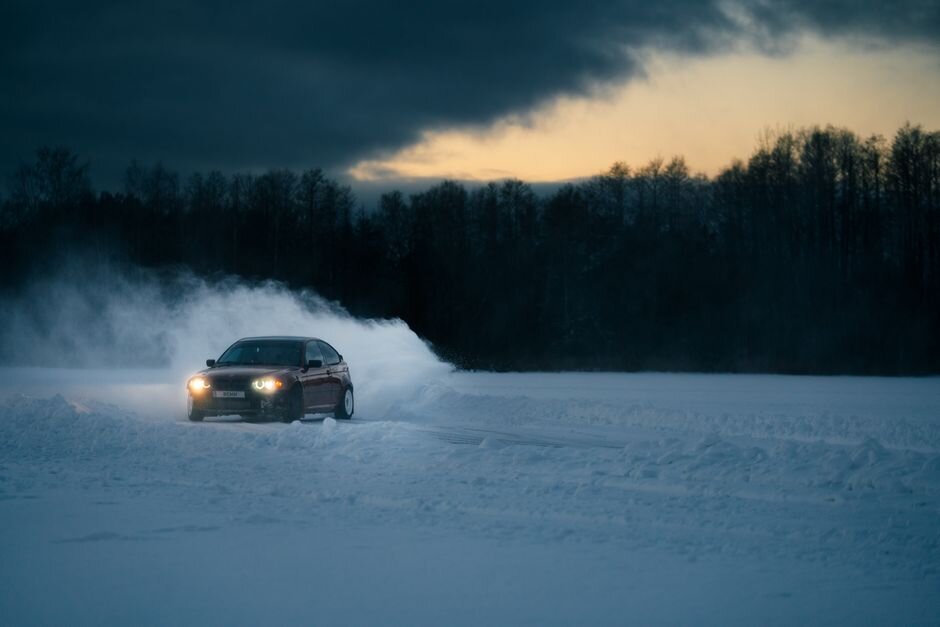
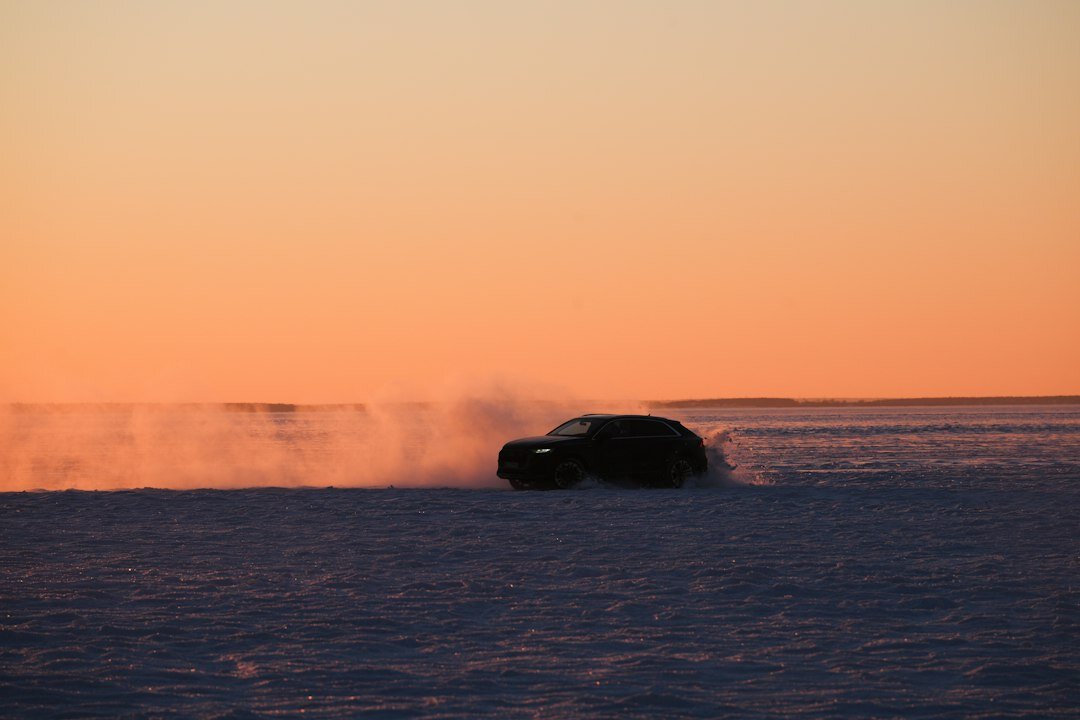
On ice, things often happen more slowly. The rear breaks away and the car starts to turn, but you can follow what’s happening. That is what makes ice the perfect classroom for drivers who want to get to know their car at the limit. Grip is so limited that a mistake unfolds over seconds rather than fractions of a second. You see what is happening and feel it through the steering wheel. And you have time to correct it.
Manufacturers and motoring clubs have created programmes around this experience. They range from a one-day course in the Alps to a multi-day trip to the Arctic Circle.
At the heart of every ice driving course is where you look. When you start to slide, you instinctively look at what you want to avoid. On the lake, you practise the opposite: look where you want the car to go, and your hands follow. It sounds simple. But it takes dozens of repetitions before you can do it without thinking.
Next come your inputs. On ice, the effects of the accelerator, steering and brakes are magnified. Too much throttle sends the rear sliding out; turn the wheel too far and the car pushes straight on over its front wheels. You learn to make small, measured movements and catch a slide by steering into it. On dry tarmac, the same sequence happens so quickly that there is barely time to understand it.
The classic exercise is driving on a circle. You follow a steady radius, apply a little more throttle than necessary and then balance the car with the steering and accelerator. Get it right and the car travels sideways around the circle without spinning. Get it wrong and you immediately feel which input was too abrupt. The slalom then teaches you about weight transfer: every change of direction shifts the car’s weight. On ice, you can clearly see how the car responds. Swerving around an obstacle brings it all together. Braking, steering, then driving straight again: all in a moment you cannot plan for.
A one-day course shows how this works on a smaller scale. The ÖAMTC Snow & Fun Training at the Saalfelden/Brandlhof driver training centre includes a slalom in the ice arena, a circular track, controlled drifting and swerving around an obstacle that suddenly appears. You can take part in any passenger car, including your own. According to Brandlhof , snow and ice training is available from December to March.
Some training venues are located where the car industry tests its vehicles. Around Arjeplog in Sweden, manufacturers put their cars through their paces on snow and ice. Between November and April, according to a report by Sveriges Radio , thousands of engineers from companies such as BMW and Volkswagen come to the region. BMW also takes participants in its M Ice Experience onto the frozen lakes at its own test centre.
The ice on the test lakes, according to WEB.DE , is between 30 and 120 centimetres thick. The surface is prepared by ice makers, who brush, polish or roughen it. They reduce grip with water and increase it with sand. This creates circular tracks, slalom courses and entire handling circuits with predictable characteristics. According to WEB.DE, more than 100 ice makers work there. They survey circular tracks and handling circuits using satellite positioning and rebuild them identically every year. Even the professionals proceed carefully: an Audi development engineer reports that teams approach the limit very gradually, often sliding across the ice at walking pace for days.
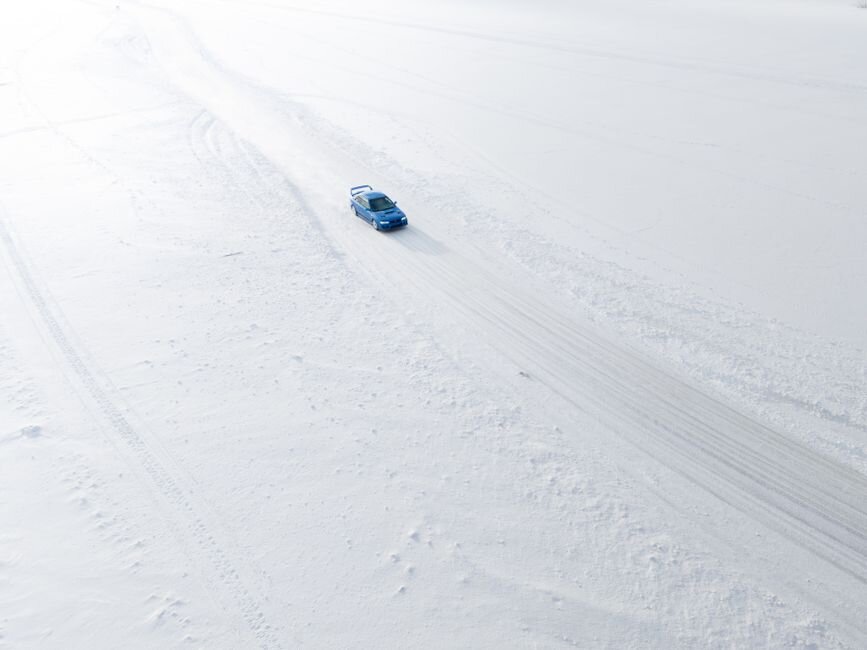
For you as a participant, there is a clear advantage. The surface is prepared and its grip can be adjusted precisely.
They reduce grip with water and increase it with sand.
The manufacturers’ courses go further. Porsche and BMW run programmes at the Arctic Circle, and the Porsche Ice Experience lasts several days.
Porsche runs its programme at the Porsche Arctic Center in Levi, Finland. According to Porsche , the tracks there were designed by architect Hermann Tilke. The programme is divided into four levels: DISCOVER, LEARN, BOOST and RACE. These include Ice Performance, Ice Force, Ice Force Pro and Ice Ultimate. Ice Force introduces you to all-wheel drive, while Ice Ultimate lets you drift a 911 Challenge across snow and ice. In the first three formats, two participants share a car. In Ice Ultimate and the One2One individual training, one person drives alone with the instructor. The fleet includes the 911 GT3, 911 Turbo S, 911 Dakar, 911 Carrera GTS and Taycan, among others.
From January to March, according to a Porsche dealer , Porsche uses the site in Levi exclusively for these winter programmes. An event lasts four to five days. Porsche does not publish current prices; they are only available during the booking process.
BMW takes the M Ice Experience to the frozen lakes at its own test centre in Arjeplog. According to an overview from American Express , the programme includes intensive training on the lakes and specially prepared ice tracks, including drifting with all-wheel drive. Prices start at around €4,300.
The same overview lists other destinations in Sweden. Volkswagen offers its Ice Experience in Arvidsjaur, while Mercedes runs training in an ice arena in Sorsele. The provider quer ist mehr operates on a frozen lake near Malå. In Germany, the ADAC offers half-day winter driving courses for passenger cars in Gründau and Grammetal.
The choice depends on what you want to take away. If your main aim is to feel safer driving day to day in winter, a one-day course covers the essentials. You can practise where to look, how to avoid an obstacle and how a sliding car feels in a single day in the ice arena. Being in your own car is an advantage: you get to know the very vehicle you will drive to work tomorrow.
If you own a sports car and want to know how it behaves at the limit, the manufacturers’ programmes offer greater depth. The levels build on one another, and the instructors know the cars in detail. The expanses at the Arctic Circle allow long, uninterrupted drifts. Several days on the ice build a level of confidence that a single day of training cannot.
When booking, it pays to read the small print. At Porsche, two participants share a car in Ice Performance, Ice Force and Ice Force Pro. If you want to drive alone with the instructor, choose Ice Ultimate or the One2One individual training. Equally important is choosing the level that suits your ability. Porsche structures its programme from DISCOVER to RACE, with each level building on the last.
Whatever the format, the experience comes down to the same thing. On the lake, you learn to stay calm when the car does something you did not intend. You take that calm with you, even onto a wet country road in March.
Yes, on club courses. You can take part in the ÖAMTC Snow & Fun Training in Saalfelden in any passenger car. On the Porsche Ice Experience, you drive cars from the Porsche fleet, such as the 911 GT3 or Taycan.
The Porsche Ice Experience in Levi lasts four to five days. One-day courses in the Alps and the ADAC’s half-day winter training courses are considerably shorter and focus on the basics.
It depends on the format. At Porsche, two participants share a car in Ice Performance, Ice Force and Ice Force Pro. In Ice Ultimate and the One2One individual training, you drive alone with the instructor.
More about journeys behind the wheel, long stretches on the road and cars for covering great distances.