//Drive · Coachbuilding
Hand-shaped metal in restomods: What the English Wheel can do
At the English Wheel, a coachbuilder forms sheet metal into curves by hand. Why restomod workshops are returning to it.

 Restomods & Classics
At the English Wheel, a coachbuilder forms sheet metal into curves by hand. Why restomod workshops are returning to it.
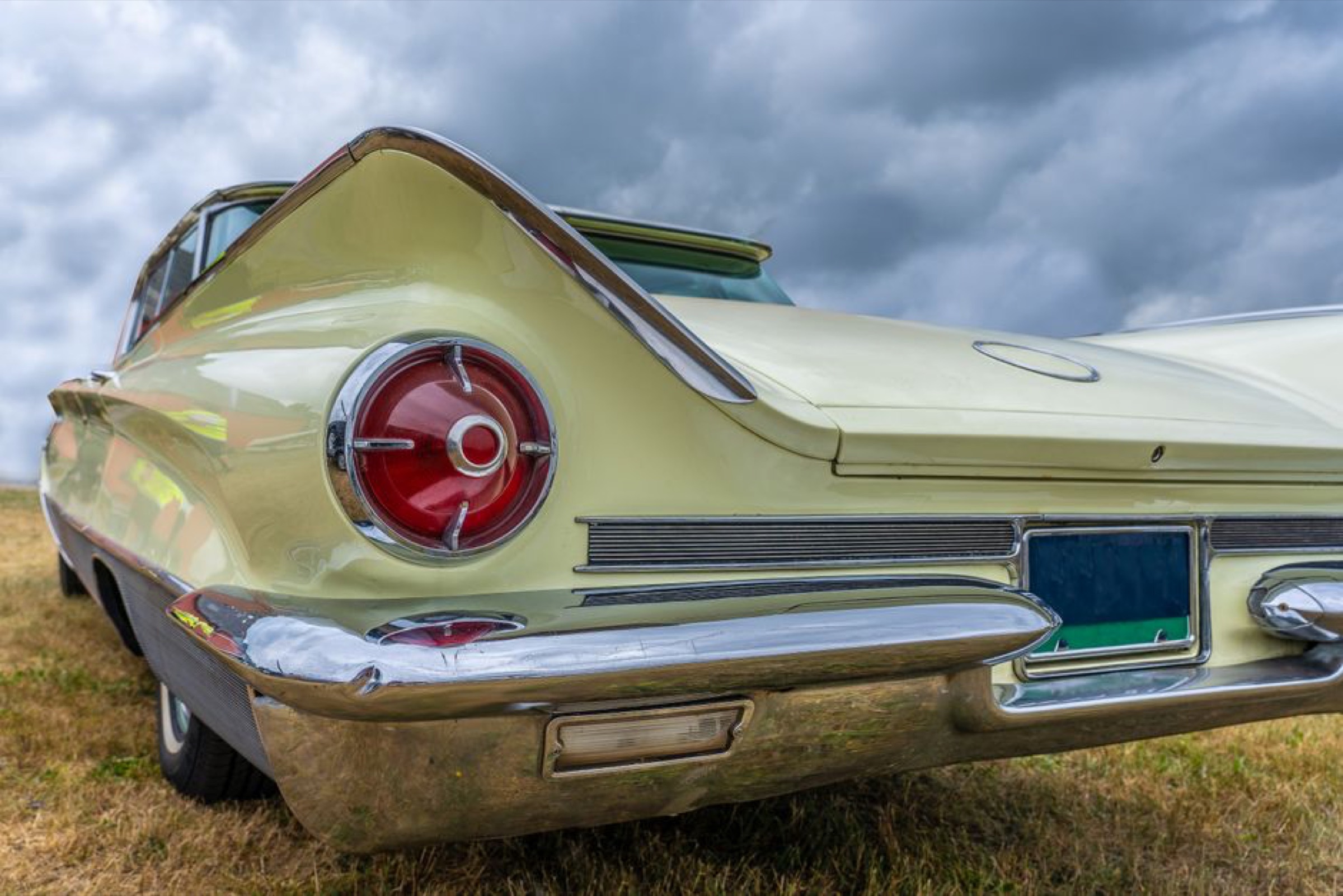
You stand beside a body that looks like new. Too new. The surface is flawless. The edge is missing. Light slides across it without catching. This is where the press shop and craftsmanship part ways: CNC and stamping tools deliver repetition. The English Wheel delivers line.
Restomods that really work reclaim the bodywork. Not as nostalgia theatre. As control over curve, tension and the moment when metal regains its character.
Americans call it an English Wheel. The English say Wheeling Machine. Technically, it is a rolling hammer: two polished steel rollers in a heavy C-frame. You move sheet metal back and forth. The rollers stretch the material. A simple curve first. A different angle. Then a compound curve.
Road & Track described the practice at Fournier Enterprises in Michigan. Jeff Fournier formed one half of a Norton motorcycle tank from annealed aluminium 3003 in around ninety minutes. Nylon mallet. Plywood buck. Leather mallet for shrinking. And the Wheel.

The process is unremarkable. Quiet. Repetitive. No oil on the rollers. Each pass changes the piece. Too many passes harden it or create dents. You plan several steps ahead while reading the light on the surface.
There are four things you can do with sheet metal: cut, bend, shrink and stretch. Bending is often reversible. Shape emerges when you shrink or stretch. The Wheel is a stretching machine. Planishing smooths out hammer marks.

Production sheet metal follows the tool. Hand-shaped metal follows the line you want. In the history of Italian coachbuilding, houses such as Scaglietti and Pininfarina worked with the same European principles of hand forming.
Anyone who has seen a flat sheet become the shoulder of a wing understands the difference between surface and volume.
Smoothness can be bought. Line must be earned.
In good workshops, you see wooden bucks beside the finished skins. The buck is the negative form of the intention. The metal is the answer. Between them lie hours in which nothing looks impressive and everything is decided.
Restomod often means an old soul with new nerves. If the soul is the body, it must not look like a plastic replica. It needs tension. It needs a line that follows the volume rather than the polishing programme.
I always inspect a car like this in oblique light. In the morning or late afternoon. Then the surface reveals whether it merely shines or has substance. An honest shoulder casts a shadow. A dishonest surface hides behind gloss.
Coachbuilding was never romantic. It was work under time pressure and material shortages. Today it is a conscious choice against uniformity. That is precisely why it feels luxurious: paying someone for line has become rare.
If you are planning a project, speak to the metalworker early. Not only when paint and interior are settled. The skin determines the rest. Doing it the other way round becomes expensive and disappointing.
A restomod body that is too smooth looks digital. You see the precision and feel no resistance. Hand-shaped metal carries small decisions: where the curve tightens, where it releases, how the edge of light cuts across the wing.
The chassis, suspension and safety can be modern. The car’s skin is another matter. If all you do here is smooth, you lose tension.
Verdict: A restomod with hand-shaped metal tells you someone took responsibility for the line. Not the press cycle.
Stand to the side in hard light. Does the surface follow the volume or the shine? Is the edge where the eye expects it?
If so, you have coachbuilding in modern dress. If not, you have expensive smoothness. Both drive. Only one stays in the mind.
Closeness matters. From a distance, much looks alike. Up close, you see whether someone has worked on it or merely arranged it.
That is why a second look matters, whether at sheet metal, stones, chairs or objects in a room.
Standards are not about volume. They are precision in places you might overlook.
A C-frame tool with two steel rollers. Sheet metal is stretched between them until curves form.
Many classic sports car bodies used it for its light weight and formability. Annealed sheet can be stretched with greater control.
No. It is slower and more expensive. It pays off when line and the edge of light are part of the character.
More cars where craftsmanship and chassis share the same standards.