Hand-Formed Metal: Why Restomods Need Imperfection
Hand-formed sheet metal in a restomod isn’t nostalgia. It brings back craftsmanship, tension, and human judgment where digital output stops.

 //DRIVE
Hand-formed sheet metal in a restomod isn’t nostalgia. It brings back craftsmanship, tension, and human judgment where digital output stops.
Why hand-formed sheet metal in a restomod is more than nostalgia: it restores craftsmanship, tension, and human judgment to the car.
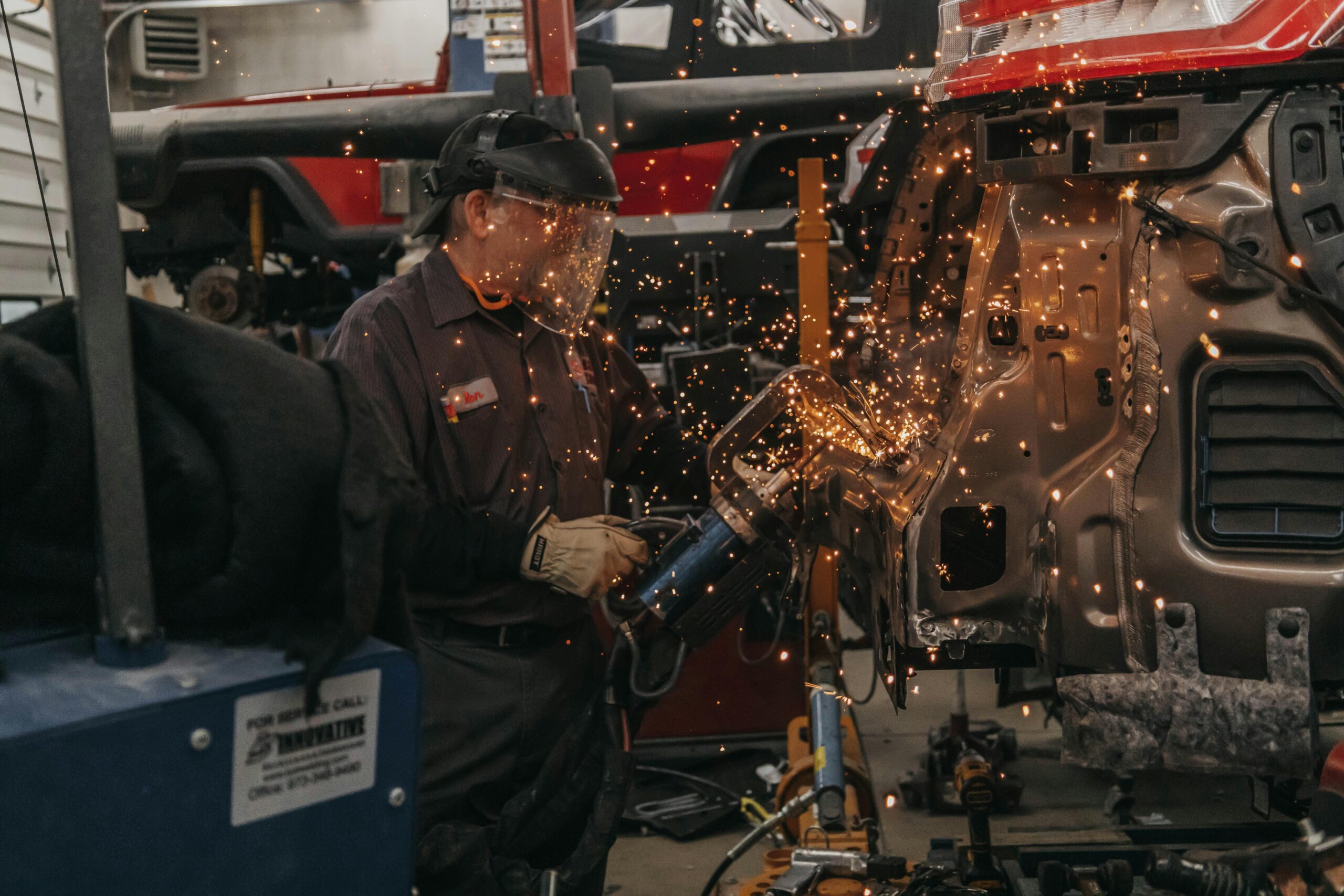
With this topic, the focus isn’t on a finished car but on the work being done on the metal. That’s why the first inline image shows exactly the moment metal regains its shape.
Some cars look as though every edge in the world has been polished away. Perfect at first glance, hollow the next. In restomods, this is a real risk. Too much digital smoothness drains the tension that once made the classic car interesting.
Hand-formed sheet metal feels different. Not rough, not romantically sloppy, but alive. A surface gains subtle tension, an edge carries weight, a fender doesn’t just sit correctly-it feels natural.
Traditional body builders work with plans, wooden forms, scans, drawings, and original parts. VintageCars.com notes that entire bodies can be created from plans, bucks, drawings, sketches, photos, or scans. Contour Metalshaping describes hand-forming complex metal surfaces for historic cars. This isn’t a rejection of precision-it’s a different kind of precision.
The difference lies in judgment. A machine can replicate a surface. A skilled craftsman sees whether the surface is right. Whether the light plays across it correctly. Whether the line matches the door. Whether the car still has presence.
A restomod is always a conversation between yesterday and today. Modern brakes, stronger structure, a more reliable engine-all can make sense. But if the body ends up looking like a rendering, the essence is lost.
Handwork preserves the small scale. It allows a car not to look identical everywhere. With old shapes, that’s not a flaw-it’s why we look at them. A classic fender isn’t just a surface. It’s a punctuation mark.
The real luxury here is in the hours you won’t see later. In straightening, adjusting, taking back, re-fitting. In a gap that isn’t just small but correct. In a crease that doesn’t shout but holds.
That’s why the best restomods aren’t the ones that look most modern. They’re the ones where you sense someone stood before the metal instead of in front of a filter. You feel the difference. That’s the point.
With hand-formed sheet metal, the work doesn’t start with romance-it starts with control. A surface must fit before it can be beautiful. The craftsman checks with eye, gauge, light, and patience. Only when the line is right does material become bodywork.
It sounds slow, and that’s exactly the value. Speed is often an argument for digital fabrication. In classic coachbuilding, time isn’t a flaw-it’s method. Some decisions need the delay because you only understand them on the second look.
A good panel doesn’t announce that work aloud. It simply sits right. The door closes, the fender line has tension, the shoulder doesn’t break. Those who know how hard that is see more than surface.
Classic cars were never as flawless as the high-gloss images we remember today. They had manufacturing tolerances, subtle differences, traces of material. A restomod that turns everything into clinical symmetry risks losing something: it robs the car of its era.
That doesn’t mean poor panel gaps suddenly become charming. It simply means perfection must be guided by feeling. A line can be correct without looking lifeless. A surface can be calm without turning sterile.
That’s why hand-formed work is regaining importance in the luxury class. It puts human judgment back where mere repetition falls short.
Render images are seductive. They show a car without oil, dust, resistance or flaws. In the workshop, reality begins. Sheet metal stretches, contracts, springs back. An idea that looked perfect on screen must first prove itself in the material.
Good restomod builders know this. They use digital tools where they help, but they never let the screen make the final call. The hand checks whether the theory holds.
This is where attitude is forged – not in rejecting modern technology, but in refusing to confuse it with taste.
Anyone spending serious money on a special car isn’t just looking for flawlessness. Flawlessness can be bought off the assembly line. What they want is work that someone took responsibility for. A car where you feel decisions were made.
Hand-formed sheet metal tells that story. It says: someone saw this line, held it, corrected it and signed it off. That’s a different value than a part that simply dropped out of a machine.
Perhaps that’s the core of modern classic cars in period clothing: no longer proving that everything is possible, but showing that someone knew when enough was enough.
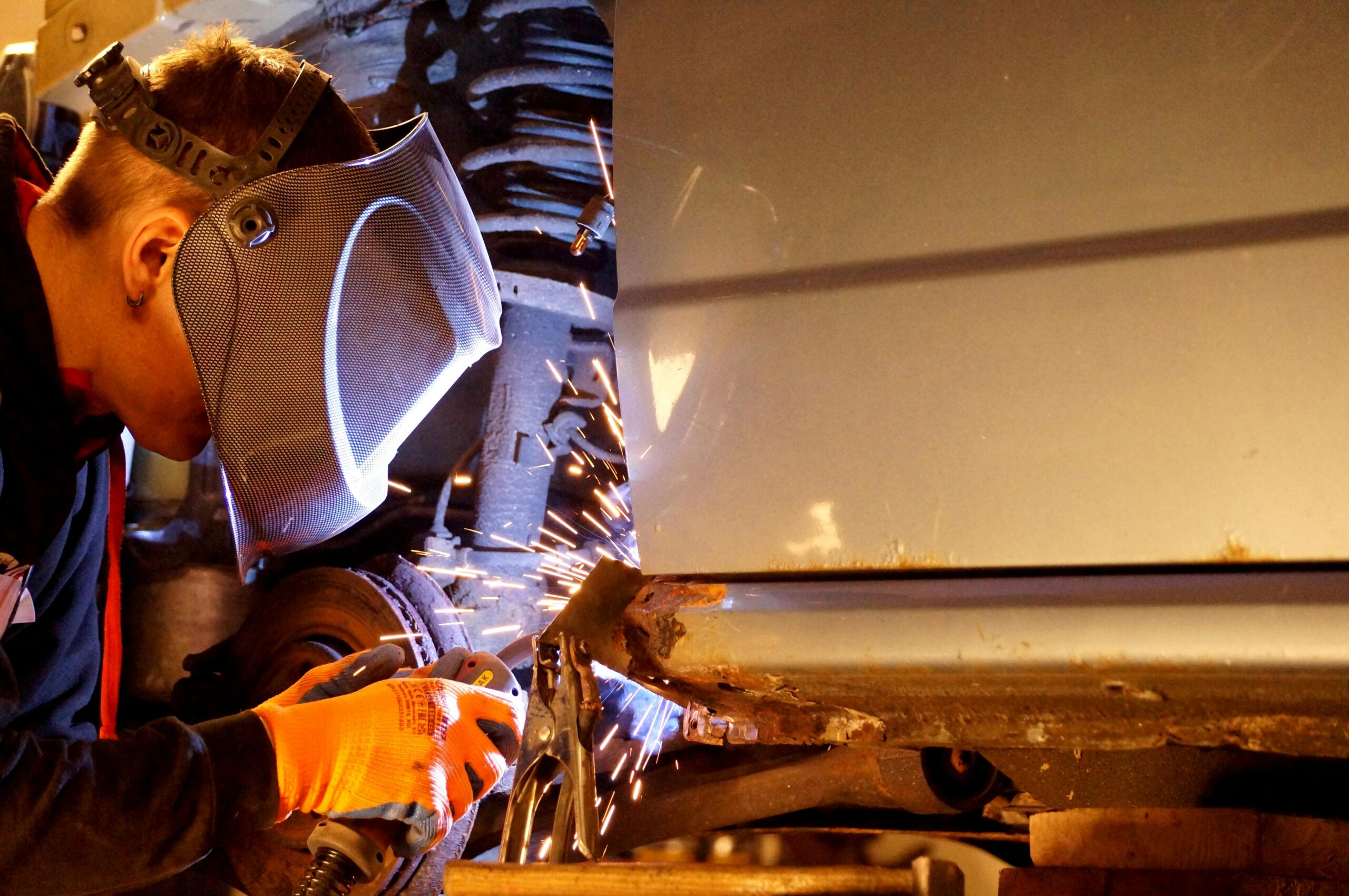
Perfect sheet metal isn’t smooth. It has tension, direction and the small human trace no render can replace.
Sheet metal isn’t an obedient material. It stretches, tensions, reflects light differently than expected and remembers mistakes. Anyone working with it is constantly negotiating. That negotiation is often missing from digitally smooth designs, where everything looks right the moment it appears.
In the workshop it’s different. A surface that looked perfect on screen can look dead in metal. A crease that was sharp enough in the file may suddenly feel harsh on the car. The good coachbuilder spots those differences not out of nostalgia, but from experience.
Hand-formed sheet metal isn’t a romantic alternative to precision; it’s a different precision. It measures not only length and angle, but light, tension and impact. Harder to log, yet immediately visible when absent.
A restomod that ignores this quality stays superficial. It can be fast, expensive, flawlessly painted. But it won’t stay interesting for long. The hand in the material is what gives it lasting depth.
Many buyers want perfect cars, yet what they really mean is coherent cars. The difference is vast. Perfection can feel sterile. Coherence allows details that don’t shout mathematically but resonate emotionally. With classics, that nuance is what makes the magic.
A hand-shaped panel should never hide a dent. Yet it can stay alive. It can show the material under tension, a line drawn rather than merely calculated. Those tiny traces aren’t sloppiness when they spring from skill; they’re handwriting.
In the luxury world, handwriting is often claimed but rarely delivered. With sheet metal it’s hard to fake. You can see whether someone grasped how a body breathes-or merely chased an effect.

That’s why the best restomods aren’t necessarily the cleanest on Instagram. They’re the ones that reward ten minutes of scrutiny, because you don’t just see surfaces-you see decisions.
Once you’ve felt this craft, restorations look different. The first glance shifts from paint to the surface beneath. How does light travel across the fender? Where does tension begin, where does it end? Where does the hand yield to the machine? These questions seem small, yet they change everything.
Hand-shaped sheet metal also rejects throwaway logic. A dented fender isn’t just a problem part; it’s an assignment. The material earns a second life-sometimes repaired, sometimes re-formed to rejoin the whole.
In restomods, that reintegration is decisive. Modern tech can enhance an old car, but it mustn’t dominate. When the bodywork ends up looking like a flawless render, the car loses the friction that makes it interesting.
The finest workshops therefore don’t fight age; they work with it. They remove what has grown weak and preserve what still carries the load. The outcome isn’t an artificially youthful car, but an old car with renewed strength.
That’s a more mature idea of perfection – not flawless in the sense of smooth, but right in the sense of coherent. That’s where unspoken luxury begins.
You can verify it simply: does the car become louder or clearer through the work? Louder means the conversion puts itself ahead of the original. Clearer means the original shape becomes legible again. Hand-shaped sheet metal succeeds when it takes the second path.
That’s why this craft belongs in the front row of restomod culture – not as a nostalgic footnote, but as a prerequisite. Without good sheet metal, every modern upgrade is just an upgrade. With good sheet metal, the conversion becomes an attitude.
See how body panels aren’t merely shaped but recreated from scratch in our feature on Panel Reconstruction of Lost Bodies. Discover how far a restomod can go without losing its roots in the Alfa GTAm Recreation.
Not necessarily. It’s controlled differently. Skilled coachbuilders blend traditional tools with scans, jigs and measurement points.
Because restomods marry modern tech with classic form. Handwork prevents the vintage body from looking sterile.
No. It’s about material understanding, light, tension and proportion-qualities you can’t download from a file.
Hand-formed sheet metal is no romantic sideshow. It’s the moment a restomod decides whether it gains character or just looks smooth.
Image sources: Pexels / Jeff Burkholder, Michael Kabus, Andrea Piacquadio.