Sustainable Travel – How to Enjoy a Conscious Vacation
In 2019 we wrote about conscious travel. What still holds true today, and what has really changed since then? A look back with figures that are confirmed for 2025.
You want to travel without packing a guilty conscience. The good news: conscious vacations are easier than ever in 2025, because the numbers are clearer and the alternatives are better. We’ve revisited our 2019 article and cross-checked it with what’s backed by data today.
- The train beats the plane by a wide margin: over 1,000 kilometres, the ICE emits around 36 kilograms of CO₂, while a flight emits more than 200 kilograms.
- Slow travel isn’t about deprivation-it’s a different kind of comfort: time, peace, and stops along the way instead of rushing.
- Your accommodation plays a role: air conditioning and large pools are the silent energy guzzlers.
- If you do fly, an honest CO₂ offset with atmosfair costs around €30 per tonne (as of 2025).
In 2019, the question was almost taboo: was I even allowed to fly? Six years later, the debate has grown more matter-of-fact. It’s no longer about sacrifice or guilt, but about making better choices-and that starts with knowing the numbers.
What has changed since 2019
Back then, “flight shame” was the buzzword of the hour, a term that said more about the feeling than the solution. Today the focus is less on shame and more on asking which option actually makes sense for a specific route. On many domestic and European connections, trains have become faster and more comfortable, night trains are back on the timetable, and booking portals now often display a trip’s CO₂ footprint directly alongside the comparison.
Transparency has also increased. Compensation providers disclose their calculation bases, hotels tout verifiable certificates instead of vague promises, and concepts like slow travel or micro-adventures have moved from niche to mainstream. What sounded like deprivation in 2019 now feels more like a conscious choice. That’s exactly why it’s worth looking back: the tips from back then still hold true, only the tools behind them have improved.
Your immediate surroundings are underestimated
So caught up in wanderlust, many forget what lies right outside the door. A cabin in the local woods, a long weekend in a city two train hours away, a museum you’ve never visited: it costs little in travel time and no heavy CO₂ backpack. Micro-adventures in your own region are no longer a stopgap since the pandemic, but a travel genre in their own right. The best side effect: you arrive more relaxed because the journey itself becomes part of the holiday.

Slow travel: the journey is the destination
When choosing a mode of transport, the maths are clearer than any gut feeling. According to Germany’s Federal Environment Agency, an ICE train over 1,000 kilometres emits around 36 kilograms of CO₂, while a flight over the same distance produces more than 200 kilograms. On the Berlin-Munich route, rail saves roughly 82 percent of emissions compared with flying. Buses and trains therefore don’t just edge out planes-they trounce them by a wide margin.
Slow travel means consciously savouring that advantage. Pack good food and a bottle of wine, plan a stopover in a town you’d usually only speed through, and turn the trip itself into the first chapter of your holiday. Moving slowly has a calming quality no direct flight can ever match.
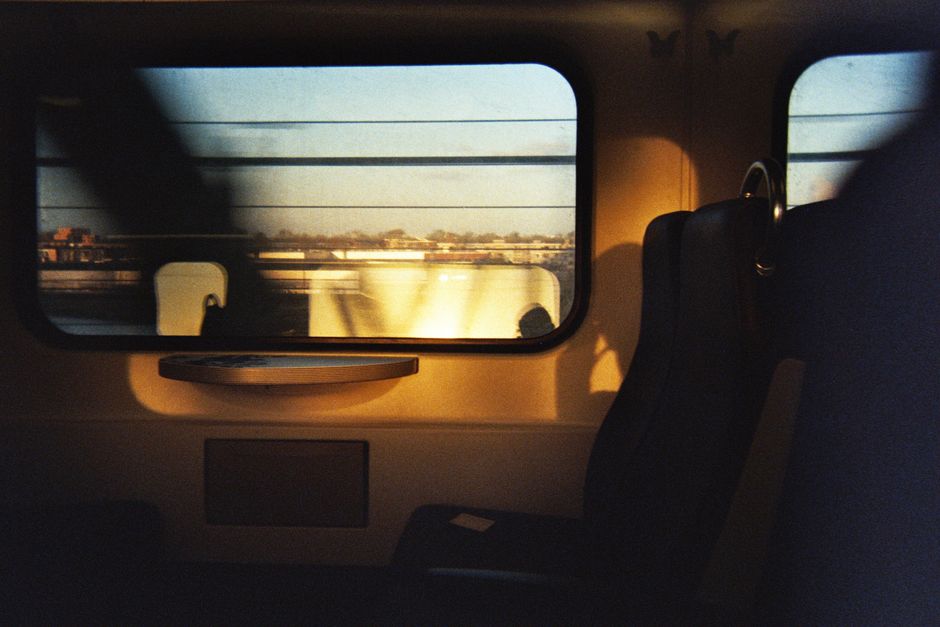
The train isn’t the compromise for travellers with a guilty conscience. It’s the quieter, often more beautiful way to arrive.
The right accommodation makes all the difference
The choice of lodging also factors into the equation. Two elements weigh especially heavy. First, air conditioning: it’s one of the biggest electricity guzzlers, especially when entire buildings are chilled around the clock. Second, water. In many southern regions there’s chronic scarcity, and a large pool that’s refilled daily is anything but harmless. Look for places that use resources sparingly instead of selling them as a given. Certifications like GreenSign or the EU Ecolabel give you a helpful first steer.

What if you still have to fly?
Some trips simply can’t be shifted to rail. When that’s the case, carbon offsetting is an option-and today’s transparency is far greater than in 2019. Providers like atmosfair calculate the exact CO₂ your flight emits and clearly state the offset cost. Currently, atmosfair charges around €30 per tonne of CO₂ (as of 2025). The funds support climate-protection projects double-certified under the Gold Standard and the CDM mechanism.
Honesty matters: offsetting doesn’t make a flight climate-neutral; it merely mitigates its impact. The most effective lever remains flying less often and more intentionally. Those who embrace this mindset don’t travel worse-they travel more mindfully.
For more inspiration on slow travel, explore our piece on solo travel. Practical tips for your next eco-conscious getaway are collected in sustainable holidays. If you’d rather pair travel with movement, our sister magazine InspiredBySports has plenty of ideas.
Good to Know
▸Is the train really that much more climate-friendly than flying?
Yes-and the gap is wider than many realise. Over 1,000 km, Deutsche Bahn’s ICE emits roughly 36 kg of CO₂, while a flight tops 200 kg, according to Germany’s Federal Environment Agency. On the Berlin-Munich route, rail cuts emissions by about 82 percent.
▸How much does it cost to offset a flight via atmosfair?
atmosfair currently charges around €30 per tonne of CO₂ (as of 2025). The exact amount depends on distance and aircraft type; their calculator on atmosfair.de shows the figure per flight. Funds go to Gold-Standard-certified climate projects.
▸Does CO₂ offsetting make a flight climate-neutral?
No. Offsetting balances emissions on paper but doesn’t prevent them. The surest lever remains flying less frequently, choosing wisely, and opting for rail on short hops.
▸What should I look for in a sustainable accommodation?
Pay special attention to energy and water use. Over-chilled air-conditioning and sprawling pools in water-scarce regions are the biggest burdens. Certifications like GreenSign or the EU Ecolabel offer helpful guidance.