Travel · The Quiet Season
The Grand Hotel at Its Quietest
The empty hall on a gray afternoon when no season is running. The Grand Hotel reveals itself most honestly when no one is there.

 Slow Routes
The empty hall on a gray afternoon when no season is running. The Grand Hotel reveals itself most honestly when no one is there.
There is a sight the promotional brochures never show: the empty hall of a grand mountain hotel on a gray afternoon when no season is running. The armchairs stand where they always stand, the wood smells of wax, light falls at an angle through tall windows onto a floor no one crosses. No piano, no murmur of voices, no rolling suitcases. Only a house thrown back on itself, waiting.
Most people imagine the off-season as a quieter version of operations: fewer guests, more space, gentler prices. At the great alpine Grand Hotels that is not how it works. They know no quiet off-season. They know true closure.
A house like Badrutt’s Palace in St. Moritz opens for one season in winter and one in summer. In between, it is closed. Spring and autumn the doors stay shut. The Suvretta House, just a few turns farther, seals itself completely between seasons. For roughly seven weeks the entire house stands empty before a new season begins. The Kulm Hotel follows the same pattern. So do Gstaad Palace and Grand Hotel Kitzbühel. They all breathe to the same rhythm.
This rhythm is not new and not a coincidence of occupancy. It is as old as the alpine Grand Hotel itself. In 1864 Johannes Badrutt sealed his famous wager with four English summer guests: he invited them in winter and promised to cover all costs should the cold season in the Engadin fail to please them. They stayed until Easter. That wager birthed alpine winter tourism and with it the idea of a house that lives in waves, not year-round. What looks like a gap in the calendar is in truth the built-in heart of the model.
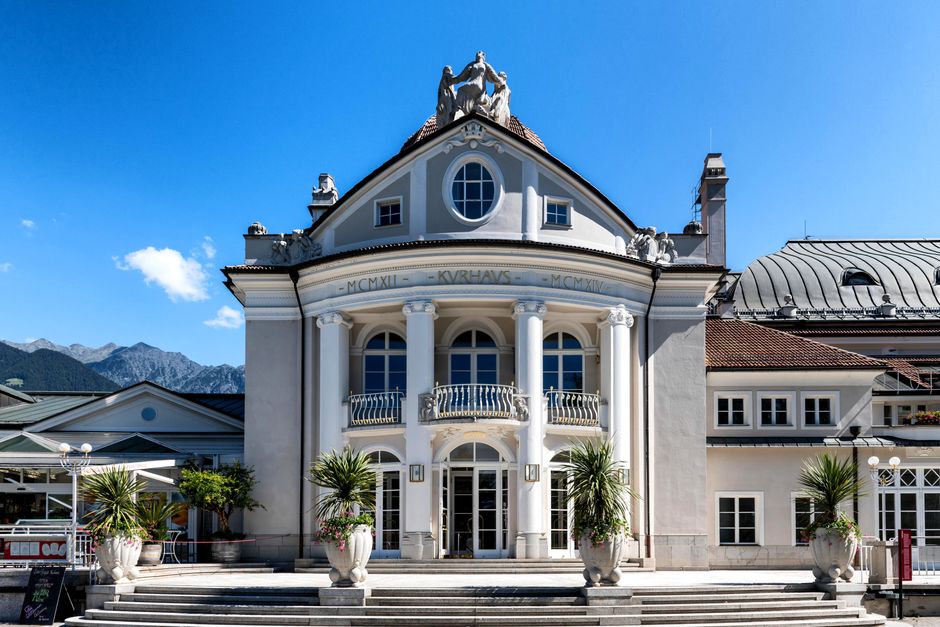
To understand why the empty weeks say so much about these houses, look at their substance. They were built to impress. And that impression requires people to receive it. Badrutt’s Palace was built in 1896 as a neo-Gothic castle with towers and terraces. Inside are intricate wood paneling, Renaissance coffered ceilings and neo-Baroque ceiling paintings. The Suvretta House, opened in 1912, arrived like a palace, with hundreds of rooms and a silhouette that recalls a princely residence more than a hotel. Since 1913 Gstaad Palace has presided over the village in chalet style, built with a budget that was extraordinary for its time.
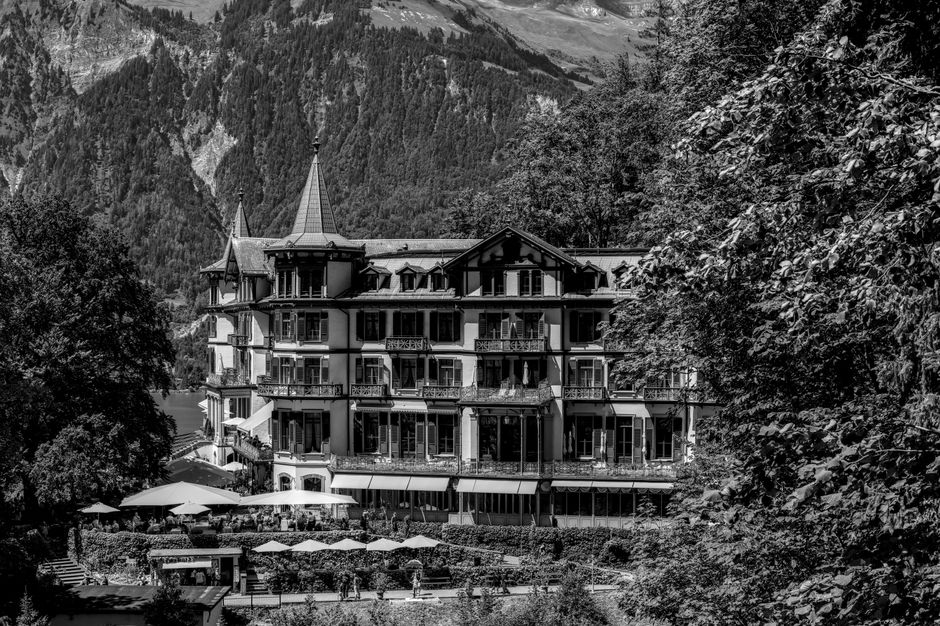
This architecture is theater. The high halls, the broad staircases, the balustrades are stages for arrivals. A full house turns them into precisely what they were meant for. An empty house shows the stage without the play. It is a rare, almost vulnerable view. Suddenly you see the labor, the construction, the intention behind what looks effortless.
Many of these houses stand where they do because the water came first. St. Moritz was a spa town long before it became a ski destination. The Mauritius Spring is regarded as the oldest documented spring in the Alps. A Bronze Age find proves a bathing tradition reaching back thousands of years. The first small spa house stood here as early as 1831. The great wave of Grand Hotels arrived only later. People came for the healing springs, the baths, the quiet and only later for the snow.
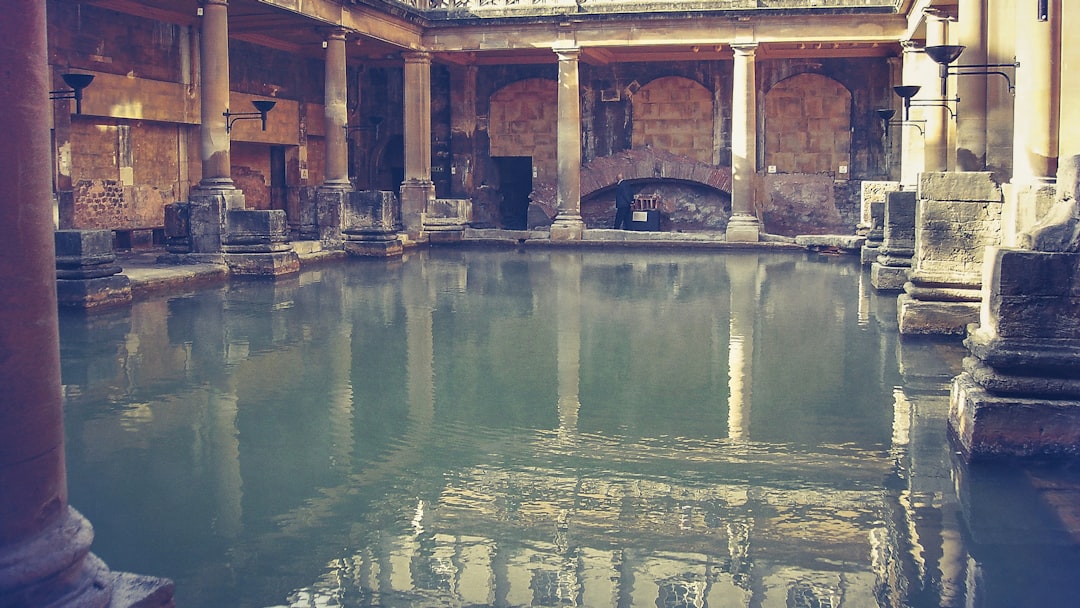
This heritage remains in the houses to this day. The baths, the thermal and wellness worlds are not secondary. They are the origin. In a quiet house, just before or after the busy season, this core reappears. A thermal pool without crowds, steam between marble columns, the soft echo of water. That is closer to what once made the place famous than any packed ski week.
When the houses are truly closed in the real in-between period, where is the moment to truly understand a Grand Hotel? At the threshold. In the first days of a season, when the house has opened but is not yet full. When the staff is fresh and rested, not yet caught in the daily rush. When a concierge has time to actually listen to you rather than juggle a dozen requests at once. When the breakfast room is not fully booked and the waiter remembers how you take your coffee.
That is the honest time. Not high season, when every house performs because it has to. But the margin days, when a Grand Hotel reveals whether its care is genuine or merely a performance for the crowd. A good house remains good even when it is nearly empty. Perhaps that is when it is most fully itself: generous space, an attentive person, a warm bath and the time to notice it all.
You will never see the quiet weeks in between from the inside. But it helps to know they exist. A house that steps back in order to gather itself understands something about rhythm that a year-round operation has unlearned. It does not work constantly. It works when it is time. And when you arrive at the right moment, it offers you its full attention.
Often not. The major houses in the Engadin and the Alps usually open only for a winter season and a summer season and close completely in spring and autumn. Some stand completely empty for several weeks. Check the exact season dates of the house before planning.
At the edges of the season. In the first days after opening, the house is open but is not yet full. The staff is rested, the attention is sharper, the rooms are more open. That is closer to the true character of a Grand Hotel than high season.
Many alpine Grand Hotels were built where healing springs existed. St. Moritz was a spa town long before winter sports arrived. The bathing and thermal tradition is the historical origin. Snow came later. That is why the wellness worlds of these houses are not an add-on but their core.
Places you come to understand slowly and the journeys that take their time to do so. Stay in //Travel.