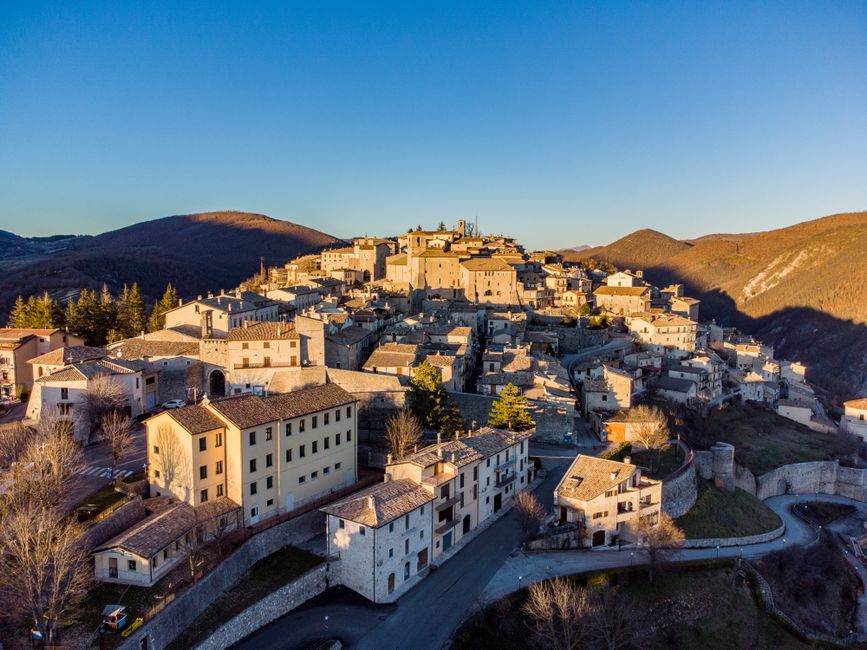
In the early morning, before the day boats arrive, the old port of St. Tropez smells of damp dew, diesel, and the coffee the Sénéquier pours on its blood-red terrace. A fisherman sorts his crates on the quay, a delivery van reverses into a bar, someone sets out chairs. The light is still low, coming off the water, striking the ochre facades and making them almost translucent for half an hour. It’s this half-hour you wake up early for-and everything else is just the price of admission.
Key Moments
- Until the late 19th century, St. Tropez was an isolated fishing village on the gulf, hard to reach – and that’s exactly why it remained unspoiled. That remoteness is still part of its character today.
- Two turning points: painter Paul Signac, who arrived in 1892 and brought his friends, and the 1956 film *And God Created Woman*, which made Brigitte Bardot and the town overnight global icons.
- The charm isn’t in the yachts but in the constants: the light, the old port, Place des Lices, the Sénéquier, the alleys of La Ponche.
- If you want to love the place, don’t come in August. Visit in the off-season, when the market belongs to the locals again.
St. Tropez is often reduced to clichés: yachts, champagne, the August crowds on the harbour mole. All of that exists – and it’s loud. But it’s not why this place has drawn people for over a century. The real reason lies beneath, in what endures, stubbornly persisting season after season, no matter how noisy any single one gets.
The Côte d’Azur has flashier addresses. Cannes has the Croisette, Monaco the glamour. But no other spot on this coast wears its history so close to the surface as this village on the gulf, which the world discovered without ever ceasing to be a village.
From Fishing Village to Legend
For a long time, St. Tropez was above all one thing: hard to reach. Unless you arrived by water, you had to take the long road around the gulf. A railway connection came late, and a motorway remains distant even now. That isolation wasn’t a flaw-it was a filter. While Nice and Cannes transformed into fashionable winter retreats for European aristocracy in the 19th century, St. Tropez stayed a port where tuna and sardines were unloaded.
That’s precisely what made it appealing to a certain kind of person. Those who wanted to observe, not be observed, came here. The painters arrived first. Writers followed. Actors came last, and with them, the cameras that revealed the secret. That the town withstood the onslaught without becoming a caricature of itself is the true achievement of this small peninsula.
The village doesn’t face the open sea but an inward-turned gulf, its gaze westward, its back to the hills of the hinterland. That shields it from the Mistral, which batters the Côte further up, and gives the harbour water that calm, almost oily stillness seen in early photographs. Geography isn’t just a detail here. It explains why boats have docked here for centuries and why the railway never became a true express route: the gulf keeps the world at arm’s length-both the good and the grating.
Today, the journey itself is part of the experience. If you take the coastal roads instead of speeding from Nice Airport, the gulf appears on the last bend, an arrival that prepares you for the place rather than ambushing it. IBL has covered how to do this route right elsewhere: in the grand-touring drive to the Côte d’Azur.
The Light That Drew the Painters
In 1892, Pointillist Paul Signac sailed into the south of France and landed in St. Tropez. What began as a stopover became a lifelong obsession. In 1897, he bought a house here, which he named La Hune, and built a large studio, inaugurated in August 1898. Signac didn’t keep his discovery to himself. He invited fellow artists, summer after summer, and the fishing port gradually transformed into a hub of the avant-garde.
The most famous of these guests was Henri Matisse. He spent the summer of 1904 here, alongside Signac and Neo-Impressionist Henri-Edmond Cross, learning the divisionist technique from them. The result was one of the defining works of modern art: Luxe, Calme et Volupté, painted in 1904, purchased by Signac himself, exhibited at the Salon des Indépendants in 1905, and now regarded as the starting point of Fauvism. The title, borrowed from Baudelaire, captures exactly what the place promises: luxury, tranquility, sensuality.
It’s no coincidence that it was the light that lured the painters. The gulf opens to the west, so the sun rises over the water, casting its glow against the houses in the morning, then floods the harbor directly in the evening. The colors Signac and Matisse applied to their canvases weren’t inventions-they can still be seen on a clear June morning.
Luxe, Calme et Volupté. Luxury, tranquility, sensuality: the title of a 1904 painting still describes exactly what the gulf promises today.– Henri Matisse, painted in St. Tropez, summer 1904
The Film That Changed Everything
If the painters discovered the place, a film revealed it to the world. In November 1956, *And God Created Woman* hit theaters, directed by Roger Vadim, then twenty-eight, starring Brigitte Bardot in the lead role. Vadim broke with convention by shooting not in a studio but in the alleys, harbor, and beaches of St. Tropez. This choice-real locations over sets-anticipated what the Nouvelle Vague would later make its manifesto.
The film catapulted two things to fame overnight: Bardot and the place that framed her. Over four million viewers saw it in France alone, double that in the U.S. Finance Minister Antoine Pinay reportedly said the film brought more foreign currency into the country than the Renault group. What had been an artists’ insider tip became a global destination.
Bardot stayed. She bought a house above La Madrague Bay, and with her came the generation that turned St. Tropez in the 1960s into shorthand for barefoot, sun-kissed summers. That the place didn’t become a caricature of itself is thanks to the fishing village, which never entirely disappeared-it just retreated a few alleys deeper.
The Places That Endure
Start at Sénéquier. The patisserie has been here since 1887, the café with its famous blood-red terrace by the harbor added in 1930. This is where Bardot sat during filming, where Picasso, Françoise Sagan, and Juliette Gréco once lingered. The red folding chairs are still here, facing the masts. Order a coffee – not at lunchtime, but early – and watch the harbor come to life. It costs little and reveals more about the place than any yacht ever could.
Then head up to Place des Lices, the village’s living room. Under ancient plane trees, men gather in the late afternoon for pétanque. The soft clink of steel balls is as much a part of this square’s soundtrack as the gulls’ cries are to the harbor. On Tuesdays and Saturdays, the market fills the space: olives, lavender, goat cheese, tomatoes ripened under the sun-not in a truck. On these mornings, Saint-Tropez belongs to the *Tropéziens* again.
And lose yourself in La Ponche, the oldest quarter, the old fishing district behind the harbor. Narrow alleys, laundry lines, a tiny church, a minuscule beach where boats once docked. It’s quiet here, even in summer, because day-trippers never find their way. If you’re staying overnight in Saint-Tropez, this is where you should sleep-perhaps at Hôtel Yaca, nestled in the old town, or slightly elevated at Le Tigre. Neither are yacht hotels; they’re places that truly understand the soul of this town.
Landmarks
SénéquierPatisserie since 1887, harbor café since 1930. The red chairs, the white nougat, the first coffee of the day.
Place des LicesPétanque under plane trees, market on Tuesdays and Saturdays. Here, the village reclaims itself.
La PoncheThe old fishing quarter behind the harbor-narrow, quiet, the most authentic part of town.
The old harborAt dawn, against the light, before the day boats arrive.
Why the Off-Season Wins
August is the worst time to understand Saint-Tropez. The village smothers under a blanket of heat, honking horns, and crowds photographing each other. The harbor mole becomes a stage, and the charm vanishes beneath the traffic. Visitors who come in these days see the cliché and mistake it for the truth.
The truth lies in May, June, and September. The light is crisp, the terraces are occupied but not overrun, and on market days, Place des Lices belongs to the locals again. The sea is warm by June, lavender blooms in the hinterlands. You can get a table at Sénéquier without waiting. You can hear the pétanque balls because no engine drowns them out.
This is the real luxury of this place – and it costs nothing but the right date: experiencing Saint-Tropez in an hour when it doesn’t have to prove anything to anyone. That’s when it reveals why, for over a century, it has never disappointed those willing to wake up early.
Other coastal towns have survived trends by reinventing themselves. Saint-Tropez has endured by staying exactly what it’s always been: a harbor where the morning light spills in from the water. The yachts come and go with the summer. But the red terrace, the clink of pétanque balls, the scent of dew and coffee on the early quay-those remain. And as long as they do, so does the reason to return.
The Details
When is the best time to visit Saint-Tropez?
May, June, and September. The light is crisp, the sea warm enough, the terraces lively but not overrun. August, on the other hand, mostly shows the crowds – and the least of what makes this place special.
What must you absolutely see?
The old port at dawn, the Sénéquier terrace, Place des Lices on market days (Tuesdays and Saturdays) with pétanque under the plane trees, and the quiet alleys of the old fishing quarter, La Ponche.
Why did the painters come here of all places?
For the light and the seclusion. Paul Signac landed here in 1892, bought a house, and brought his friends along. Matisse painted *Luxe, Calme et Volupté* here in 1904-the birth of Fauvism.
What made the town world-famous?
The 1956 film *And God Created Woman* by Roger Vadim, starring Brigitte Bardot. Shot on location in Saint-Tropez, it turned both the actress and the town into overnight global icons.
❖
Source cover image: Wikimedia Commons / Henk Monster, CC BY 3.0 · Inline: Wikimedia Commons / François de Dijon (CC BY-SA 4.0), Henk Monster (CC BY 3.0) · Historical details: Café Sénéquier, Wikipédia / Wikipedia, TheCollector.
Jakob Bach writes for InspiredByLuxury about places that are more than their reputation – and what lingers once the season fades. This travel note is a personal recommendation, not a sponsored post.
//Travel
More from //Travel
Destinations with character, not mass tourism. Quiet retreats, great addresses, traveling with style. Stay tuned to //TRAVEL.
To the section →

 //TRAVEL