It’s just before seven when we leave Munich, the city still bathed in that blue light it only gets for half an hour each day. Traffic on the A8 southbound is light, the tank is full, and ahead, where the sky hasn’t quite made up its mind, you sense the first ridge of the Alps more than you see it. We haven’t planned breakfast or a fixed stop until noon. That’s the whole plan: as little plan as possible.
Quick Facts
- The idea: not the fastest route from Munich to the Côte d’Azur, but the most beautiful. A real, drivable line over the Brenner Pass, through northern Italy and along the Riviera to Saint-Tropez.
- Three stages, no daily mileage under pressure: Munich to South Tyrol, South Tyrol to the Ligurian coast, then the coastal stretch to Saint-Tropez. If you have time, add a detour through the Alpes-Maritimes mountains.
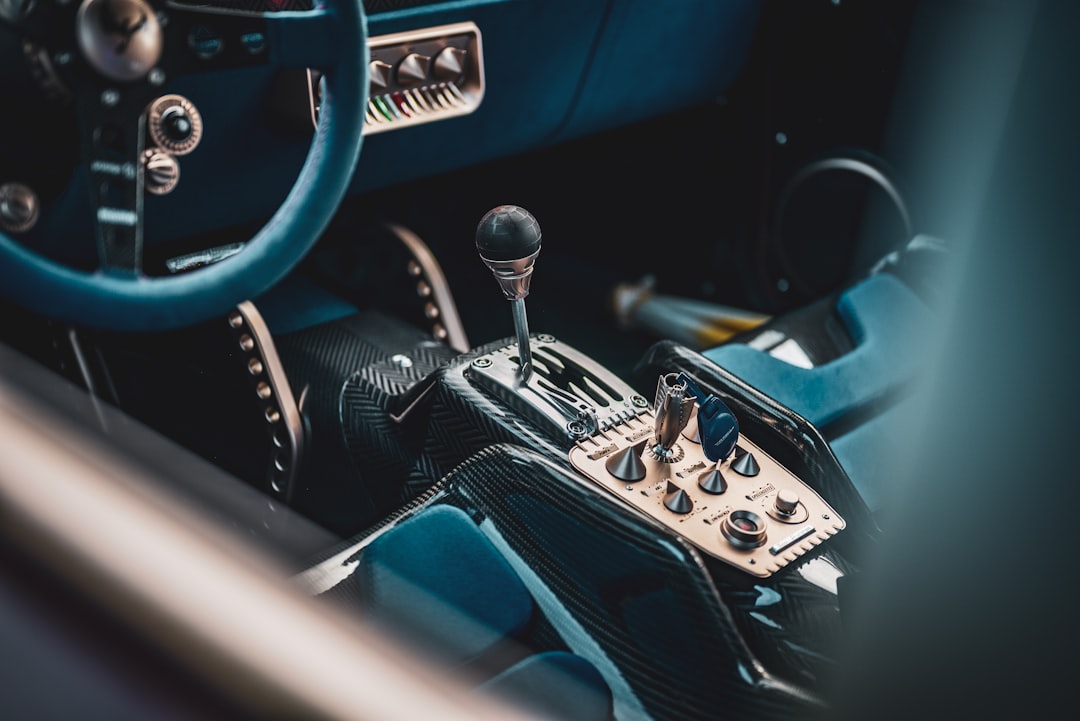
- This is a route for a grand tourer-a car that thrives on long distances, runs quietly, and makes itself heard at just the right moment. It’s about the drive, not the car.
- The real magic happens between the places: the shift from alpine cool to Mediterranean warmth, the light, the pauses you take because you can.
A grand tour isn’t a transfer. A transfer asks how fast. A grand tour asks how beautiful. Both end in the same place (in this case, a harbor town on the Golfe de Saint-Tropez), but they arrive differently. One leaves you drained, the other enriched. We wanted the second way, and for that, you need one key decision: to leave the motorway where it stops being a promise.
You could hammer this route in one long day-just under nine hours of pure driving time if nothing gets in the way. We turned it into three. Not because it’s necessary, but because the *in-between* is the real reason to hit the road.
First Leg – Over the Brenner Pass
The Brenner is the lowest of the great Alpine crossings, and perhaps that’s why it’s so underrated. Today, you zip across the Europabrücke near Innsbruck-this bold ribbon of concrete high above the Wipptal Valley-and barely notice you’ve just crossed the main Alpine ridge. We took our time, stopped for coffee in Innsbruck, and gave the bridge what it deserves: a moment of attention before driving over it.
Beyond the pass, everything shifts. Signs become bilingual, then Italian. Near Sterzing, the air smells different; in Bolzano, the dry warmth hanging over the valley basin has nothing in common with that morning in Munich. We’ve driven less than four hours and already entered another world. South Tyrol, where apples and wine share the same slopes. This is where the first leg ends-early enough to stroll along a promenade in the evening, where German and Italian blend seamlessly in the same sentence.
A word about the car-and then no more. This route doesn’t demand 500 horsepower; it demands a seat you can still bear after eight hours, and an engine that doesn’t scream at highway speeds. A Grand Tourer, built for distance, not stoplight sprints. The rest is a matter of taste. What matters is rolling down the windows at the pass and hearing the world shift from pine resin to stone, and later, to salt.
Second Leg – All the Way to the Sea
The second day is the long one. From South Tyrol, the Brenner Autobahn carries you down the Adige Valley, past Trento, until the mountains open near Verona into the Po Plain: flat, vast, agricultural-a transitional landscape you pass through rather than admire. Here, the highway is purely functional. We didn’t stop in Verona; that’s for another trip.
The journey gets exciting again near Genoa. The city is squeezed between mountain and sea, and right there, along the Ligurian coast, begins the stretch you’re really driving for. The Riviera di Ponente, the western arc of Liguria, nestles between the hills and the Tyrrhenian Sea. Leave the A10 Autobahn and take the old coastal road, and you’ll pass through towns like Finale Ligure and Alassio, past the palm trees of Sanremo-the last major Italian name before the border. Yes, it’s slower. But that’s the whole point of not flying.
At Ventimiglia, Italy becomes France-almost imperceptibly, a border now just a sign. Beyond it lies Menton, the first town of the Côte d’Azur, with its ochre facades and lemons so prized the town dedicates an entire February festival to them. This could be where the second day ends, at the edge of the Mediterranean, with the knowledge that the best is yet to come.
A transfer asks how fast. A Grand Tour asks how beautiful. Both end in the same place, but they arrive differently.– Note from the second evening, somewhere between Genoa and Menton
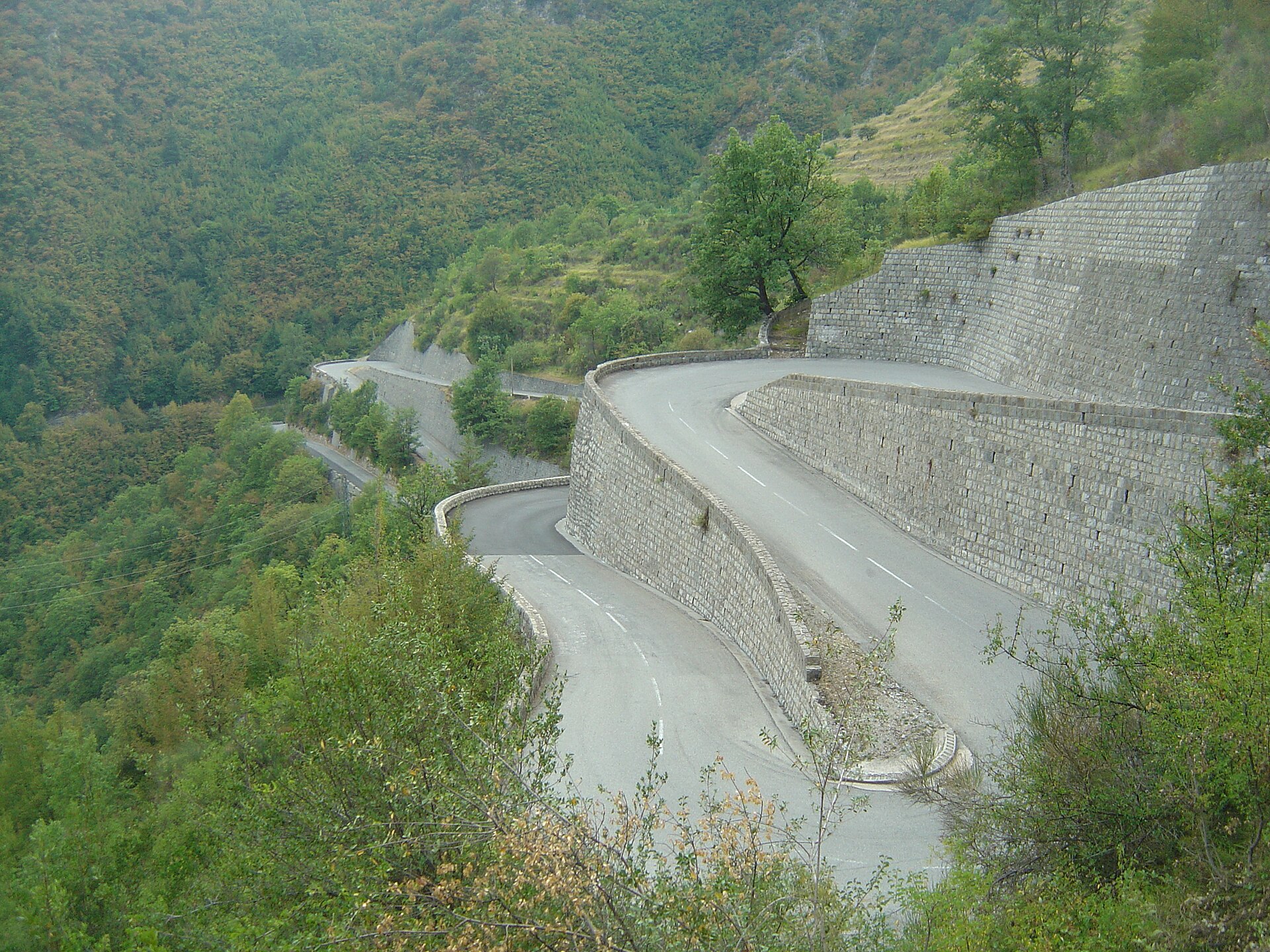
If you have an extra day here, take a detour that doesn’t lead to the sea, but upward. Above Sospel, the D2566 climbs in tight switchbacks to the Col de Turini-1,600 meters high, a pass made legendary by the Monte Carlo Rally for decades: 34 hairpin turns through dark coniferous forest, a road regularly ranked among the world’s most beautiful. It’s a loop away from the destination and straight into the essence of the journey: driving for the sake of driving itself.
Third Leg – The Light Turns Southern
The final day is the shortest – and the most beautiful. From Menton, you follow the coast westward, past Monaco, through Nice with its Promenade des Anglais, where the palm trees stand in a row, all the same height, equally spaced, as if a city gardener had planted them with a ruler. Beyond Cannes, the stretch you’ll remember begins: the Corniche d’Or.
This road, laid out in 1903 by the Touring Club de France, winds for about 27 kilometres through the Estérel Massif between Cannes and Saint-Raphaël. To the left, the red porphyry of the mountains; to the right, the sea, which isn’t blue here but tilts into turquoise where it laps shallow over the rock. The strip between Agay and Le Trayas, blasted into the red cliffs, is the most spectacular part-a succession of coves where you’ll want to stop at every second one. We limited ourselves to three. Too few.
Beyond Saint-Raphaël, the landscape softens. The road leads through Fréjus and then along the water to Sainte-Maxime, and from there you see it for the first time across the bay: the destination, on the opposite shore of the Golfe de Saint-Tropez. You can circle the gulf through Port Grimaud with its canals, or in summer take the ferry that chugs directly into the old port in twenty minutes. We drove – because after three days, we didn’t want to get out.
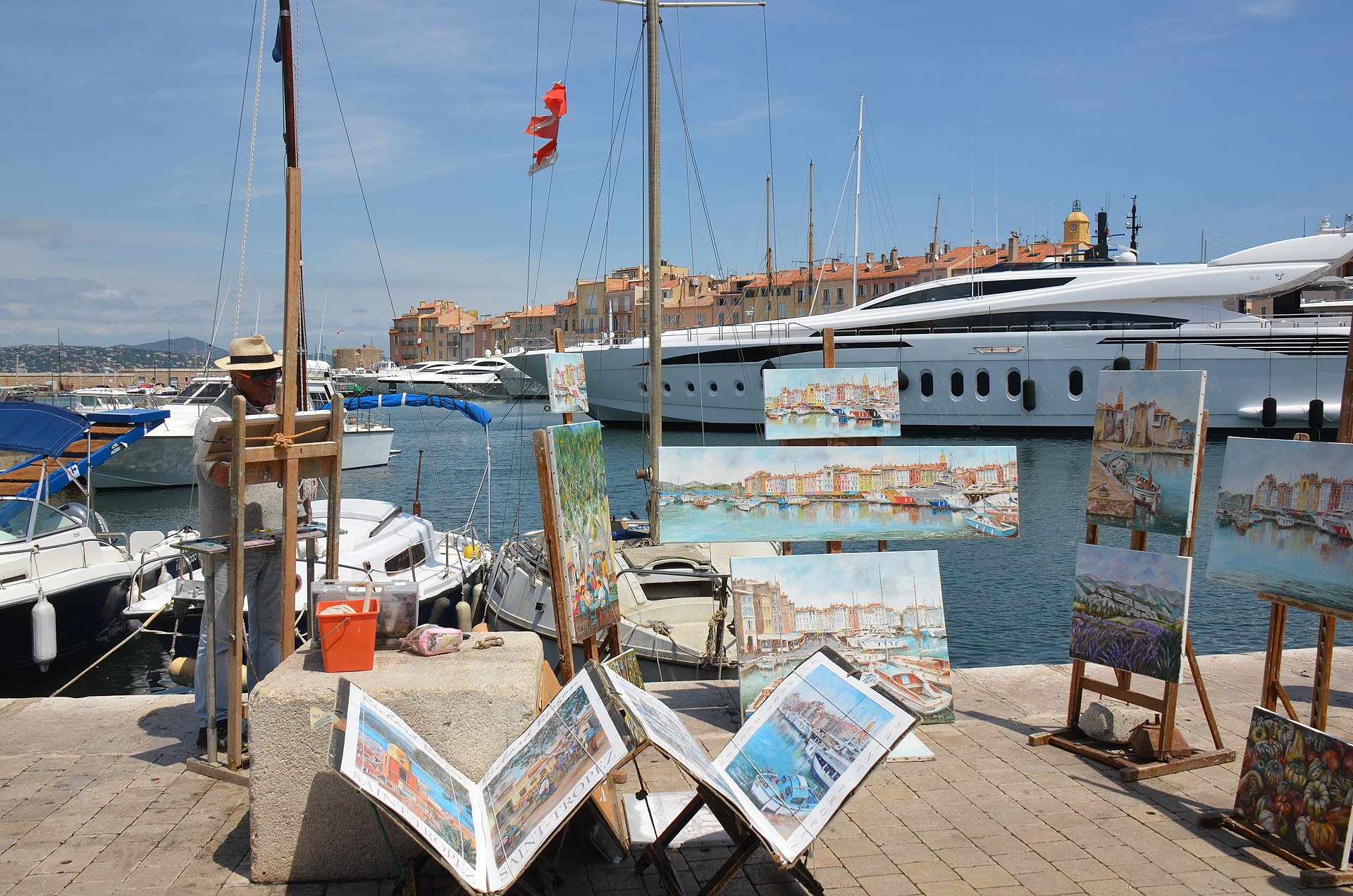
And then you’re there. Saint-Tropez doesn’t greet you with a bang, but with a quay where painters set up their easels against the yachts, as if nothing has shifted in a hundred years-nothing that defines this place and why it’s more than its reputation. We explore that in detail elsewhere. For now, the feeling is enough-the one every good Grand Tour bestows at the end: that the journey already contained the destination long before you arrived.
The Legs
1 · Munich → South Tyrolvia A8 and Brenner (A13/A22), Europabrücke near Innsbruck, arrival in Bolzano. Around 280 kilometres, just over three hours without stops.
2 · South Tyrol → Côte d’AzurEtsch Valley, Verona, Po Plain, then the Ligurian coast via Genoa to Menton. The longest leg, with a detour along the old coastal road.
3 · Menton → Saint-TropezNice, Cannes, the Corniche d’Or through the Estérel, Saint-Raphaël, Sainte-Maxime, the gulf. Short, but the highlight.
Optional Detourvia Sospel and the D2566 to the Col de Turini (around 1,600 m) and back. Half a day, pure driving pleasure.
What a Drive Like This Really Needs
It’s tempting to reduce a route like this to numbers: elevation gain, passes, kilometres. But the essentials aren’t on the dashboard display. What it takes is the willingness to set off early and arrive late, without checking the clock in between. The discipline not to stop at every cove along the Corniche d’Or-because otherwise, you’d never get there. And the generosity to stop at three anyway.
And it takes a little lie you tell yourself: that the destination is the point. In truth, Saint-Tropez is just where you eventually have to stop. The real reason was the Brenner Pass in the morning light, the first Italian words beyond the summit, the red cliffs above the turquoise water. The reason was the road. That’s the most beautiful way to head south: so that arriving feels like the end of a piece you’d have wanted to hear longer.
Maybe that’s the only rule that really matters. Plan the legs, not the hours. Let the car breathe and yourself too. And when the sea first tilts into turquoise, take your foot off the gas-not because a curve is coming, but because that one glimpse deserves it. The south isn’t going anywhere. It’s been waiting, forever, at the end of the road.
The Details
How long does the route take?
The pure driving time from Munich to Saint-Tropez is around nine hours via the fastest route. As a grand tour with stops and detours, three days are ideal: one leg to South Tyrol, another to the Côte d’Azur, and a third along the coast. If you include the Col de Turini, add half a day.
When is the best time to go?
Late spring and early autumn. In May and June, the Alpine passes are open, the coast isn’t yet crowded, and the light is perfect. Avoid high summer if you want to drive the Corniche d’Or without traffic-best to set off early in the morning.
What car suits this route?
A true grand tourer: a car that thrives on long distances, stays quiet on the autostrada, and comes alive in the twists of the Estérel. It’s not about raw power, but comfort over distance and character when it counts.
Brenner Pass or Swiss Alps?
Both work. The Brenner is the most direct, lowest route into northern Italy, leading elegantly via Verona toward the Ligurian coast. The Swiss route over the Gotthard is a journey in itself-just as beautiful, but that’s another story.
❖
Source header image: Wikimedia Commons / Céréales Killer, CC BY-SA 4.0
Jakob Bach writes for InspiredByLuxury about travel and driving – and the difference between arriving and being on the road. This route is real and drivable; the order of the stops is correct. The rush is optional.
//Drive
More from //Drive
Cars you own, not just drive. Engineering, materials, and the things that endure. Stay in //DRIVE.
To the section →

 //DRIVE