How to make your winter holiday more sustainable
In 2020 we asked whether sustainable ski holidays even existed. Five winters later we’re taking stock-and showing you what really matters when it comes to getting there.
youDRESSED editorial teamMaking your winter holiday more sustainable hinges on one key decision: how you get there. Around three-quarters of a ski holiday’s emissions come from the journey to the mountains, not from the lift ride. Choosing the train, opting for a traffic-calmed alpine village and skiing away from the big lift-linked parks can slash your footprint dramatically-without giving up winter itself.
- The journey is the biggest lever: ETH Zurich studies attribute roughly three-quarters of a ski holiday’s CO₂ balance to travel.
- About 84 percent of alpine guests arrive by car-this is where the biggest savings lie.
- The train emits only a fraction of a car’s per-capita emissions in long-distance travel (around 31 grams of CO₂ per passenger-kilometre instead of about 140).
- Traffic-calmed destinations and car-free mobility guarantees are available through networks like Alpine Pearls.
- Ski touring and snowshoe treks are the more nature-friendly alternatives-as long as you stick to protected zones and signage.
Back in February 2020 we asked whether a winter holiday in the Alps and a clear ecological conscience could ever coexist. Ski areas were expanding, snow cannons running longer, and doubts about the compatibility of nature and ski tourism were growing. What’s changed since then? The short answer: mountain-side technology has become more efficient, but the decisive factor still sits before the valley station. It’s the journey there.
At first glance this sounds unremarkable, yet it’s well documented. Researchers at ETH Zurich ran the numbers for a week-long ski holiday and found roughly three-quarters of emissions come from the round trip, about one-fifth from accommodation, and only a small remainder from skiing itself. Chairlifts and snow cannons draw power, but per guest they weigh less in the overall balance than the drive to the mountains. So if you want to make a difference, start not by skipping the slopes but by choosing how you travel.
Why Your Journey Is the Biggest Lever
The Alps attract tens of millions of winter guests every year, and the vast majority arrive by car. Estimates suggest that around 84 percent of Alpine holidaymakers travel by car. It is precisely this share that makes all the difference: an average passenger car emits around 140 grams of CO₂ per kilometre, whereas long-distance rail travel produces only about 31 grams of CO₂ per passenger-kilometre, according to data from Germany’s Federal Environment Agency. Over a typical journey of several hundred kilometres, the gap quickly multiplies.
You don’t have to give up skiing to enjoy a more sustainable winter holiday. You just need to arrive differently.
The usual objection to taking the train is luggage. Skis, poles, boots, helmet – schlepping all that gear through crowded stations is no fun. Yet a lot has changed since 2020. Many ski regions are now reachable via through services and overnight trains, and some rail operators even offer luggage forwarding or ski depots right at the valley station. Once you’re settled in your compartment watching snow-dusted valleys glide past instead of crawling along a traffic-jammed motorway, it’s easy to see that the journey can be part of the holiday itself.
Where the Location Does Half the Work
Some places make sustainable choices almost effortless. The Alpine Pearls network has, since 2006, united Alpine villages that have made gentle tourism a condition of membership: traffic-calmed village centres, eco-certified accommodation and a mobility guarantee that lets guests get around without their own car. Today the network centres mainly on destinations in Austria, Italy and Slovenia – it has evolved since our first report, but its ambition remains the same. Booking here ideally means arriving by train and being met at the station, rather than picking up a rental car.
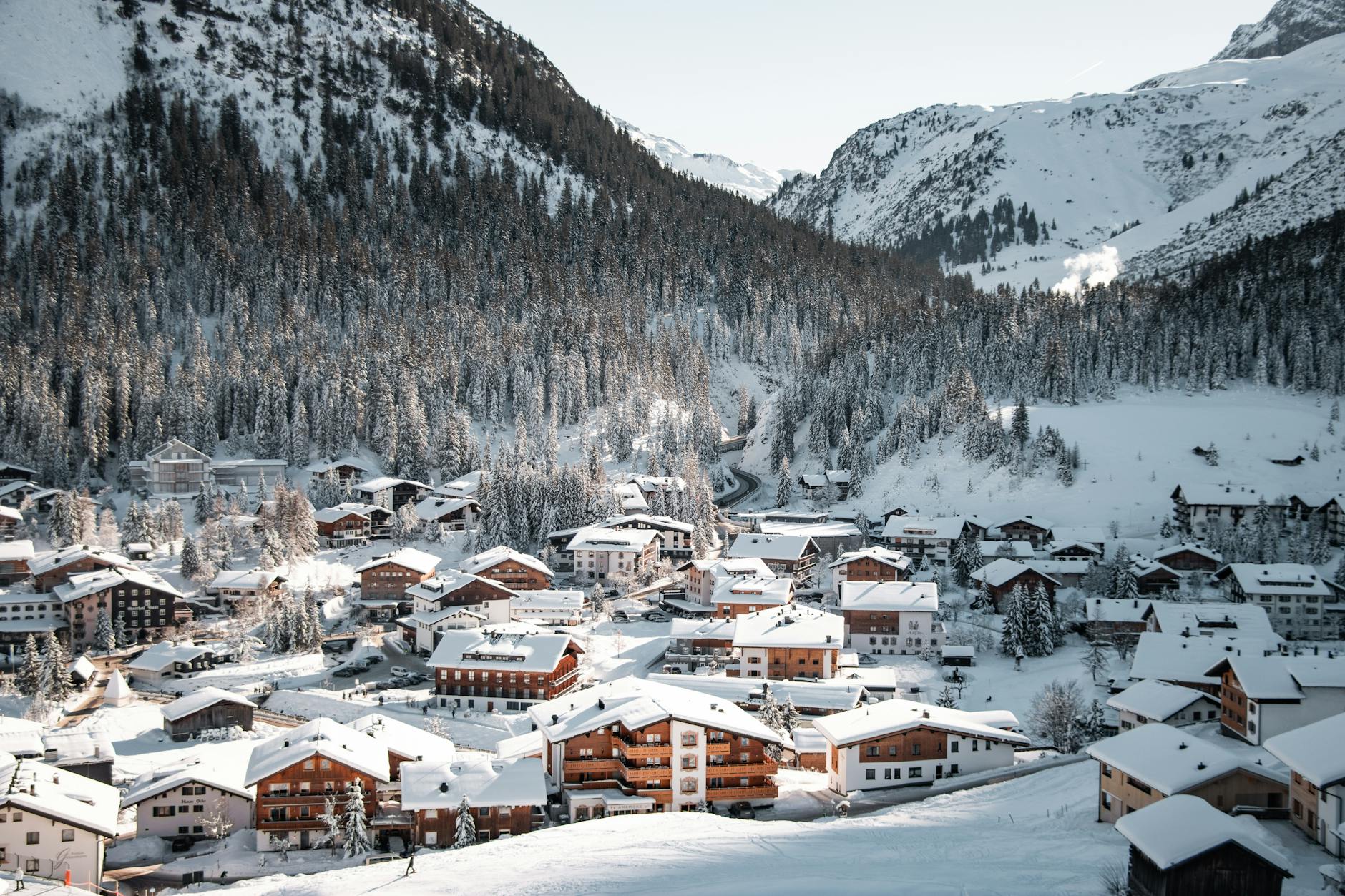
The appeal of these villages isn’t only about the carbon ledger. A snow-blanketed village square without roaring traffic sounds different. You hear the crunch of snow underfoot, the jingle of a horse-drawn sleigh, the quiet between two songs drifting from a café. It’s the kind of winter you imagine when you flip through vintage postcards – and it’s closer than you think.
Beyond the Crowds
If you want to escape the ski circus altogether, there’s a growing scene built on your own steam. Touring skis and snowshoe trekking have grown in popularity for years, and neither needs lifts or snowmaking. They are only truly nature-friendly, however, under strict conditions. Study the hazards thoroughly – avalanche risk in particular – and stick rigorously to signage and wildlife-rest zones. In protected areas and near wildlife habitats, winter sports have no place; disturbed animals burn vital energy reserves in the cold. And the classic rule still applies: take your rubbish home.
No winter holiday in the Alps leaves nature untouched. Yet the gulf between a weekend in the funpark with a drive of your own and a few quiet days in an auto-free mountain village reached by train is vast – ecologically and atmospherically. The good news after five years: the greener option is easier to book today than in 2020, and it rarely feels like compromise.
For more on mindful travel, see our guide Sustainable Travel: Tips and Tricks for Greener Journeys. If you prefer winter in style rather than on the slopes, browse our selection of Enchanting Mountain Hotels for Your Winter Getaway.
Good to Know
▸How much CO₂ does the train really save compared to a car?
According to datos del Ministerio Federal de Medio Ambiente alemán, long-distance trains emit around 31 grams of CO₂ per passenger-kilometre, while an average car produces about 140 grams. Per person, you’re looking at a fraction of the emissions-roughly two-thirds to three-quarters less, depending on occupancy and route.
▸Does it even make sense to cut back on skiing?
Hardly. Studies by ETH Zürich attribute only a small single-digit percentage of a ski holiday’s carbon footprint to the actual skiing. The biggest lever is the journey there, accounting for around three-quarters of emissions, followed by accommodation. If you want to make a real difference, take the train instead of skipping skiing altogether.
▸What is Alpine Pearls?
A network founded in 2006 comprising Alpine villages committed to gentle tourism: traffic-calmed town centres, eco-friendly services and a mobility guarantee without a car. Membership has evolved over the years; today, active destinations are mainly in Austria, Italy and Slovenia.
▸Are ski touring and snowshoe hiking really more sustainable?
In principle, yes-since they don’t rely on lifts or artificial snow. But they’re only truly nature-friendly if you stick to marked trails and wildlife-rest zones, avoid protected areas and take all your rubbish home. Startled wild animals waste precious energy in winter.