
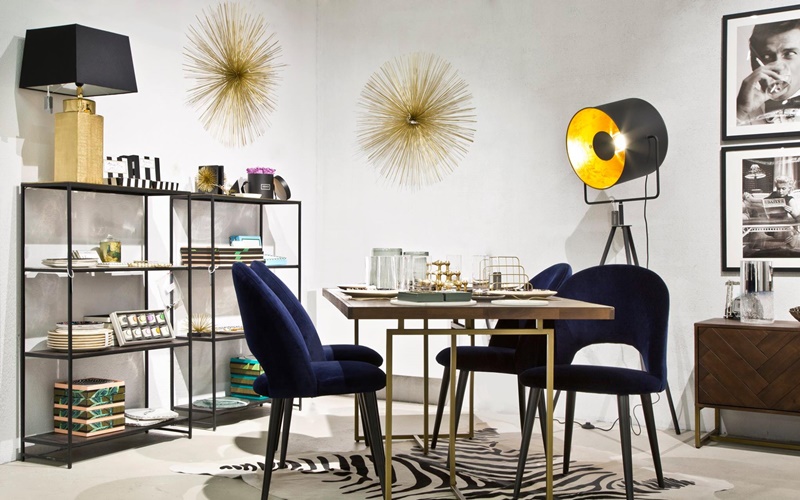
Interior-Shop Westwing opens pop-up store in Munich
On 16 September, Westwing opened a 500 m² pop-up store at its Munich headquarters-the brand’s first offline store worldwide.
In 2018 we reported on Westwing’s pop-up store in Munich. What remains? The simple insight that you can love furniture online, but only truly understand whether the material, dimensions and ambience fit once you see it in the space.
- Westwing opened a pop-up at its Munich headquarters on 16 September.
- The store was located at Brienner Straße 12 and was the brand’s first offline store worldwide.
- Over 500 square metres and two floors showcased home accessories and furniture.
- Large furniture items could be viewed but had to be ordered online.
- The store was initially planned until the end of December, open Monday to Saturday from 10 am to 8 pm.
Online interior shopping has its own allure. A marble coffee table can look convincing on screen in seconds. Scandinavian tableware almost always seems right. A wool throw blanket in a well-photographed living room almost always feels spot on. The old youDRESSED article about Westwing’s pop-up store in Munich zeroed in on exactly that: what happens when a strongly digital interior shop suddenly gets physical space?
On 16 September, Westwing opened a pop-up at its Munich headquarters-the brand’s first offline store worldwide, according to the alt text. The address: Brienner Straße 12. The footprint: 500 square metres across two floors. That’s large enough not just to display products, but to create moods. And that’s precisely what interior design is about. A cushion is rarely just a cushion. It’s colour, texture, light, its relationship to the sofa-and the question of whether you can live with it.
Why offline isn’t old-fashioned for interior design
The appeal of the store wasn’t that Westwing suddenly became a classic furniture house. On the contrary: the original article explained that while large pieces could be inspected on site, orders still had to be placed online. The pop-up wasn’t a break with the digital model, but an extension of it. See it, touch it, place it, then order. For interior design, that’s a very logical sequence.
With bigger items, space is everything. A sofa can look compact in a photo and suddenly dominate the room. A throw can look premium yet feel wrong. Dishes have weight, glass has resonance, wood has temperature. Online, these qualities can only be conveyed to a limited extent. A pop-up makes that gap visible-and closes it for a moment.
Furniture isn’t meant to be merely seen. It’s meant to exist in the room.
500 square metres as a curated showcase
The store was initially planned through the end of December. Opening hours were Monday to Saturday, 10 am to 8 pm. That sounds like a dry detail, yet it also reveals something about the experimental nature of the project. Westwing wanted to gauge how live presentation of the assortment resonated with customers. A pop-up is perfect for that: time-limited, attention-grabbing, and close enough to everyday life for genuine reactions to emerge.
Munich was the right address. Brienner Straße isn’t a random spot for furniture, accessories, and brand staging. It carries a certain calm that suits interior design better than pure retail pressure. Two floors also allowed Westwing to build living scenes instead of just stacking shelves. That’s where the difference between “I like it” and “I want it at home” takes shape.
What hindsight reveals today
The original piece brimmed with anticipation. It spoke of browsing, of live admiration, and of the hope that physical presence might endure if enough people showed up. Today, it reads as an early reminder that digital brands don’t have to remain disembodied. In the living sphere especially, stepping into a space isn’t a step backward-it’s a service.
Westwing stayed true to its model in the pop-up: inspiration on site, order online. For shoppers, that’s convenient because the store doesn’t pressure you to take items home immediately. You can see, compare, test materials, and decide later. That may be the real luxury of furniture shopping: no need to act instantly.
The archival value lies in that subtle shift. For a few months, an online shop became a place. And a place can do what no feed can: show how things converse with one another.
The store as antidote to impulse buying
The original article mentioned online sales-driven impulse buys almost in passing. That’s exactly where the pop-up becomes interesting. Online, you can buy quickly because an image looks good and a discount pushes the button. In real space, you slow down. You notice proportions, whether a colour truly feels warm, and whether a material only photographs well. A good store therefore doesn’t need to sell as much as it needs to enable better decisions-especially for things meant to last: sofa, table, lamp, rug. Once you’ve seen them in the room, you may buy less impulsively, but more consciously. For interior design, that’s no drawback.
Westwing’s pop-up was also a test in the original article: how would customers react to live presentation? That question remains smart today. Brands that thrive online don’t need to open flagship stores everywhere. Yet they benefit from moments when people can touch the brand. Trust sometimes grows from the heft in your hands.
It was equally smart for customers. Anyone who had already seen countless Westwing images online could use the pop-up to verify whether the curated world works beyond the screen. That’s the moment a brand matures: it must convince not only in photos, but under real light.
The old article thus endures as a small interior-design lesson: rooms aren’t built from single beautiful objects, but from the relationships between them. A store can reveal those relationships. A shopping cart can only assert them.
Quick Answers
▸Where was the Westwing pop-up store located?
The store was located at Brienner Straße 12 in Munich, at Westwing’s headquarters, according to the original article.
▸Could you buy furniture directly on-site?
Home accessories and furniture could be viewed in person. Large furniture items had to be ordered online after seeing them in the store.
▸How long was the pop-up planned to run?
The article initially mentioned a period through the end of December, with opening hours from Monday to Saturday, 10 a.m. to 8 p.m.
Images source: Westwing


