Design Objects · Silver
Silver cutlery: What the hallmarks reveal and how to care for it
Sterling or silver-plated, hallmarks, tarnish and the dishwasher: how silver cutlery keeps its shine, with guidance from manufacturers and restorers.

 Design Objects
Sterling or silver-plated, hallmarks, tarnish and the dishwasher: how silver cutlery keeps its shine, with guidance from manufacturers and restorers.
Silver cutlery often stays in a household for generations. Forks and spoons come out for festive meals, are given as gifts and passed down. To keep them shining, it helps to look closely at the material, hallmarks and care they need. Solid silver and silver-plated pieces look similar, but each calls for a different approach to cleaning. How you care for yours depends on whether it is solid or plated.
The following sections explain how to recognise sterling silver, what plating grades such as 150 g mean, what the marks reveal and how tarnish forms. You will also learn how to wash, dry and store your cutlery. The information comes from manufacturers including Robbe & Berking, Wilkens and Rosenthal, from Robert Welch and from the Canadian Conservation Institute.
Modern sterling silver is usually marked with the fineness number 925; historic British pieces often bear a symbol hallmark. The alloy is 92.5 per cent pure silver, while the remaining 7.5 per cent consists of other metals, usually copper. This composition identifies solid silver cutlery, which you can recognise by the stamped fineness in parts per thousand.
Silver-plated cutlery, by contrast, has only a layer of silver over a different base metal. At Robbe & Berking , the number 150 represents the amount of silver in grams applied to a defined reference quantity. The figure in grams therefore does not refer to an individual piece of cutlery. Higher plating grades mean more silver on the cutlery.
Wilkens offers silver-plated cutlery in various grades, including 90 g hard silver plating and 150 g. According to Wilkens, the Royal grade at 180 g is its highest. Plated pieces are stamped with the manufacturer’s name and the plating grade, so you can still read the grade years later.
A glance at the marks will usually tell you what kind of cutlery you own. Solid silver is identified by its fineness in parts per thousand. At Wilkens, for example, plated pieces bear the name and plating grade, while other manufacturers use different marks. This helps you care for the cutlery, because you then know how much silver is on each piece and how gently you need to remove tarnish.
The standard EN ISO 8442-2 is also technically relevant in Europe. It sets requirements for stainless steel and silver-plated cutlery. For plated versions, such as those with a base metal of nickel silver or stainless steel, it specifies three minimum values for the thickness of the silver layer.
In Germany, the Fineness Act sets out which details may appear on silverware. It dates from 1884 and has been in force since 1888. On silverware such as cutlery, a fineness mark is permitted only from 800 parts per thousand silver. A mark such as 925 is therefore clearly above this threshold. The stamp gives the fineness in parts per thousand and the company name.
Since the imperial regulation, German silverware has carried the imperial crown to the right of the crescent. Robbe & Berking explains the marks as follows: the crescent represents genuine silver content, while the crown indicates German origin. Read together, the two marks tell you about the material and its origin.
For pieces from Great Britain, the hallmarks explained by the Birmingham Assay Office offer guidance. The maker’s mark, fineness mark and assay office mark are compulsory there. The fineness mark may indicate a fineness of 925, for example. Together, the three marks tell you who made the piece, its fineness and which office tested it.
The lion known as the Lion passant is an optional additional mark on 925 silver. The date letter has also been optional since 1999. When looking at British cutlery, check the three compulsory marks first and read the optional marks for additional information.
The dark spots on forks and spoons have a chemical cause. The tarnish on silver consists mainly of black silver sulphide. It is caused by sulphur compounds in the air, such as hydrogen sulphide. When the metal comes into contact with these substances, its surface reacts and the layer becomes visible.
The cause lies in the air surrounding the cutlery. Wilkens calls the process tarnishing and also describes the pieces as oxidising.
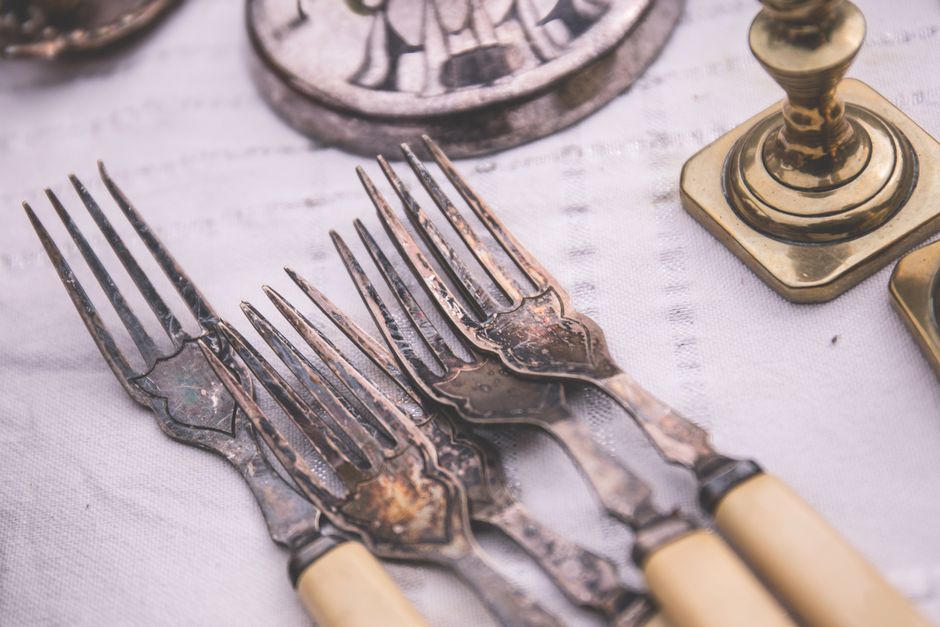
The dark layer can be polished off, but this comes at a cost to the material: every polish removes some silver. According to the Canadian Conservation Institute , any method of removing tarnish can cause severe damage to silver-plated pieces. The plating is only a thin layer over the base metal.
The tarnish on silver consists mainly of black silver sulphide.
According to Robbe & Berking and Wilkens, silver and silver-plated cutlery is dishwasher-safe. The amount of detergent is key to a good result.
Robbe & Berking advises using only one third to a maximum of half the recommended amount of detergent. The reason lies in its composition: dishwasher tablets contain a relatively high proportion of oxygen, which encourages discolouration. Silver cutlery therefore needs less detergent. When the cycle has finished, open the door to let the steam escape.
Not all cutlery belongs in the dishwasher. According to Robbe & Berking, cutlery with parts made of horn, mother-of-pearl or wood is not dishwasher-safe. Wash these pieces by hand. First rinse off any food residue rich in protein or acid. You should avoid contact with egg, citrus fruits and vinegar.
Rosenthal advises against washing stainless steel and silver cutlery in the same cutlery basket because of the risk of contact corrosion. According to Rosenthal, hand washing is better at preserving shine and patina over the long term.
Robert Welch recommends hand washing silver-plated cutlery. Do not soak the pieces; dry them thoroughly straight away, ideally with a microfibre cloth. Use silver dip only briefly and rinse the pieces thoroughly afterwards.
The Canadian Conservation Institute recommends restraint when removing tarnish. Use silver polish sparingly and choose mild products. According to the institute, polishes intended for all kinds of metals are unsuitable for silver cutlery. Polishing only when tarnish appears helps protect the material.
For storage, the Canadian Conservation Institute advises placing silver pieces individually in sealed polyethylene bags or wrapping them in acid-free tissue paper. This reduces their contact with air. According to the institute, anti-tarnish cloths containing silver particles are particularly effective. When handling cutlery, wear clean cotton gloves, as salts and oils from your skin leave marks.
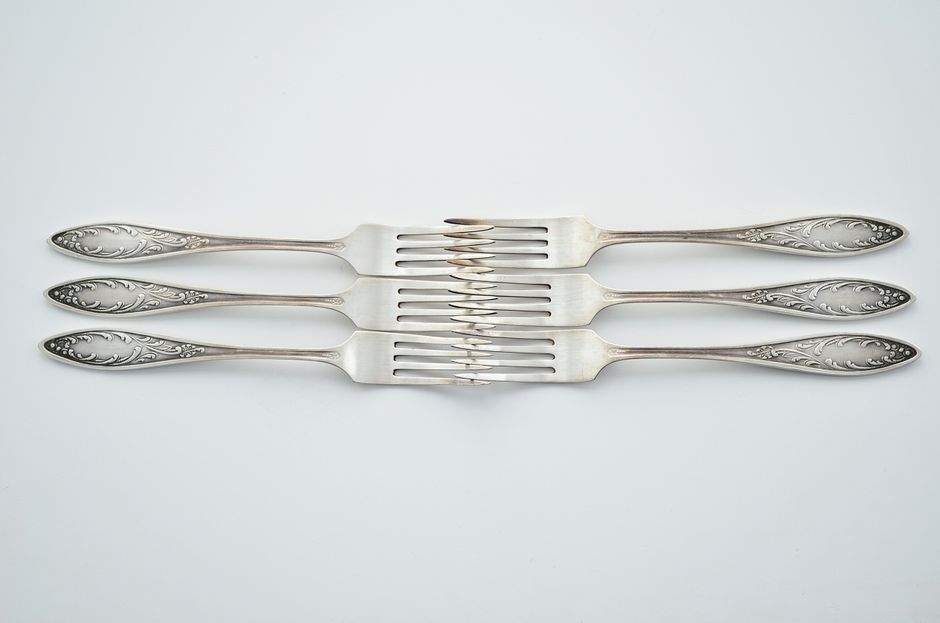
The manufacturers emphasise that daily use is the best protection against tarnish. Wilkens explains that regular use prevents cutlery from oxidising. For pieces used less often, Robbe & Berking recommends cutlery bags or covers. Wilkens suggests storage pouches.
Everyday use and careful storage go hand in hand: use your cutlery often, wash it gently, dry it straight away and store each piece individually protected. Before your next festive meal, the marks will tell you what material you are holding. If you are unsure, the manufacturer’s guidance for your model offers further details. This helps your cutlery retain its shine for years to come.
The manufacturers disagree. Robbe & Berking and Wilkens say their silver and silver-plated cutlery is dishwasher-safe; Robbe & Berking advises using one third to a maximum of half the usual amount of detergent. Rosenthal and Robert Welch recommend hand washing. According to Robbe & Berking, cutlery with horn, mother-of-pearl or wood is not dishwasher-safe.
Look at the stamp. In Germany, a fineness mark is permitted on silver cutlery only from 800 parts per thousand. Modern sterling silver usually bears the number 925, while historic British pieces often bear a symbol hallmark instead. According to Robbe & Berking, the crescent and crown represent genuine silver content and German origin; silver-plated pieces from Wilkens bear the name and plating grade.
According to the Canadian Conservation Institute, the dark layer consists mainly of silver sulphide, formed by sulphur compounds such as hydrogen sulphide in the air. Robbe & Berking advises keeping egg, citrus fruits and vinegar away from your cutlery.
More pieces that bring order to a room rather than fill it.