Anna Wintour designs for Nike
Fashion icon and editor-in-chief of US Vogue, Anna Wintour, has never exactly been known as a sneaker enthusiast.
In 2018 we reported on Anna Wintour’s collaboration with Nike. What came of it? More than just a sneaker release-it was a sign that streetwear and fashion houses could no longer be considered separate worlds.
- Anna Wintour designed two models for the Air Jordan line.
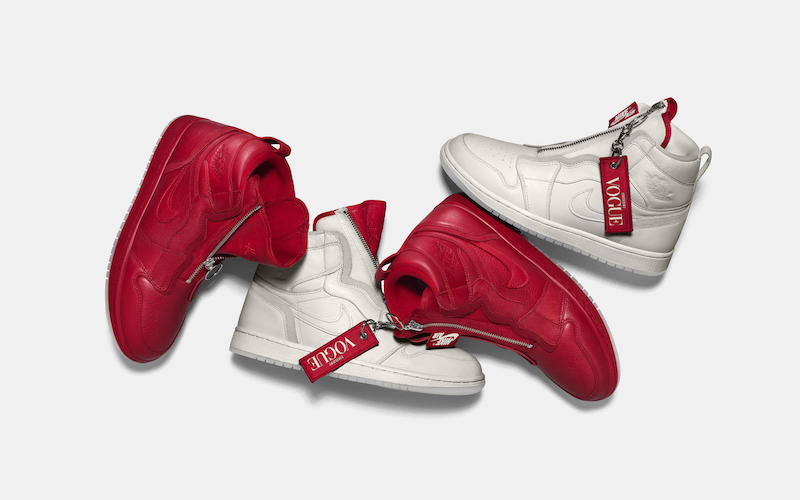
- The AJI ZIP AWOK debuted as the Air Jordan 1 Retro with soft leather and a zipper.
- The AJIII SE AWOK reimagined the Air Jordan 3 SE with tweed details.
- AWOK stands for “Anna Wintour Okay,” her signature approval mark from the pages of Vogue.
- The feature highlights how sneakers had firmly entered the luxury lexicon by 2018.
Anna Wintour isn’t a figure you’d typically associate with sneaker culture. That’s exactly why the Nike collaboration felt so intriguing at the time. It wasn’t just another drop-it was a handshake between two worlds: on one side, the editor-in-chief of US Vogue; on the other, Air Jordan, sport culture, and streetwear. The original youDRESSED article framed that moment as a surprise. Looking back, it’s even clearer: in 2018, sneakers weren’t just casual footwear-they were currency.
The piece positioned the collaboration within a fashion landscape where sneakers were elbowing handbags out of the spotlight. Luxury brands like Gucci and Balenciaga were already borrowing from streetwear codes, runways were getting more relaxed, and younger audiences rejected rigid divides between couture and everyday life. In that environment, Wintour suddenly fit right in with Nike-not because her style had turned street, but because she understood a shoe could be a statement.
AWOK on leather instead of Vogue pages
The first model, the AJI ZIP AWOK, was a Wintour version of the Air Jordan 1 Retro. Soft leather, a zipper, and a Nike Air pendant with “Edited by Vogue” made the shoe anything but subtle-but precise. What mattered was the AWOK acronym. It stands for “Anna Wintour Okay,” referencing her personal stamp of approval that greenlit Vogue pages. On a sneaker, it becomes a fashion statement: the shoe isn’t just worn; it’s curated.
The AJI ZIP AWOK launched in red and white on July 21 in North America, according to alt text. Even the color choice fits the logic of the collaboration. Red as signal, white as clean canvas. No over-designed aesthetic, just a symbol meant to be understood. Whoever wore the shoe wasn’t just wearing Nike; they were wearing a slice of Vogue authority.
This collaboration worked because it didn’t try to make Anna Wintour younger. It made the sneaker official.
Tweed, tennis and the question of stance
The second shoe, the AJIII SE AWOK, drew on the Air Jordan 3 SE model. Tweed details stood out, along with the AWOK seal. The original piece also mentioned Wintour’s sporting connection: tennis is one of the few arenas where her fashion persona and sneaker logic naturally align. That’s important, because otherwise the collaboration could have read like pure marketing. Instead, it gained a personal thread.
Scheduled for release on September 7 in black and red, no pricing or potential German launch details were available at the time. That very gap belongs to the archival character. We know from the original text what was announced, but we’re not inventing a new update. The value of the retrospective lies in reading the moment: fashion kept opening up, and sneakers became objects you could discuss in the same language as bags, coats, or couture.
Why the article still works today
The collaboration is a good example of how fashion signals migrate. An Air Jordan emerges from sport, pop culture, and the street. Anna Wintour arrives from editorial power, front row seats, and the strict economy of taste. Together they created a product that didn’t blur both sides but highlighted them. That was the appeal.
The original piece drew partly on FashionUnited and stayed close to the facts. Today it reads like a small document of a transition. Streetwear no longer had to ask permission to enter the fashion world. It was already in the room, and Anna Wintour stamped her acronym underneath.
What the collaboration says about fashion authority
Fashion authority rarely arises from novelty alone. It comes from context. In this Nike collaboration, Anna Wintour contributed precisely that: not youth, not the street, not sportiness in the narrow sense, but judgment. The AWOK acronym was therefore more than a nice touch. It turned the sneaker into an object sanctioned by the editorial world.
That’s where the real tension lay. In 2018, sneakers didn’t need permission to be worn. They were already everywhere. But the link with Vogue and Wintour shifted the reading. An Air Jordan could suddenly be not just comfortable, rare, or desirable, but editorially framed. That’s a subtle difference-and pretty important for fashion.
The retrospective also shows how well a collaboration works when both sides remain visible. Nike stays Nike. Wintour stays Wintour. No smooth middle ground emerges, just a product with friction. It’s that friction that makes archival pieces more valuable than plain release announcements.
You can therefore read this piece as a style archive. It says less about a single pair of shoes than about a moment when fashion was reordering its hierarchies. Whoever took sneakers seriously back then wasn’t automatically cool. Whoever ignored them no longer quite grasped where clothing was headed. The Wintour collaboration sat exactly between those poles.
When you place that kind of luxury, size isn’t the only measure. What counts is whether space, calm, and material truly come together.
Quick Answers
▸Which shoes were part of the collaboration?
The AJ1 ZIP AWOK as Air Jordan 1 Retro and the AJ3 SE AWOK as the winter edition of the Air Jordan 3 SE were mentioned.
▸What does AWOK mean?
AWOK stands for “Anna Wintour Okay.” In the original post it was described as her approval mark, which she also used on Vogue pages.
▸Why was the collaboration exciting?
Because it showed how effortlessly sneakers in 2018 had entered the vocabulary of luxury fashion, editorial culture, and streetwear.