Analysis · Certificates
Heated or untreated: Reading a gemstone report
Gemstone treatment and certificates: what laboratories report on heat, filling and diffusion and what the status means for price and care.

 Watches & Jewellery
Gemstone treatment and certificates: what laboratories report on heat, filling and diffusion and what the status means for price and care.
Treatment often helps determine the price, stability and resale value of coloured gemstones and some diamonds. Here you can understand common procedures, laboratory disclosures and typical gaps in certificates, giving you a sound basis for buying beyond colour and origin.
Heat treatment is common practice for many coloured gemstones. It can improve colour and transparency and is widespread in sapphires and rubies. Whether and how much a stone has been heated can often only be established through laboratory methods. The documented disclosure therefore matters most to the trade.
Fillings target cracks, cavities or pores. Oils and resins are used in emeralds; impregnation is common in some coral and turquoise. Treatment can limit everyday durability because fillers react to heat, solvents or ultrasound. A stone that appears clear can be more delicate than an untreated stone with visible inclusions.
Diffusion introduces colouring elements from outside into layers close to the surface. This matters for some sapphires because the colour does not extend throughout the crystal. Recutting, repolishing or heavy wear can change its appearance. Disclosure of diffusion therefore helps determine value and suitability for particular settings.
Other methods depend on the stone. Irradiation followed by heat can affect the colour of some diamonds and coloured stones. High-pressure high-temperature treatment (HPHT) has a distinct role in diamonds. Whether a method is considered common, rare or strongly value-reducing depends on the stone, market and laboratory standard; colour alone cannot determine this.
Respected gemmological laboratories examine indications of origin, authenticity and treatment using their own methods and report formats. Certificate wording follows laboratory guidelines and what an examination can establish within reasonable limits of effort and uncertainty. The Laboratory Manual Harmonisation Committee (LMHC), whose members include GIA, SSEF, Gübelin Gem Lab and the Central Gem Laboratory (CGL), has standardised “no indications of heating” and “indications of heating” for corundum. GRS GemResearch Swisslab grades heat and residues from H to H(d) and beryllium diffusion as H(Be); for emeralds it grades clarity enhancement from “none” through “minor” and “moderate” to “prominent”.
Trade and industry rules require sellers to disclose treatments known or detectable to them. The CIBJO Gemstone Blue Book and CIBJO guide “The Do’s and Don’ts” call for verbal disclosure of common procedures such as heat or colourless oiling before or at sale; commercial documents should name the treatment. Diffusion, colour-producing fillings, irradiation and comparable procedures additionally require conspicuous written disclosure. These frameworks do not replace an individual laboratory certificate.
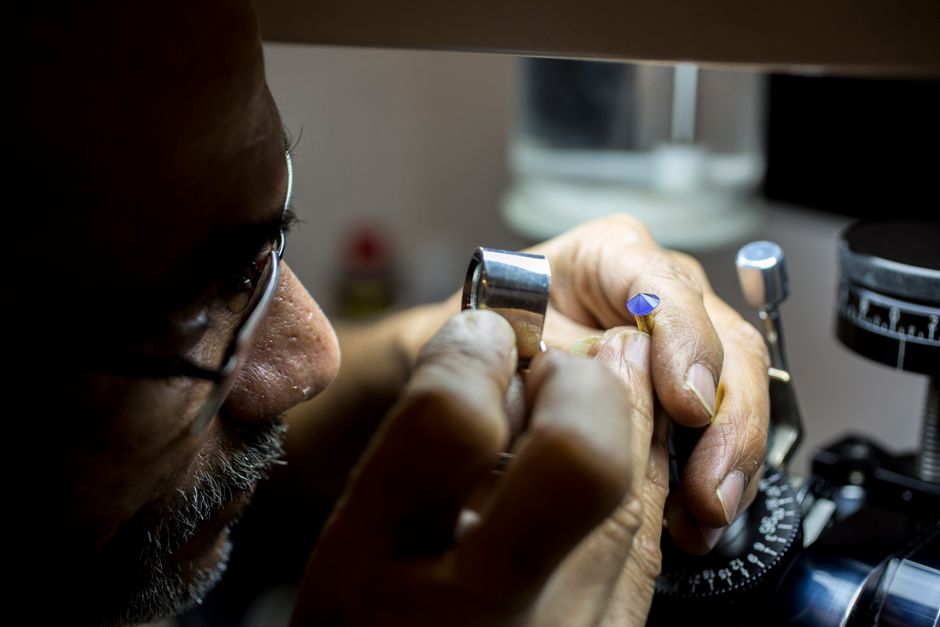
An absent treatment line does not always mean “untreated”. Some reports list only detected procedures; others explicitly state “no indications of treatment” or use comparable wording. The distinction matters for price and for comparing stones. Reading only colour and carat weight can mean missing the document’s most consequential line for value.
Laboratories assess what can be detected in the stone or inferred from available evidence. Surface diffusion, very fine fillings and old, weathered oiling vary in detectability. LMHC deliberately uses “indications of” to describe evidence rather than an absolute guarantee covering the stone’s entire life. Gübelin Gem Lab expressly notes that clarity enhancement in emeralds through oil or resin is reversible and repeatable: a report records the condition at examination, and a stone described as having “no clarity enhancement” can later be refilled. Gübelin therefore accompanies such reports with an information sheet on the time limit of the statement.
Diamond certificates often separate grading of weight, colour, clarity and cut from treatment and origin. GIA says every GIA Diamond Grading Report lists known treatments. GIA issues reports for stable procedures such as irradiation, annealing, laser drilling and HPHT and laser-inscribes colour-treated stones; it does not grade unstable treatments such as fracture filling or coating. A conventional diamond certificate without an explicit treatment assessment leaves you a reason to ask specifically about HPHT, irradiation and filling.
A richly coloured stone with no traceable treatment status leaves price, care and resale open to uncertainty.
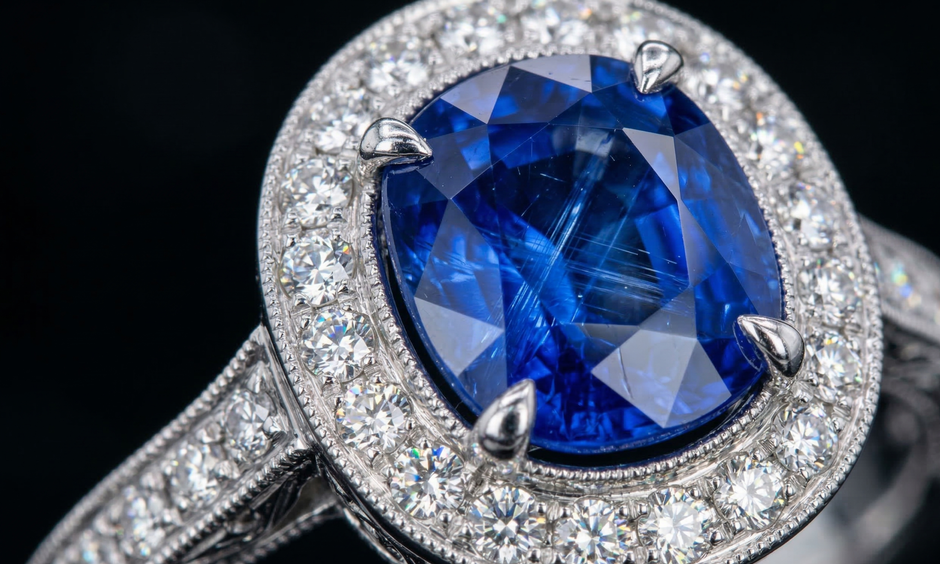
Untreated stones of comparable colour and clarity often command premiums over treated stones of the same variety in trade and at auction. The range depends on rarity, stated origin, size and quality of evidence and cannot be reduced to one percentage. Munich specialist Ceylons gives approximate trade ranges for Ceylon sapphires of medium to vivid blue and eye-clean quality: wholesale at around 1 carat is roughly 400–1,500 euros per carat for heat-treated stones and 800–4,000 euros for untreated stones; at around 2 carats, 800–3,000 euros heated and 2,000–8,000 euros unheated. The Natural Sapphire Company places heat-treated Cornflower Blue and untreated Royal Blue stones over 2 carats in separate price bands, with a considerably higher range for untreated stones.
Auction results support the premium for documented unheated stones. In 2024 Sotheby’s reported a Ceylon sapphire ring with a 23.65-carat oval and SSEF report (“Ceylon origin, no indications of heating”) at 685,800 CHF; that year a Cartier ring with a 19.78-carat Ceylon sapphire and comparable SSEF finding achieved 305,000 CHF. Such results also reflect size, colour, brand and estimate. Treatment status remains a factor in value.
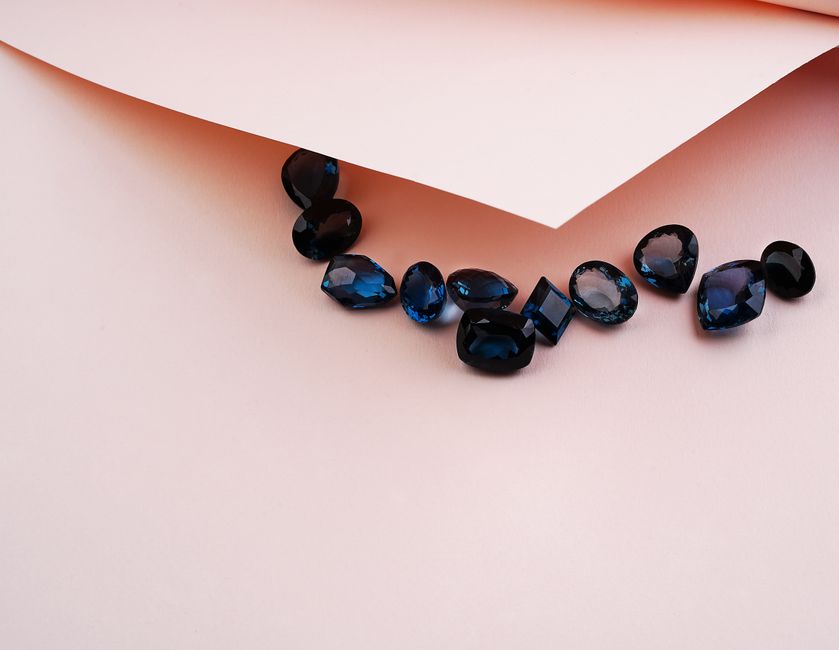
The emerald market is often accustomed to light to moderate oiling; heavily filled or resin-stabilised stones carry different prices and care expectations. For sapphires, the market distinguishes more clearly between heat alone, diffusion colour and untreated stones.
Treatment does not automatically make a stone worthless. A well-documented heat-treated sapphire can be a sensible choice if colour, budget and intended use suit you. The price difference mainly reflects rarity and demand for natural colour without intervention. If you pay for “untreated”, the evidence should appear in the certificate and purchase contract. A seller’s account alone cannot support that premium.
Resale and insurance depend on documented status. Missing treatment information or a contradiction in later laboratory checks can lead to disputes over value and reversal of the sale. Treatment status therefore belongs in the valuation.
Which treatments are known or laboratory-confirmed for this particular stone? The answer should be specific to the stone and address more than general statements about colour. Ask to see the current laboratory certificate, including the exact treatment comment.
Has the stone been repolished, reset or treated again since certification? Any later intervention can weaken the link to the document. For older pieces, ask whether an updated report or renewed examination is advisable. GRS expressly recommends rechecking stones at purchase and change of ownership, partly because recutting, further treatment or improved detection methods can make a report outdated.
How is treatment described in the purchase contract and invoice? Verbal assurances need written support. For expensive stones, treatment status belongs in the contract documentation alongside the laboratory report.
Which laboratory and report type are involved? Documents differ in the parameters and depth of their examination. For coloured stones, GIA distinguishes between the Colored Stone Identification Report, covering identification and detectable treatments, and the Colored Stone Identification & Origin Report, which adds geographical origin for selected varieties. An appraiser can explain whether an identification report suits the intended use as an everyday ring, brooch stone or collection piece, or whether origin and extended treatment analysis would be useful.
Fillings and impregnations often cannot withstand aggressive cleaning. Ultrasonic baths, steam and some solvents can wash out or cloud oils and resins. Tell your jeweller the treatment status before any professional cleaning.
Heat-treated stones without filling are often easier to live with, though they remain vulnerable to hard knocks and unsuitable neighbours in a jewellery box. Diffusion colours and surface treatments call for care with recutting and heavy abrasion. The jeweller should consider the setting and the wear involved, whether in a ring or pendant.
Keep care instructions and certificate together. Anyone later selling, inheriting or remodelling the stone needs the same information you had at purchase. Unclear treatment then becomes a risk to value. Style alone gives an incomplete picture.
Documentation follows the purchase decision. A richly coloured stone with no traceable treatment status leaves price, care and resale open to uncertainty. Reliable certificates and written disclosures help you assess the emotional purchase on a sound basis.
Diamond grading and treatment are often handled separately. GIA lists known treatments in every Diamond Grading Report and laser-inscribes colour-treated stones; it does not grade unstable procedures such as fracture filling or coating. To establish status, check the exact treatment comment and ask specifically about HPHT, irradiation and filling.
According to Gübelin Gem Lab, clarity enhancement through oil or resin is reversible and repeatable. The report records condition at examination; a stone filled again later will differ from the document. Gübelin therefore provides an information sheet on the time limit. Re-examination is advisable after a change of ownership or further work.
Ultrasonic baths, steam and some solvents can wash out or cloud oils and resins. Fillers in emeralds and impregnations in coral and turquoise react to heat and aggressive substances. Tell your jeweller the treatment status before professional cleaning. Care instructions and the certificate provide a reliable basis for everyday care and later remodelling.
More pieces with technical skill and restraint.