Guide · Fit
Made-to-measure shirts: Where ready-to-wear ends
A guide to men’s made-to-measure shirts, from collar, shoulders and cuffs to fittings, fabric choice and prices.

 Wardrobe
A guide to men’s made-to-measure shirts, from collar, shoulders and cuffs to fittings, fabric choice and prices.
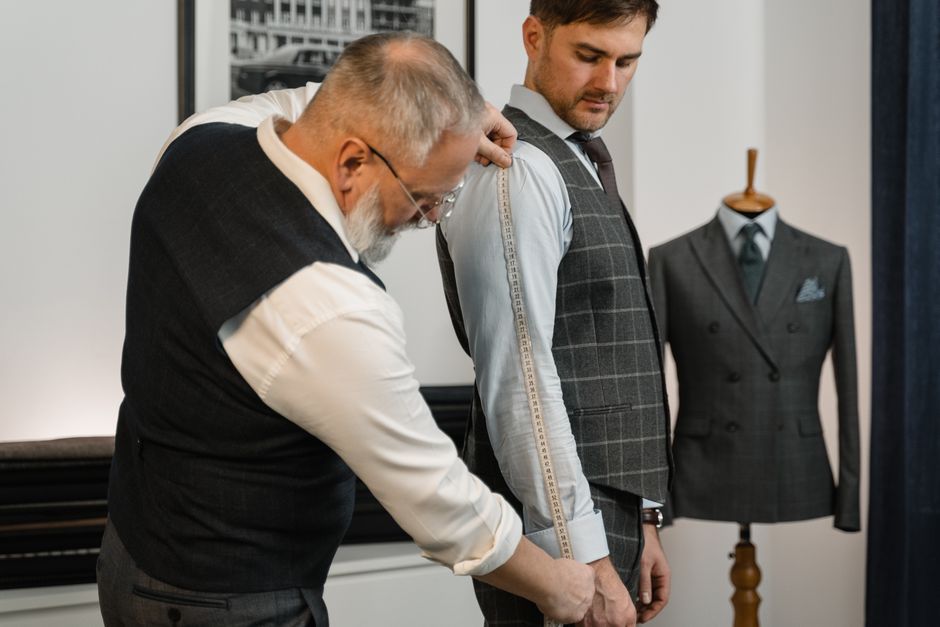
Off-the-peg shirts follow standard measurements and an average that few bodies consistently match. An unusual build, short arms or exacting collar requirements can reveal the limits of ready-to-wear within hours. A made-to-measure shirt addresses the fit points a tailor can measure, record and translate into fabric.
Ready-made shirts use neck size and sleeve length, filling in the rest with standard proportions. Chest, waist, hips and back length often differ from those assumptions. A shirt that fits the chest may have excess fabric or pull at the waist. A narrow waist can come with tightness at the shoulder or upper arm.
Standard sizing often misses the relationship between front and back. A pronounced chest, rounded back or forward shoulders change the fabric needed on each side. Ready-to-wear distributes fabric evenly, creating folds below the collar or pulling at the front button. A tailor records these asymmetries as separate measurements and adjusts the pattern pieces individually.
Everyday arm movement also affects fit. If you spend long periods at a desk or driving, you need more freedom at the elbow and often a different cuff position from someone who stands all day. Standard sizing cannot account for these routines. A made-to-measure shirt is cut for your body and typical wear.
The collar shapes the first impression and all-day comfort. Too tight, it presses and shifts the tie knot. Too loose, it stands away and makes the shirt look unfinished. Neck measurement in centimetres, neckline shape, collar stand height and contact at the back of the neck all matter.
Established shirtmakers and made-to-measure providers set clear checks. The SOBS fit guide calls for 1.5 to 2 centimetres of ease at the neck, about two fingers, and a check with a tie fastened without pressure. Two fingers should fit between neck and closed collar, the collar should lie against the nape and the points should sit cleanly. Le Chemiseur describes the same two-finger rule and warns of pressure marks and gaping sides. At Stephan Görner Maßkonfektion in Frankfurt, the collar loosely encircles the neck with one finger of ease. The collar stand and collar shape, including Kent, cutaway and button-down, influence the fit at the nape and the appearance of the tie knot.
The shoulders give a shirt its structure. If the sleeve seam sits too far out, the shirt slips and fabric hangs. Too close to the neck, the sleeve head pulls and restricts movement. Ready-to-wear often changes in broad increments. A good fit depends on shoulder width matching bone and muscle and on the shape of the sleeve head. Tailorjack measures shoulder width in a gentle curve between the outer edges of the shoulder bones. SOBS and Le Chemiseur say the seam should end exactly at the shoulder edge or the bone at its tip, with a smooth yoke.
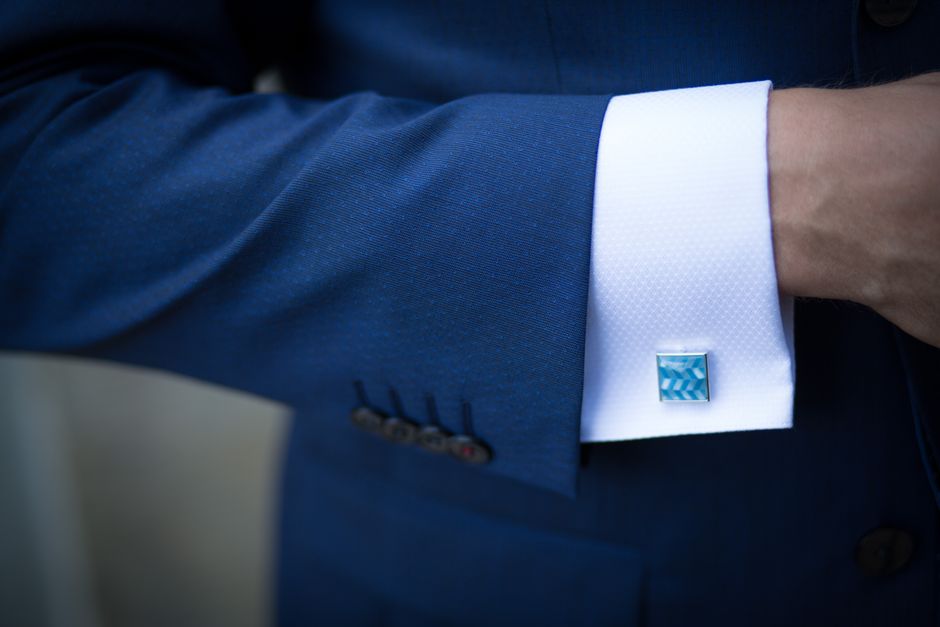
The cuff determines how neatly the shirt sits under a jacket. Sleeves that are too short hide the cuff; sleeves that are too long push fabric into the hand and bunch the cuff. SOBS recommends 0.5 to 1 centimetre of visible cuff beneath the jacket and about one finger of ease inside. Le Chemiseur places the sleeve end about two centimetres above the base of the thumb with the arm hanging and lets about one centimetre of cuff show beneath the blazer. Görner suggests the sleeve should be about one finger-width longer than the jacket sleeve. Cuff width and button position matter too. A flat wrist needs a different fit from a broad one; watch wearers often need more room on that side, with Le Chemiseur typically allowing an extra centimetre. Made-to-measure work permits millimetre adjustments beyond standard size increments.
An elaborate cuff calls for the correct sleeve length.
Fabric determines drape, creasing and feel. Pure cotton and selected blends with a small amount of elastane are particularly suitable for everyday wear when freedom of movement matters.
Major shirtmakers and made-to-measure providers broadly agree on classic weaves. Seidensticker describes poplin as dense, robust and easy to care for in business shirts. Twill, with its diagonal weave, often has more opacity than poplin and suits a shirt worn without a jacket. Seidensticker describes Oxford as soft and robust, with a strongly textured appearance from coloured and white threads. Charles Tyrwhitt categorises poplin as light and cool, twill as medium-weight and more crease-resistant and Oxford as a dense, robust basket weave. Cove describes poplin as releasing body heat, twill as slightly lustrous and less prone to creasing and Oxford as softer and less formal, suitable for an Oxford-cloth button-down.
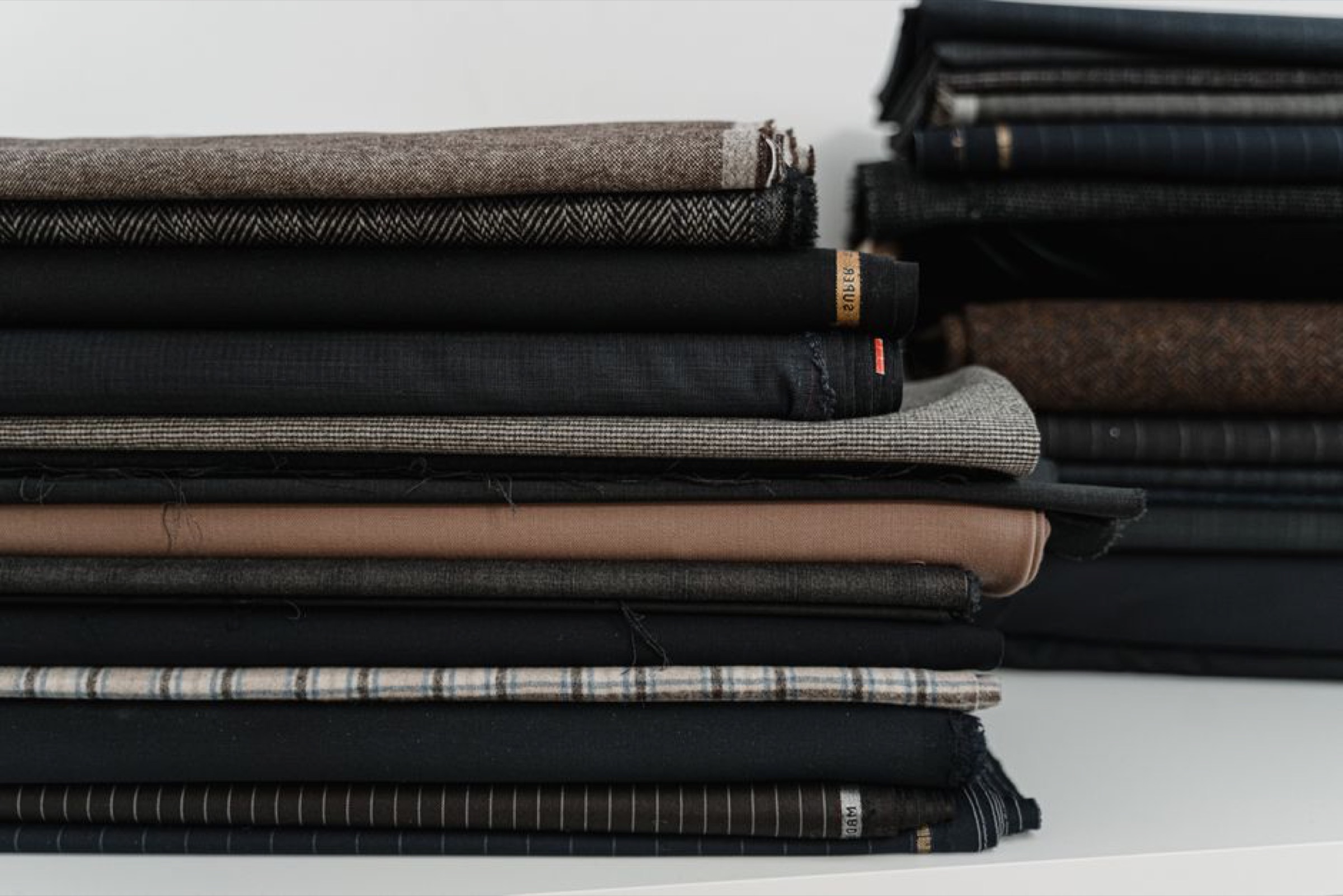
Yarn count indicates how finely yarn is spun. The English Ne system dominates cotton: the higher the number, the finer the yarn. Swiss shirting weaver ALUMO lists typical plied yarns for made-to-measure shirts from about Ne 80/2 to Ne 240/2; Superior uses Ne 100/2, Supraluxe and Twill Soprano use Ne 120/2 and finer qualities such as Soyella use Ne 170/2. The Alumo shop documents an organic poplin in Ne 100/2 weighing about 92 grams per square metre. Finer yarns often yield smoother, denser cloth and need more delicate handling and care. For frequent washing and ironing, assess the actual fabric against your wearing and care habits. Oxford and lightly textured weaves are more forgiving and suit shirts worn without a jacket.
Colour and pattern are a matter of taste. For fit, weave density, weight and elasticity are practical criteria. If you travel often, consider how the cloth responds to being folded in a suitcase and whether the atelier provides first-wash instructions. Cove notes that new shirts typically shrink by about 0.25 to 0.5 centimetres at the collar and sleeve length after one or two washes and that the atelier allows for this. A good made-to-measure shirt brings cut, fabric and use together.
The first fitting is a chance to measure and assess. The tailor checks collar, shoulders, chest and cuffs and marks where fabric should be removed or added. Use the positions in which you will wear the shirt: standing upright, sitting and wearing a jacket if applicable. This reveals whether sleeve length and shoulders work under the outer garment.
Many ateliers deliberately use two stages. For a first order, Cove generally makes a test shirt first, allowing about four weeks; the rest follows in a similar period. Hübscher Hemden in Switzerland sends a sample shirt about two weeks after measurement and alters the pattern before final production. Cove adds seam allowance to tailored pieces for later adjustments and generally corrects fit issues reported within four weeks of production on site, often within a week.
Some issues are difficult to correct after completion. The shoulder seam, collar attachment and sleeve head width govern the sleeve shape and neck fit. Altering them afterwards quickly reaches construction limits: the named houses emphasise test shirts, fittings and planned seam allowance but give no fixed alteration limits in centimetres. Hem, side seams and cuff width are often more flexible if enough seam allowance was planned. Fischer Maßkonfektion in Cologne deliberately sets no fixed fitting allowance and adjusts until the fit is right.
Between fitting and completion, understand the marks and speak up if something feels unnatural. A good atelier records measurements and corrections. Hübscher explicitly keeps measurements and patterns for repeat orders. This makes subsequent shirts easier and prevents the same fit errors recurring. For several shirts, a correctly fitted and documented first one saves time and money.
The price of a made-to-measure shirt covers measuring, pattern, fabric and labour. A first order generally includes full measurements, pattern development and the initial fitting process. Repeat shirts on the same pattern in comparable fabric often cost less because that one-off work is complete, though most ateliers do not list the difference separately in public.
Published entry prices across Germany, Austria and Switzerland show a clear range. Cove lists made-to-measure shirts from 98 euros in its Traditional line and from 198 euros in Handmade; its FAQ puts branded fabrics such as Thomas Mason or Canclini at about 130 to 150 euros and up. Maßnahme grades shirts by fabric class from 99 euros for Bronze through 149 and 199 euros to 239 euros for Platinum and from 299 euros for Diamond. Fischer Maßkonfektion in Cologne lists shirts from 129 euros in Silver-Line and 189 euros in Gold-Line. Stephan Görner in Frankfurt lists shirts from 159 euros. Rebmann Fashion places Thomas Mason fabrics through Fabric Butler in classes of 159 to 179 euros, from 189 euros, from 229 euros and from 299 euros per shirt. The houses generally retain measurements and patterns, though comparable prices for second and third shirts on the same pattern are rarely transparent online.
Your tailor should state four figures clearly: the first shirt including measurement and fitting, a repeat shirt on the same pattern, the fabric component or price classes and the extent of free corrections after completion. Without this breakdown, comparisons between ateliers lack a sound basis. A final price alone leaves quality and scope unclear.
Taste and fit are separate considerations. More expensive fabric does not automatically improve shoulder fit. An elaborate cuff calls for the correct sleeve length. Enjoy the fabric and details once collar, shoulders and cuffs fit; then finer cloth and a further order can be considered.
Addressing these points beyond standard sizing brings comfort and a traceable shirt fit that can be recorded and repeated. A made-to-measure shirt adapts ready-to-wear to your own body.
If the collar, shoulders or cuffs consistently press, gape or slip in daily wear, made-to-measure can help. This applies particularly to unusual builds, a pronounced chest or different front and back lengths. If you sit or drive often, a sleeve cut for your movements can help. Clothing size then remains a broad starting point.
The hem, side seams and cuff width can usually be adjusted if enough seam allowance was planned. The shoulder seam, collar attachment and sleeve head width affect the whole construction and are best corrected before final production. Cove and Hübscher therefore use test shirts and targeted fittings before the series begins. Speak up early to preserve room for adjustments.
The first order includes measurement, pattern development and fittings. Once the pattern exists, that one-off work is complete and comparable repeat shirts often cost less. Most ateliers rarely list the difference separately in public. First price, repeat price, fabric class and scope of corrections let you compare the real cost.
Fabrics with character, understated cuts and a lasting feel. Stay in //Style.