

Viennese Weave: Why Thonet Never Went Out of Style
Six wooden parts, ten screws, a century of coffeehouse history. How bent beechwood became the quiet counter-design to disposable furniture, and why the workshop still feels anything but museum-like.
Some pieces of furniture need no introduction. A bentwood chair with Viennese weave introduces itself the moment you sit down. The weave gives slightly, the curved wood flexes just enough. Somewhere between seat and backrest, a question arises: why do new chairs often feel heavier yet less sturdy than this 165-year-old design?
- The café-classic bentwood chair was designed around 1859 for Vienna’s coffeehouse culture and consists of only six wooden parts and ten screws
- Viennese weave refers to the hand-woven rattan seat that shapes both the look and feel of the chair
- The Hessian-based workshop still produces classic and contemporary bentwood models in-house
The flat-pack concept before flat-pack
Long before furniture retailers turned the idea into a mass-market phenomenon, a nineteenth-century bentwood chair had already solved the challenge every flat-pack company grapples with today: how to ship a seat efficiently across long distances. Made of just six wooden parts and ten screws, the chair could be disassembled and packed flat, an early flat-pack concept created for Vienna’s coffeehouse culture circa 1859.
This reduction to six parts is no cost-cutting measure; it is an engineering feat. Each component must perform multiple roles, support, flex, connect, without compromising the silhouette. It is this discipline that later imitations rarely match, even when they look similar.
How beech becomes a curve
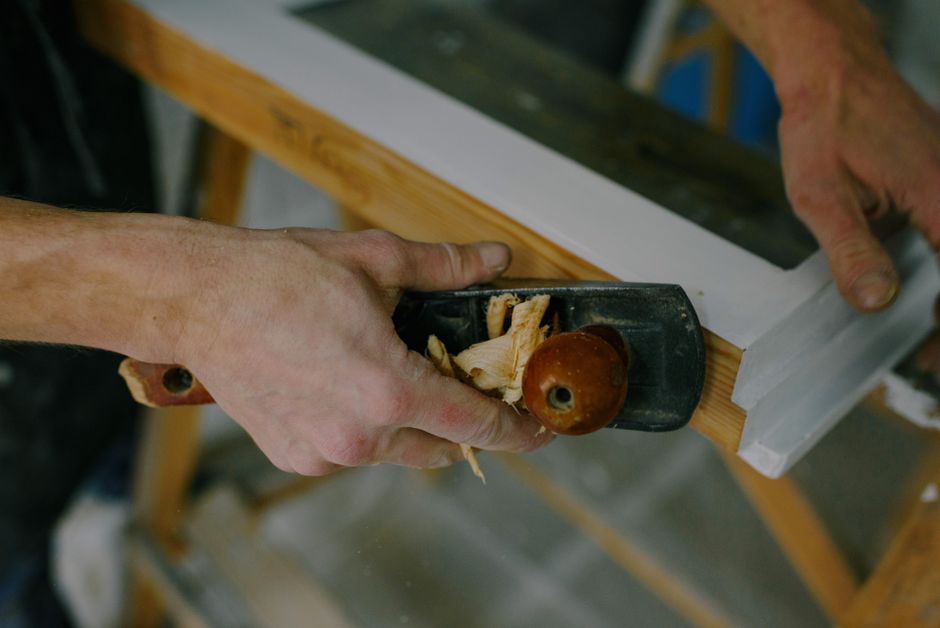
The bentwood process relies on steaming and bending wooden rods, historically beech, inside metal molds. The curved elements are laminated and give the piece its signature light, springy silhouette. In the workshop the wood is bent under steam inside steel forms; the air carries a warm, faintly humid scent. The resulting arches appear as a single fluid line, though they are actually built from laminated layers.
This technique explains why a bentwood chair looks lighter than it is yet remains rock-solid. Solid, straight-sawn timber would need to be far thicker to deliver the same stability. The curved form redistributes forces along the grain rather than across it, a structural advantage the finished chair keeps to itself.
The Breathing Weave
Viennese weave refers to the hand-woven rattan seating mesh typically crafted in intricate patterns for bentwood classics, defining both the visual and tactile identity of the chair. Sit on freshly woven Viennese weave and the cane yields a soft, springy creak under your weight. The open weave allows air to circulate through the seat, giving coffee houses their subtle, unobtrusive comfort.
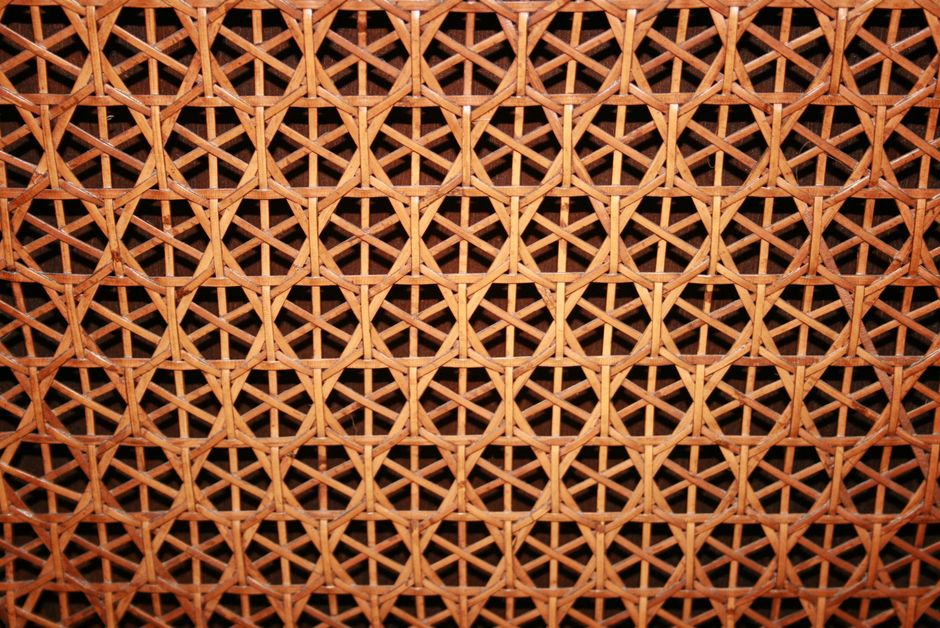
This detail is often overlooked, yet it’s the real comfort trick of the design. A padded chair insulates; a woven chair ventilates.
In the crowded, warm coffee houses of the nineteenth century, this wasn’t an afterthought, it was a practical necessity that still works today, even if few people linger for hours as they once did.
A woven chair doesn’t insulate. It ventilates. That’s exactly why you can sit there longer than on any padded armchair.
Museum-worthy is the opposite of the goal
Vitra includes bentwood design classics in its own lineup and explicitly positions them as pioneering achievements in furniture making, anchored in the international design trade, not merely as historical artifacts in a museum. Even the Vitra Design Museum in Weil am Rhein documents bentwood within the context of modern furniture history, with a clear classification: an antithesis to disposable mass-market goods, not a relic.
This distinction matters. A museum object is observed. A bentwood chair is used, every day, in coffee houses, living rooms, and restaurants around the world. The workshop in Frankenberg, Hesse, still produces both the canonical Nr. 14 and contemporary collections and designer collaborations, a sign that this is a living workshop, not an archive.
Made in Germany, Conceived in Vienna
The company’s story begins in 1836 in Boppard on the Rhine, moves to Vienna in the course of the nineteenth century, and eventually settles in today’s production site in Frankenberg. This journey through three locations is still reflected in the brand: the name remains tied to Vienna, even though actual production has long been in Germany. Classics as well as contemporary models are crafted from solid wood and traditional steps, bending, sanding, lacquering, weaving, in the company’s own workshop.
This origin story isn’t a marketing add-on; it explains why the product looks the way it does. A Viennese coffee-house culture that needed light, stackable seating met a German craft tradition capable of solving the technical challenge. Together, they created a design that carries both heritages within it.
What Still Works About an Old Chair Today
The coffee-house classic remains a perennial in gastronomy and interior design because its combination of delicate bentwood backrest, rounded seat, and light weave is instantly recognizable in coffee houses and premium interiors worldwide. That’s rare in an industry otherwise driven by seasonal trends. A piece of furniture produced largely unchanged for more than a hundred and fifty years must have done something right, something no design language of the intervening decades could replace.
When you buy such a chair today, you’re not buying nostalgia. You’re buying a construction solution that happens to look good and will still be functional long after the current trend chair has landed in the bulky waste.
Quick Clarification
▸What makes the bentwood chair structurally unique?
It consists of only six wooden parts and ten screws, an early flat-pack concept from around 1859. The bentwood process, steamed and bent into metal molds, gives it a lightweight, elastic shape with high stability.
▸What exactly is Viennese weave?
Viennese weave refers to the hand-woven rattan seat weave used in bentwood classics, crafted in intricate patterns. It ventilates the seating area and keeps the chair comfortable over time without padding.
▸Where is the workshop located today?
Production is now based in Frankenberg, Hesse. From there, both classic models and contemporary collections, including designer collaborations, are crafted by hand.
Image source: Title image and article images Pexels.


