
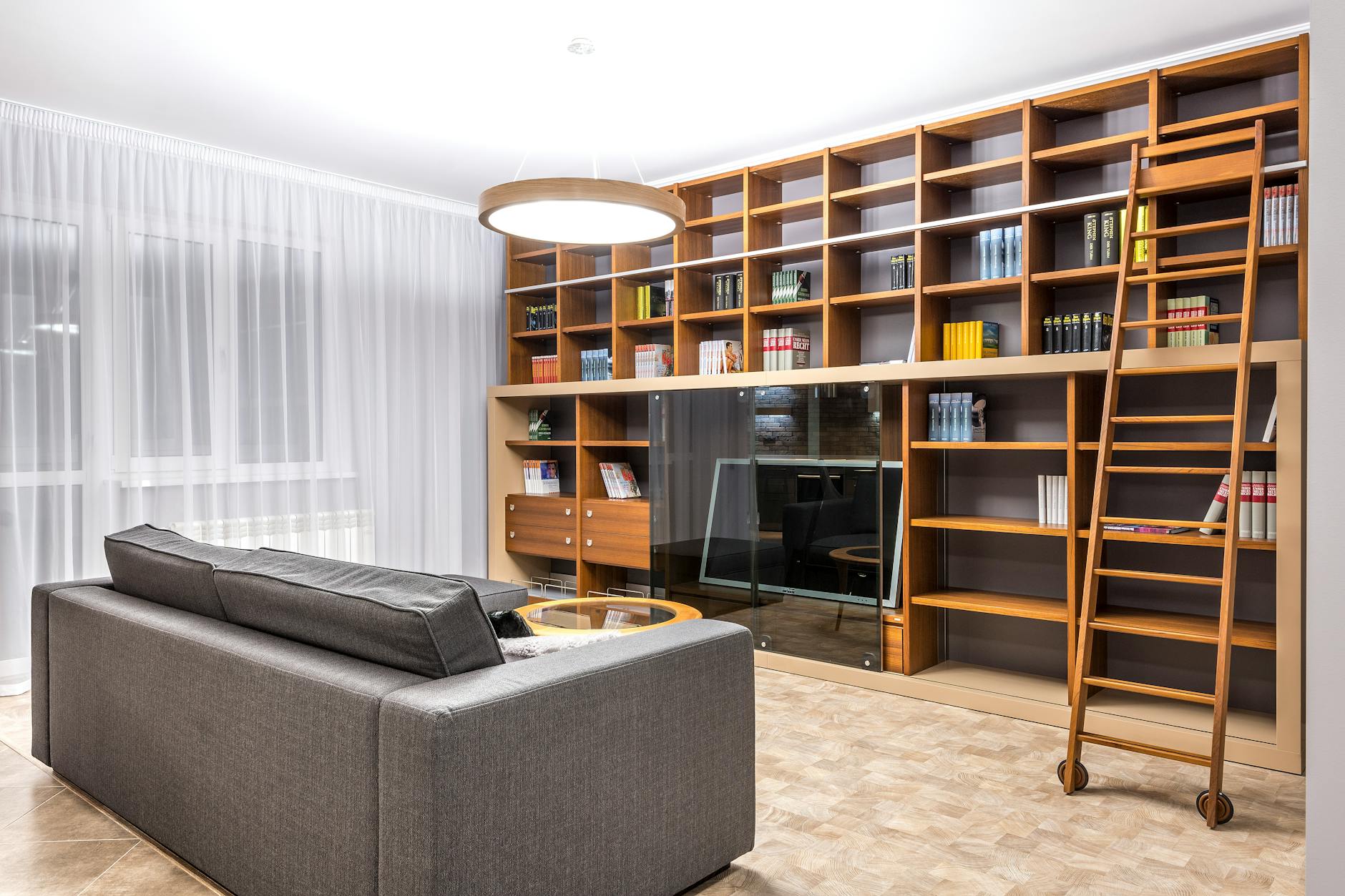
Tips and ideas for your home library
A home library isn’t the preserve of stately homes-it’s all about planning, light, and the right order. We show you how to make your bookshelf stylish yet functional.
Dreaming of a home library brimming with all your favourite books? You can make it happen in any home. A personal library isn’t about square metres; it’s about three things: the right shelving system, clever lighting, and an order you can live with. Here’s how to create a wall of books that’s both elegant and practical.
- A bookshelf fits in any home. What matters isn’t space but system, light, and order.
- Three styles work best: minimalist-modern, classic wood, or playful-eclectic. Pick one and stick with it.
- Give shelves room to breathe. About 60 percent full looks calmer and larger than a crammed shelf.
- Warm-white light between 2,700 and 3,000 Kelvin showcases book spines best-ideally as an indirect LED strip inside the shelving.
- Place heavy books on lower shelves, lighter ones above. It’s not just about looks; it’s about stability.
Which style suits your space?
Before you install the first shelf, decide on a direction. A library only works when it speaks a clear language-not when it tries to chase three trends at once.
Modern and minimalist. If you love clean lines, cool colors like white or black are the right choice. A minimalist shelving unit doesn’t dissolve a modern space; it structures it. The classic library design in white with square or rectangular compartments fits almost any interior and looks timeless. The trick lies in discipline: equal spacing, little decoration, no clutter between the books. Here, the shelf itself can be the statement piece.
Classic wood. For a warm, traditional setting, shelves made of natural materials are unbeatable. Choose wood and warm tones, blending them into a harmonious mix. A shelving wall with geometric wooden compartments is the safe bet for a classic interior. Our insider tip: a wooden library ladder running along a brass rail. It’s both function and statement, instantly giving even a small wall the aura of a proper library.
Playful and eclectic. You’re more of a free spirit? Then mix natural wood tones with warm pastels and deliberately break the strict order. The spacing doesn’t need to be millimeter-perfect here. Be bold: stack a few books horizontally, tuck in picture frames, a vase, or a small plant. A string of fairy lights or subtle shelf lighting adds the cozy kick. Just make sure the controlled chaos looks intentional-not like leftover moving boxes.
A good library is half empty. The space between the books isn’t wasted real estate; it’s part of the design.
How do you organize your books?
No other question sparks as much debate. There are two main camps, and both are right-just for different people.
Alphabetical or thematic order is the classic library approach. It looks like a real collection, and most importantly, you’ll find any book instantly. Ideal for avid readers who actually search their shelves.
Color-coded shelving, often called rainbow shelving, is the photogenic counterpoint. You arrange book spines in a soft gradient from light to dark, and the wall immediately soothes the eye. Beautiful for photos, less so for searching: a book series gets split up, and without the title in mind, you won’t find anything. Our advice: use this for one or two shelves as a focal point, not the whole wall. If you want both, combine a statement shelf in color with functional shelves organized by topic.
A practical detail applies to both methods: place heavy, large volumes on the bottom and lighter, smaller ones on top. This distributes the weight evenly, calms the visual flow, and protects your shelving wall’s mounting. How to style your home in Scandinavian minimalism-we’ve covered that elsewhere-and the same logic applies here: less, but more deliberate.
The right lighting makes all the difference
A library lives by its light. Harsh, cool ceiling spotlights make even the most beautiful collection look sterile. Instead, opt for warm-white light between 2,700 and 3,000 Kelvin, which shows book spines softly and invitingly. The most elegant solution is LED strips tucked into shelf edges or slim aluminum profiles. Around 400 to 600 lumens per meter provide gentle, indirect illumination that doesn’t glare or cast harsh shadows.
If you also want to read in your library, plan a second light source: a floor or table lamp aimed directly at your chair, slightly brighter. This separates mood lighting from task lighting, and both can coexist without clashing. A comfortable chair, a reading lamp, and a small side table for your tea are all you need to turn a bookcase wall into a true reading nook.
Perfect for small apartments
You don’t need a dedicated room. A nook beside the sofa, the wall above the desk, or the space along a door can all be transformed into shelving. In tight quarters, the 60-percent rule is your best friend: keep shelves no more than two-thirds full and the room will feel larger instead of cluttered. A hybrid setup-open shelves for the books you love and closed cabinets for folders and reference works-keeps the wall calm without sacrificing storage. Think bigger: even your bedroom can become a cozy reading retreat; a shallow wall shelf above the bed is often all it takes.
What matters isn’t how many books line the shelves, but whether the wall feels like it belongs to you. A home library is one of the few pieces of furniture that grows more beautiful with time, because it quietly tells your story.
Quick Answers
▸How much space do I actually need for a home library?
Less than you imagine. A single wall, a sofa-side niche, or the area above a desk is enough for a full bookshelf. What counts isn’t square metres, but keeping the shelves no more than 60 percent full-it looks best that way.
▸Should I organise my books by colour or alphabetically?
Both approaches work. Alphabetical or thematic sorting lets you find any title instantly-ideal for voracious readers. Colour-blocking looks stunning in photos but makes retrieval harder. Our tip: use one or two shelves as a colour accent, the rest by subject.
▸What kind of lighting works best for bookcases?
Warm-white LEDs between 2,700 and 3,000 Kelvin, installed as indirect strips along the shelf edges at roughly 400-600 lumens per metre. For a reading corner, add a focused, slightly brighter task light beside the chair.
▸How do I stop the shelves from looking overcrowded?
Give them breathing room. Fill shelves only to about 60 percent, place heavy books on lower levels and lighter ones above, and scatter a few objects-like a vase or framed print-among the spines. A hybrid mix of open and closed compartments hides less attractive items while keeping the wall tidy.


