

Spring in the Living Room: New Upcycling Trends
In 2019 we wrote about upcycling for the living room, with tin-can vases and fabric-scrap bunting. Six years later, what started as a DIY pastime has become a serious interior-design trend. What’s still valid, and what’s been left behind?
From old to new was a nice weekend project in 2019. By 2026, upcycling has become part of a broader shift: away from disposable furniture toward pieces you repair, pass on, and cherish. Here’s our update on the spring classic, with ideas that still work today and those the trend has overtaken.
- The tin-can vase, the dyed crockery, and the bunting chain from 2019 still work today, cost almost nothing, and need no tools.
- The 2026 colour palette is Soft Neutrals: rose, sage, and vanilla, paired with natural materials like rattan, linen, and untreated wood.
- What began as a DIY hobby has become a market: the global sustainable-furniture market is growing from about €43 billion (2023) to an estimated €78 billion by 2030.
- The new guiding principle is circularity: furniture you can disassemble, repair, and re-cover instead of tossing after three years.
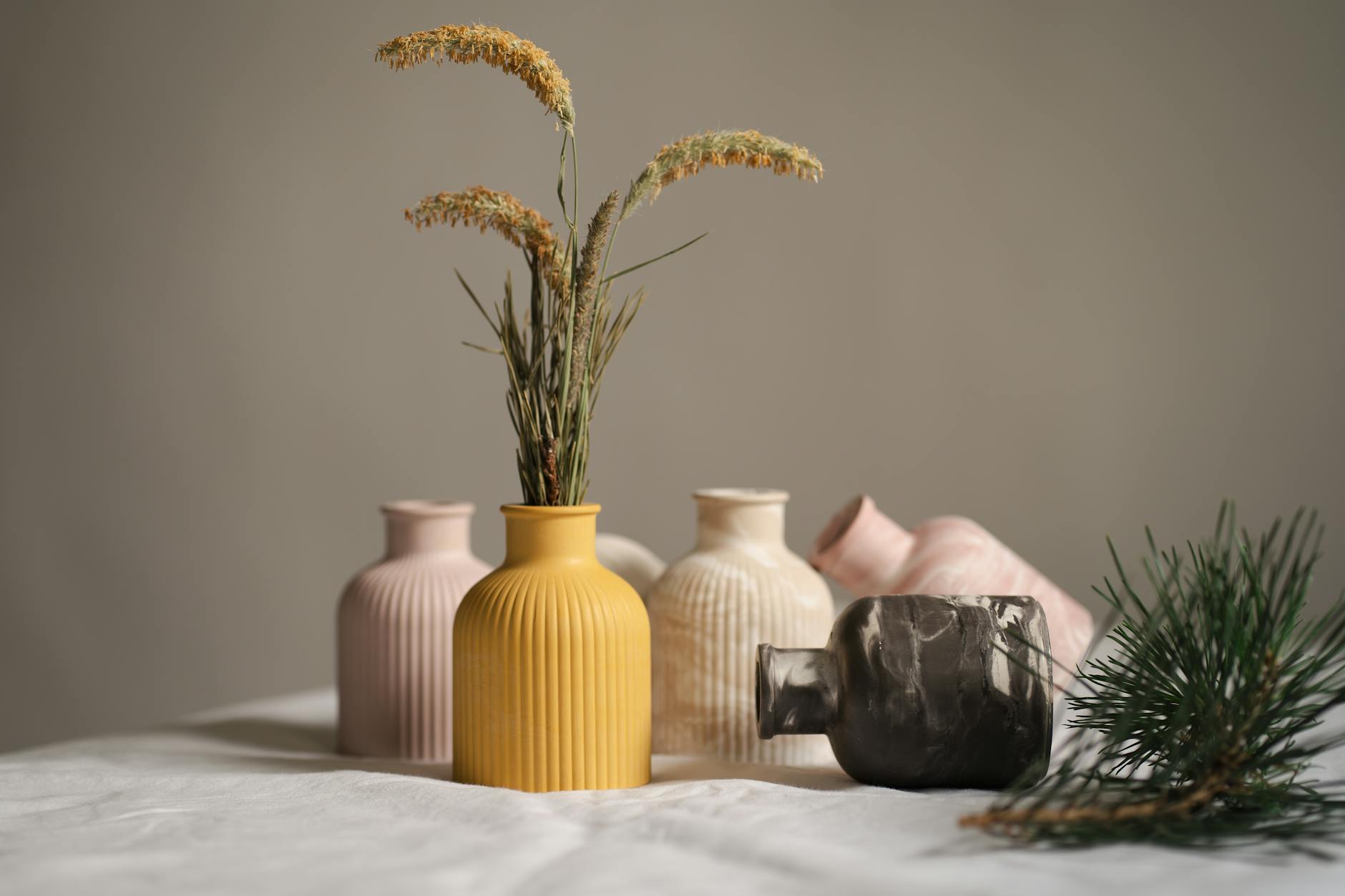
- Dried flowers are back-paired with fresh spring blooms in your handmade vase.
Why DIY Evolved from a Trend into a Mindset
In 2019, upcycling was primarily one thing: a neat savings project. A tin can became a vase, scraps of fabric a bunting garland. The charm lay in the fact that it cost nothing yet still looked like something. That much remains true today. What has changed is the motivation behind it.
The era of disposable furniture is drawing to a close. Instead of cheap pieces destined for the scrap heap after a few years, the industry is embracing the circular idea by 2026: every piece of furniture should have a clear beginning, middle, and end. Designers now plan sofas and tables to be disassembled, repaired, and reupholstered. What started as a private crafting hobby has grown into a movement worth taking seriously-complete with the right to repair.
The numbers back this up. The global market for sustainable furniture is projected to grow from around €43 billion in 2023 to about €78 billion by 2030, according to industry estimates. A 2024 survey also found that buyers are willing to pay nearly ten percent more on average for sustainably produced goods. Your painted tin-can shelf is therefore part of something much bigger.
The best thing about upcycling remains: you need no money and no talent, only the courage to reimagine an old thing.
Timeless Classics That Still Work
Some ideas simply never go out of style. Three from our original feature have endured, and with the 2026 color palette they even look better than before.
Tin-Can Vases, Now in Soft Neutrals
Almost everyone has empty cans in the trash. Rinse once in the dishwasher, and you’ve got a vase. The finishing touch comes from paint-and that’s where 2026 shines: instead of bold hues, choose sage green, soft rose, or vanilla. Spray cans in these pastel shades are available at any hardware store. Line three painted cans on a windowsill with a few dried flowers, and you’ve captured spring vibes without spending a cent on décor.
New Life for Old Dishes
Give your old dishes a makeover instead of tossing them. Ceramic paint is widely available and can breathe new life into chipped plates and bowls. Whether dipped, patterned, or lettered, the possibilities are endless. It fits perfectly with the circular mindset: you repair and refresh rather than replace.
Bunting Garlands from Scrap Fabric
Do old T-shirts, keepsakes, and discarded tea towels pile up at your place? Turn them into a bunting garland. With a set square, sewing machine, and a little patience, you’ll create décor that’s a showstopper not just at parties. Linen and natural fabrics are trending in 2026 anyway, so your old linen blouse may well get a second life as a bunting triangle.
What’s New for 2026
Beyond the classics, the trend has branched out into fresh directions you can try on a small scale.
Large pieces are emerging from upcycling: garden furniture from pallets, retro shelves from vintage suitcases, paired with reclaimed wood. Bamboo, cork, and recycled timber are replacing conventional materials because they’re ecologically superior and bring a tactile quality that new stock often lacks. If you don’t have a carpentry workshop, start small: an old wooden crate becomes a side table, a discarded suitcase a wall shelf.
And the décor? Dried flowers are back, now styled alongside fresh blooms. In your hand-painted tin-can vase, a bunch of pampas grass and a few tulips feel just right for spring. The best part: nothing needs to be new, and nothing needs to be perfect.
Once the home-decor spark catches you, read on to discover how to furnish your space with Scandi style-simple and warm, or why modular furniture aligns so well with the repair-don’t-replace ethos.
Quick Answers
▸What’s the difference between upcycling and recycling?
Recycling breaks a material down into raw components, such as turning old paper into new paper. Upcycling keeps the item largely intact and enhances it: a tin can becomes a vase, a suitcase a shelf. The result often gains more value than the original.
▸Which colours will be on trend for upcycled décor in 2026?
The season favours soft neutrals: blush pink, sage and vanilla. Pair these with natural materials like rattan, linen and untreated wood. A quick spray of pastel paint lets you add these hues to old cans, crates or frames in minutes.
▸Do I need tools or crafting skills?
For the classics, very little is required: a dishwasher and spray paint for the can vase, ceramic paint for the dishes. A sewing machine helps with bunting. Bigger projects like pallet furniture demand more, but you can tackle them step by step.
▸Does upcycling pay off financially?
Absolutely for your wallet-you reuse what you already own instead of buying new. The market confirms it: sustainable furniture and décor are in demand, and the sector is growing at double-digit rates. If you restore skilfully, you create one-offs that would cost many times more in a store.
Inspired by a feature from Livingathome.de. Image: Unsplash / Bernard Hermant.


