
Less is more! The new home trend “Japandi”
The latest interior design trend, “Japandi,” combines Scandinavian and Japanese living styles! Minimalist and elegant at the same time!
In 2019, we reported on Japandi: Calm arises through precision. What came of it? The short answer: The old core remains readable if you sort it more calmly and precisely. This reformatted version retains the existing facts, slows down the pace of the original text, and leads you directly to what still holds up today.
- What do Japan and Scandinavia have in common?
- Simplicity is key
- The simpler, the better.
- View this post on Instagram
- A post shared by Nol&Lik (@nolandlik) on Nov 21, 2019 at 4:01 PST
The Core of the Archive Piece
What do Japan and Scandinavia have in common? Exactly-a warm, inviting atmosphere and strict aesthetics, or put differently, the interior design style known as “Japandi.” The rustic elements of the North are combined with the restrained elegance of the East. Here, you’ll find everything you need to know about this new home trend and how to bring it into your own space. The philosophy behind Japandi is that even with a simple setup and minimal details, the room should still radiate coziness and warmth. Achieving this, however, requires focusing on essential details, thinking minimally, and stepping away from a consumerist mindset.
Simple forms are the alpha and omega
What’s interesting about the archive isn’t the date. It’s the moment when a detail becomes readable again.
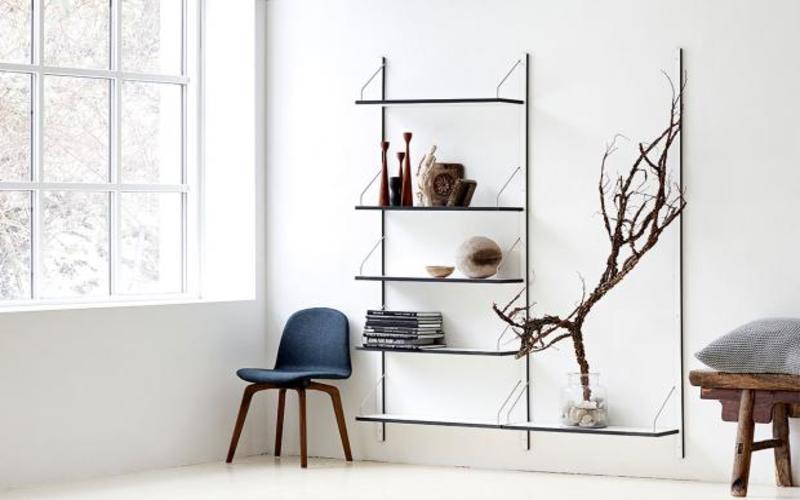
The simpler, the better. That’s the motto of this interior style. Whether it’s furniture or accessories, simplicity takes center stage. Eye-catching pieces like oversized armchairs should be avoided. The same goes for decor. The focus is on a few carefully selected details that radiate the necessary elegance. Black accents, in particular, are a hallmark of this style, adding a calming atmosphere and visual depth. Moreover, the decorative items are often one-of-a-kind pieces with a personal touch.
View this post on Instagram
What Matters Today
A post shared by Nol&Lik (@nolandlik) on Nov 21, 2019 at 4:01 PST
Delicate furniture made from natural materials
Functionality and simplicity should also be reflected in the furniture. Particular emphasis should therefore be placed on delicate, compact pieces. They can be rearranged with minimal effort and symbolize restraint. Additionally, the purpose of each piece should be immediately apparent at first glance. Ideally, the furniture should be crafted from natural materials. Scandinavians often opt for very light wood when decorating, while in Japan, dark wood is among the most frequently used materials. Bamboo, stoneware, and paper are also common choices. In Japandi design, light and dark tones can be freely mixed and matched.
A post shared by Bianca (@schoenfabrik) on Nov 12, 2019 at 9:07 PST
The trend’s color palette proves to be both subtle and bold at the same time. Japandi design predominantly favors natural tones like beige, green, brown, or aubergine. These shades can, however, also feature richer, deeper variations. The understated colors are timeless and easily paired with one another.
The Calmer Perspective
The new look at the legacy content doesn’t change the facts, but it changes the emphasis. What was previously told more quickly now gets more space: first the answer, then the details, then a calm look at the decision behind it.
For you as a reader, that’s exactly the benefit. You don’t have to wade through old web remnants, social embed traces, or restless transitions. The content remains the same material, but the form leads more clearly through the topic.
With an archival piece, it doesn’t matter whether every formulation sounds current. What matters is that date, context, and core information fit together cleanly. This way, it remains visible what was reported back then and why it still has a place in the new IBL format.
The standard is simple: no artificial update, no invented additional facts, no loud trend feeling. Just the existing material, better cut. That’s how an old article becomes a readable magazine text.
If you take only one thing with you, let it be this: Good topics don’t necessarily need new claims. Sometimes it’s enough to organize the existing observations and bring the strongest details forward.
The new structure follows the IBL principle: less scattering, more focus. The old content doesn’t need to shine like a new report. It should be understood without you having to fight through side trails.
This way, the text remains honest to its origin. It shows when it was created, preserves the existing names, places, products, and tips, and only starts anew where readability and tone improve.
The new look at the legacy content doesn’t change the facts, but it changes the emphasis. What was previously told more quickly now gets more space: first the answer, then the details, then a calm look at the decision behind it.
For you as a reader, that’s exactly the benefit. You don’t have to wade through old web remnants, social embed traces, or restless transitions. The content remains the same material, but the form leads more clearly through the topic.
With an archival piece, it doesn’t matter whether every formulation sounds current. What matters is that date, context, and core information fit together cleanly. This way, it remains visible what was reported back then and why it still has a place in the new IBL format.
The standard is simple: no artificial update, no invented additional facts, no loud trend feeling. Just the existing material, better cut. That’s how an old article becomes a readable magazine text.
If you take only one thing with you, let it be this: Good topics don’t necessarily need new claims. Sometimes it’s enough to organize the existing observations and bring the strongest details forward.
The new structure follows the IBL principle: less scattering, more focus. The old content doesn’t need to shine like a new report. It should be understood without you having to fight through side trails.
This way, the text remains honest to its origin. It shows when it was created, preserves the existing names, places, products, and tips, and only starts anew where readability and tone improve.
Quick Answers
▸What is Japandi: Calm arises from precision?
What do Japan and Scandinavia have in common?
▸Why is the article marked as an archive piece?
Because the article comes from the legacy content and has now been restructured without expanding the existing facts.
▸What is the most important takeaway?
Simplicity is the A & O


