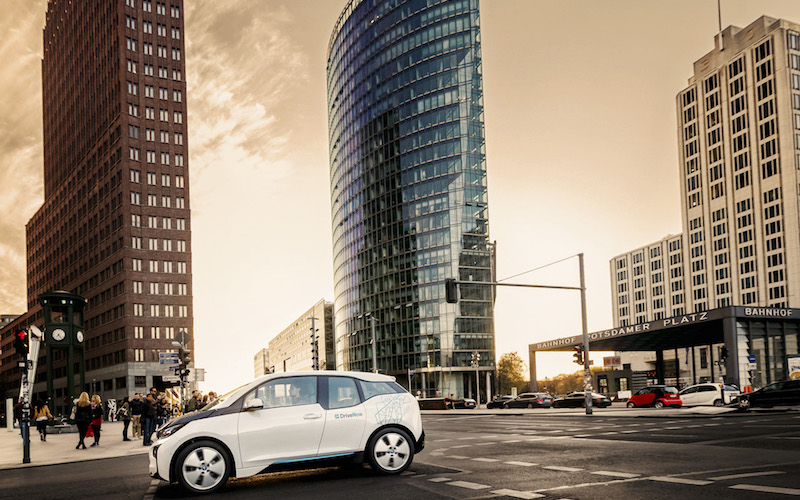
Zip through the city in no time at all – with SHARE NOW
In February 2019, BMW and Daimler merged their car-sharing services DriveNow and car2go into SHARE NOW. We look back: What became of the big mobility promise?
Back in February 2019 we wrote here about the launch of SHARE NOW: the car-sharing joint venture that brought together BMW’s DriveNow and Daimler’s car2go under one brand. The idea sounded like the future of urban mobility. Seven years later, the brand has vanished-but the model lives on. Here’s what really happened and what you can still get out of it today.
- SHARE NOW launched in 2019 as a merger of DriveNow (BMW) and car2go (Daimler) into a single free-floating car-sharing service.
- Early 2020 the service pulled out of North America entirely and refocused on Europe.
- In 2022 Stellantis acquired SHARE NOW via its mobility arm Free2Move.
- By autumn 2024 the SHARE NOW name had disappeared; the fleet now operates under the Free2Move app.
- The principle remains the same for you: find a car nearby via app, pay by the minute, drop it off anywhere within the service area.
Anyone who was in Berlin, Munich or Hamburg in 2019 knew the scene by heart: a Smart or a Mini parked at the curb, a tap on the phone, door open, off you went. Free-floating car sharing was the promise-no fixed parking spot, no return station, just grab the nearest available car and leave it wherever you finished. SHARE NOW bundled two of Europe’s biggest providers under one roof. On paper, it looked like the logical answer to clogged city centres, expensive parking and the desire not to own a second car just for the occasional weekend.
What Became of the Big Promise
The reality caught up with the model faster than expected. By the end of 2019, just months after its launch, SHARE NOW announced a complete withdrawal from North America. On 29 February 2020, services in New York, Seattle, Denver and Washington, as well as in Montreal and Vancouver, were shut down. The reasoning was blunt: too much competition, operating costs too high, and too sparse charging infrastructure for an all-electric fleet. Carsharing only pencils out where lots of people live in close quarters and parking is expensive. In sprawling US cities, the equation didn’t add up.
Europe remained the core market. Here, SHARE NOW had enough density, enough users and enough parking pain to make it work. Yet the joint venture never stayed independent for long. In 2022, BMW and Mercedes-Benz sold SHARE NOW to Stellantis, the group behind brands such as Opel, Peugeot, Fiat and Citroën. The buyer was the mobility arm Free2Move, which instantly took on roughly 10,000 vehicles, fourteen European cities and millions of registered customers.
The SHARE NOW brand is history. The idea behind it-sharing a car spontaneously instead of owning one-is more firmly rooted today than it was in 2019.
From SHARE NOW to Free2Move
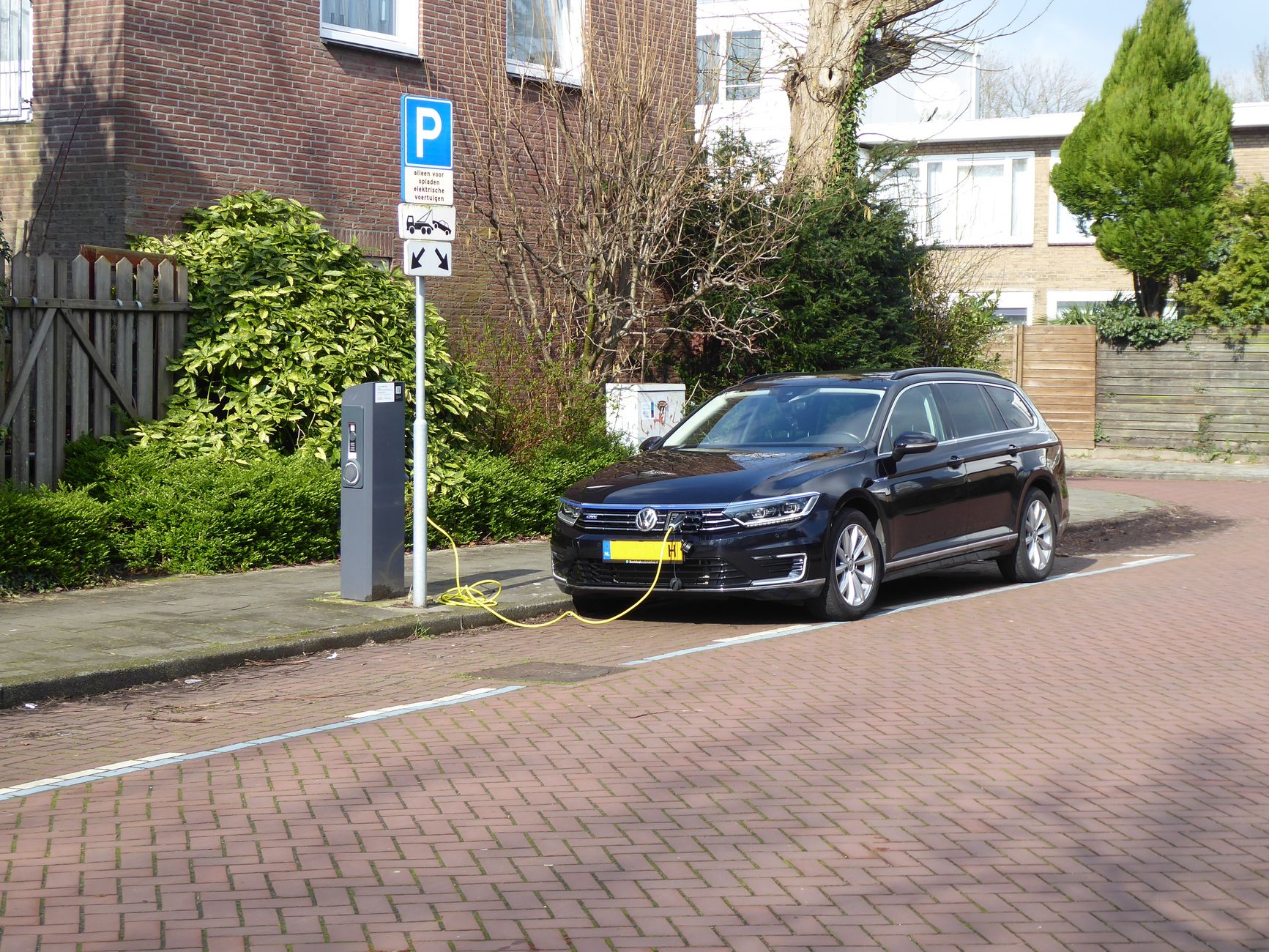
For two years the two brands ran in parallel. Then Stellantis drew the line. In autumn 2024, SHARE NOW was fully folded into Free2Move; the name vanished from app stores. Today, if you want to rent a car on the spur of the moment in Berlin, Munich, Hamburg or Frankfurt, you open the Free2Move app. The car at the roadside is unchanged; only the badge on the bonnet has changed. What once sounded like future-music-a single app unifying two services-has become one platform, albeit under a different name.
Important for context: Free Now, also run by BMW and Mercedes, is a different animal altogether. Free Now is a taxi and ride-hailing app where someone else does the driving. In SHARE NOW’s carsharing, you take the wheel yourself. The similar names still cause confusion, but they describe two entirely separate services.
What This Means for Your Next City Break
In practice, little has changed for you-and that’s the good news. The free-floating principle still works exactly as it did in 2019. You locate a nearby car via the app, pay by the minute, drive to the station, museum or airport with your luggage, and drop the vehicle back inside the operating zone. No fuelling, no insurance paperwork, no looming service appointment. Especially for a weekend in an unfamiliar city where a three-day rental would be pricey, it remains a hassle-free option.
The broader trend we flagged in 2019 has held true: in big cities fewer people own cars and instead tap carsharing, bike hire or scooters depending on the occasion. What has shifted is the provider landscape. The major automakers have learned that mobility services are a tough business in their own right, and brands are consolidating. For you, that mainly means fewer apps but larger fleets in the cities where the model works.
Next time you explore a metropolis, it’s worth a quick glance at the Free2Move app before you book a multi-day rental. For short hops, spontaneous trips and the final leg with luggage, shared driving is often the simpler choice. How deeply you immerse yourself in a new city-say, over two days in Ljubljana-is ultimately up to you. And if you’re chasing the sheer thrill of driving rather than mere transport, you’ll find it more in pieces like our Eccentrica V12 First Drive.
Good to Know
▸Is SHARE NOW still around?
No, not under that name anymore. Since autumn 2024, the service has been fully integrated into Free2Move, the mobility subsidiary of the Stellantis Group. The vehicles remain in city centres, but bookings are now made via the Free2Move app.
▸Who owns the car-sharing service today?
In 2022, BMW and Mercedes-Benz sold SHARE NOW to Stellantis. Since then, the service has been part of Free2Move. BMW and Mercedes continue to operate Free Now, but that’s a taxi and ride-hailing app-something quite different from car-sharing.
▸In which cities can I still spontaneously share a car?
In Germany, mainly in major metropolises such as Berlin, Munich, Hamburg and Frankfurt, plus additional European cities. The retreat from North America took place back in 2020. Which cities are currently served is shown directly in the Free2Move app via an interactive map.
▸Is car-sharing worth it for a city break?
For short, spontaneous trips and the leg with luggage, often yes-because you pay by the minute and avoid fuel costs, parking searches at fixed stations and daily rental-car flat rates. For longer outings spanning several days, a classic rental car can be cheaper.