
Dress your home in luxury: The new Gucci Living collection
In autumn 2017, Gucci moved into living rooms with its Décor collection: velvet armchairs with animal prints, porcelain from Richard Ginori, scented candles in four notes. We reported on it at the time and are now taking stock of what has become of the Maison’s boldest living experiment.
In autumn 2017, Gucci began outfitting not only its wearers but also their homes. Gucci Décor was the collection with which Alessandro Michele brought velvet armchairs, porcelain and scented candles into the Maison. We wrote about it at the time. Today, nearly eight years later, a second look is worthwhile: the line is still available at Gucci, the designer behind it has long since moved on, and the taste Décor anticipated back then is now mainstream. Here’s what has endured.
- Gucci Décor launched in September 2017 as the Maison’s first dedicated home line, curated by Alessandro Michele.
- The porcelain is from Richard Ginori, the Florentine manufactory founded in 1735, which Gucci acquired in 2013.
- No minimalism here: animal prints, velvet, jacquard, four signature fragrance notes. Consciously against the grain.
- Michele left in 2022, succeeded by Sabato De Sarno and, since July 2025, Demna. The Décor line has outlasted all three.
Accents instead of uniform look: What Gucci Décor was in 2017
The idea was as simple as it was radical: what Michele had done with fashion should also apply to the home. No off-the-peg, fully styled suite, but individual pieces you add to your space. A floral-patterned armchair with silver details. Metal chairs whose cushions feature moths, bees, and cats. Cushions with tassels, velvet on the front with animal print, jacquard on the back. It was never about wrapping an entire room in Gucci. It was about that one object that makes the rest interesting.
In 2017, this was a statement. The living trend at the time was Scandinavian, light, reduced, preferably a sofa in greige and an oak table to go with it. Michele went against the grain. Wallpapers with dense flora and fauna motifs, folding screens, dark colours, pattern upon pattern. Décor wasn’t meant as good taste in the sense of home décor magazines, but as an attitude. In the boutiques, the pieces didn’t even have their own sales area; they stood between the clothing racks. Exactly as Michele intended: living is another way to dress in Gucci.
Those who preferred something quieter found the smaller items: crockery, candlesticks, incense holders, and scented candles in four specially developed fragrances. The wooden chairs in the line required around ten hours of craftsmanship per piece. That’s the point often overlooked by a fashion house selling home accessories: here, real craftsmanship stood behind it, not a printed logo on imported goods. A candle sells quickly, but a chair someone spends ten hours making is a different statement altogether.
The centrepiece was the porcelain. It didn’t come from some licensed factory, but from Richard Ginori, founded in 1735 in Doccia near Florence. Marchese Carlo Andrea Ginori laid the foundation, and the manufactory survived nearly three centuries before slipping into insolvency in 2013. Gucci was the only company to make a serious offer: around €13 million, plus a commitment to retain most of the more than 300 employees. Michele became artistic director there and revived archival patterns, a second role alongside fashion.
This is more than a footnote. It explains why Décor never looked like mere merchandising. When you hold a Gucci plate in your hand, you’re holding almost 300 years of Florentine porcelain history, reworked in the same manufactory that once fired pieces for European courts. That’s the difference between a furniture logo and a manufactory. And it’s why the Décor ceramics still rank among the most credible pieces in the entire line.
Gucci Décor was never meant as a complete look, but as that one object that flips a room. That’s precisely what makes it still usable today.
What became of Gucci Décor?
The short answer: the line still exists. On gucci.com you’ll still find candles, trays, cushions, crockery, and throws under the Décor label. The long answer is more interesting because almost everything around it has changed.
Alessandro Michele, the man behind the entire concept, left Gucci at the end of 2022. Today he directs creative vision at Valentino. He was succeeded by Sabato De Sarno, who steered the house toward calmer, cleaner lines and deliberately dialled back his predecessor’s maximalist legacy. De Sarno didn’t stay long: at the start of 2025 he left the house, even before his planned Milan show. Since July 2025 Demna has led creative direction, fresh from shaping Balenciaga. His first Gucci campaign, titled La Famiglia, launched in early 2026.
Three creative hands in under four years, and Décor has outlasted them all. That says more about the idea than any sales figure: a single bold home piece appears more crisis-proof than an entire design language. What Michele launched in 2017 as a playful aside at the edge of the boutique-without its own sales floor, tucked between clothing racks-has remained the quiet constant.
How to bring the Décor look home
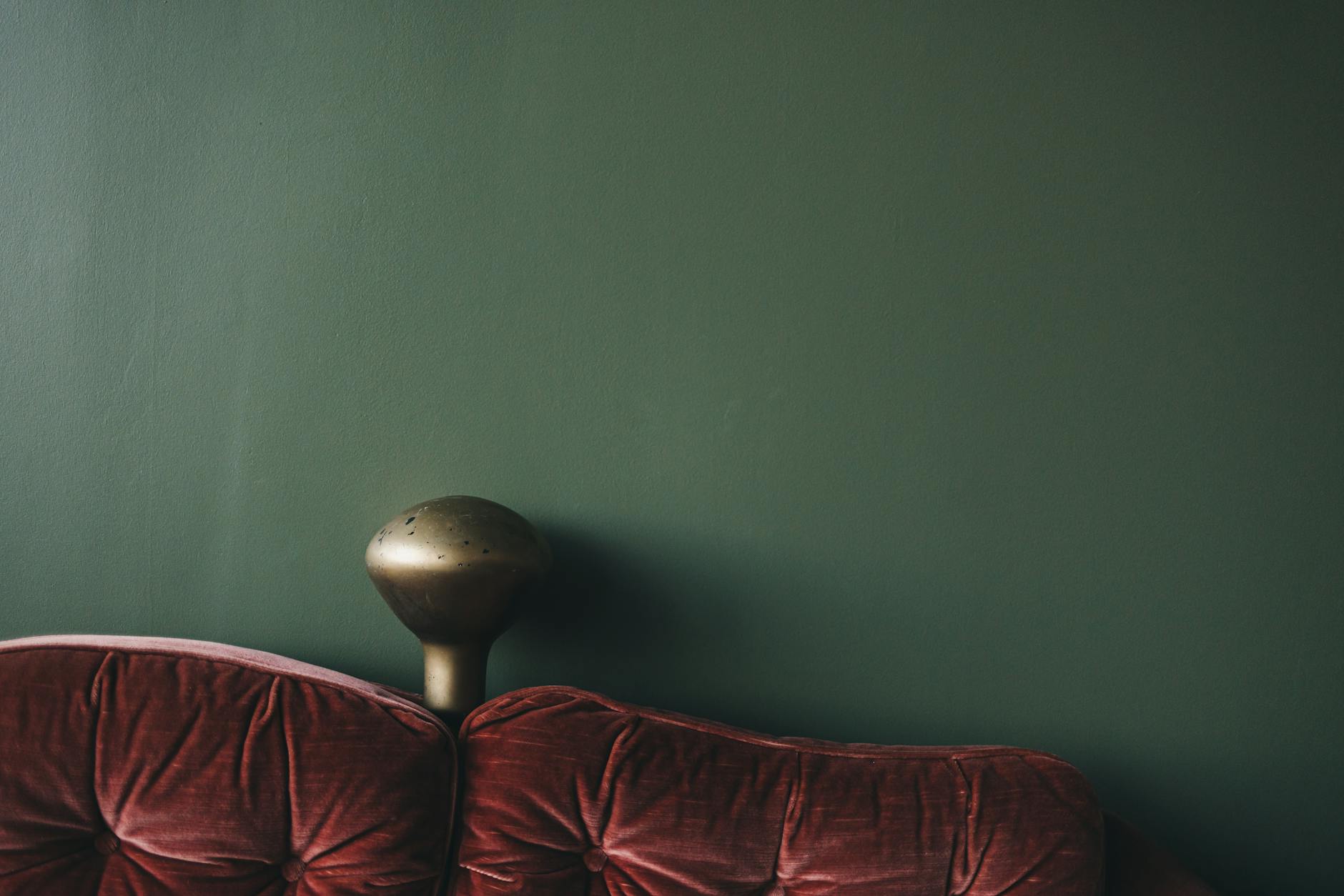
You don’t need to buy a Gucci armchair to grasp the concept. The Décor look works through three levers. First: velvet in a rich hue-rust red, bottle green, or teal. A single upholstered surface is enough to jolt a room out of beige-induced slumber. The contrast between warm velvet and a dark wall color does half the job. Second: an animal print or floral jacquard on a pillow or throw, sparingly applied-one piece, not five. The mistake most people make is overdoing the quantity. Décor was never loud through volume, but through a single bold statement in a quiet setting. Third: a scent. The idea of defining a space through a candle wasn’t commonplace in 2017; today it is.
The beauty of this method: it costs a fraction and hits the same nerve. A well-chosen velvet chair from a vintage dealer, a candle with character, a plate with a story-together they deliver the same vibe as the boutique version, minus the five-figure bill. Décor never claimed you needed the original. It issued a permission slip: you’re allowed to make your home interesting instead of just tidying it up.
What’s fascinating is that taste proved Michele right. The deliberately overstuffed, mixed aesthetic Décor anticipated has become eclecticism as the new interior trend. What looked quintessentially Michele in 2017 now appears in every second Instagram feed. Even the backlash-the apartment that needs to prove nothing-relies on the same principle: one strong piece instead of ten indifferent ones. Décor was early. That’s the real punchline of the collection.
Quick Answers
▸Is Gucci Décor still available to buy today?
Yes. The Décor line remains part of the range and can be purchased via gucci.com and selected boutiques. Offerings include scented candles, trays, cushions, tableware, and throws. Individual pieces from the original 2017 collection have become collector’s items.
▸Who designed Gucci Décor and who currently leads Gucci?
The line was created by Alessandro Michele, who steered Gucci from 2015 until late 2022. He was succeeded by Sabato De Sarno, who left the house in early 2025. Since July 2025 Demna has been at the creative helm. Michele now designs for Valentino.
▸Where does Gucci porcelain come from?
From Richard Ginori, the porcelain manufactory founded in 1735 in Doccia near Florence. Gucci acquired the insolvent company in 2013 and integrated it into the Kering group. That’s why Décor ceramics sit at a far higher craft level than typical licensed fashion-house tabletop lines.


