
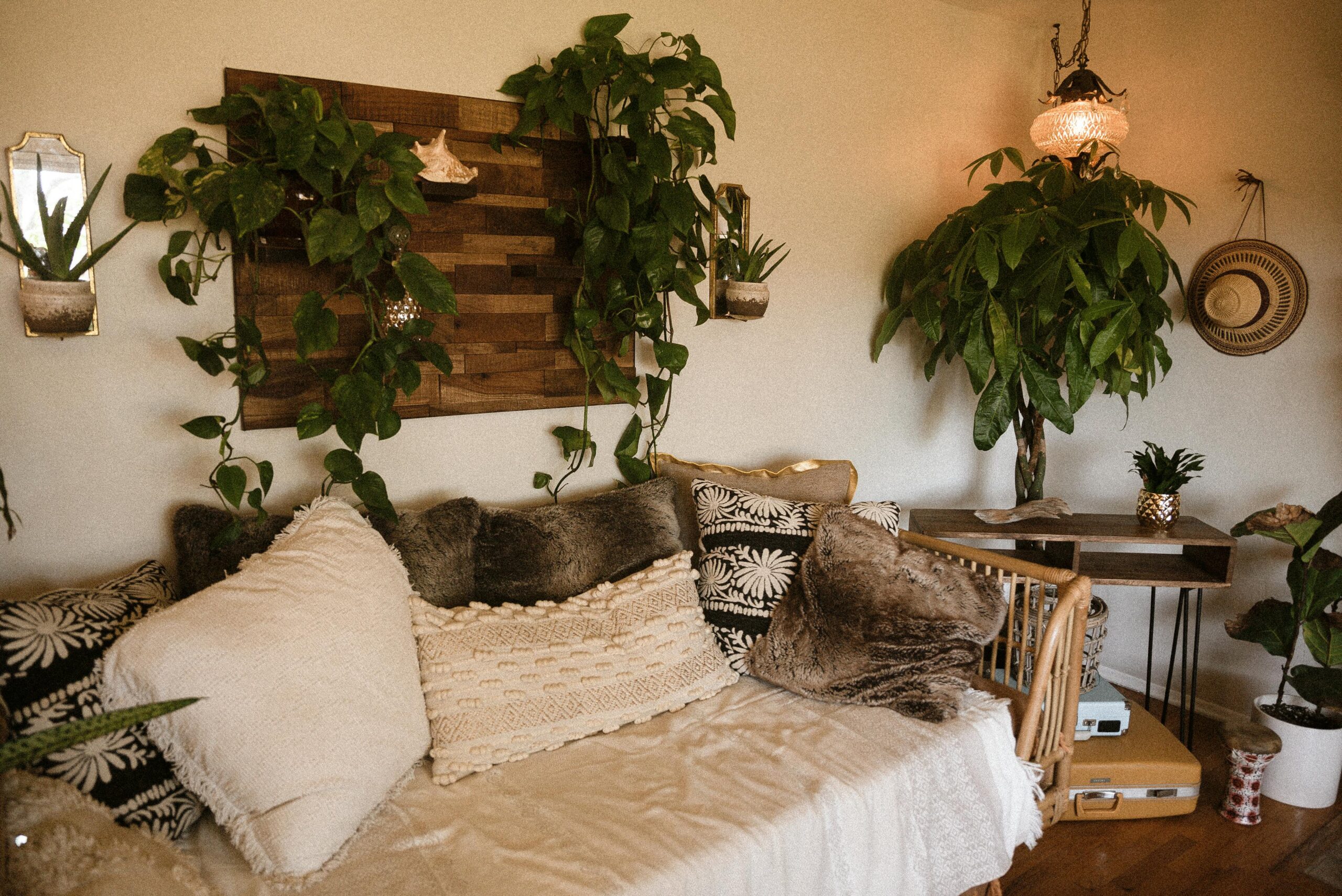
Boho-Chic – Not Just a Decor Style, But a Way of Life
Boho-chic once stood for rooms packed with Pinterest mood boards: macramé on every wall, tasselled cushions, plants in seagrass baskets. By 2026 the picture has shifted. We show you what’s left of the Bohemian look and how to style it today without turning your home into a décor warehouse.
In 2020 we celebrated boho-chic as a limitless living style: decorate with everything you love, one-offs instead of mass-produced goods, macramé on every spare wall. Six years later the look is still here, but it has mellowed. Rather than cramming every square metre with finds, the 2026 boho style favours a few, well-chosen pieces, warm earth tones and materials you actually want to touch. The free spirit remains, but the chaos can go.
- Boho thrives on natural materials: rattan, linen, cotton, clay and wood instead of high-gloss and chrome.
- The 2026 trend leans toward less décor, more calm: curated rather than overstuffed, terracotta and muted earth tones as guiding hues.
- Macramé stays the signature element, but works better as a single accent than wall-to-wall coverage.
- Large houseplants like monsteras or snake plants are a must, not an afterthought.
- You don’t need new furniture: boho emerges from layering, textures and pieces with history, not a trip to the furniture superstore.
The appeal of the Bohemian style was never a rigid blueprint. There are no limits, no restrictions. Rooms are furnished with whatever pleases you. It’s this eclectic collision of different styles that turns every space into a unique piece. The furniture and its arrangement follow no uniform pattern, and every tiny décor item tells its own story: the branch from the forest, the paper lanterns from the flea market, the hand-knotted macramé.
Result: unmistakable one-offs instead of interchangeable mass-produced goods. Bright, but not cold. Cosy, but not rustic. Tidy, but not sterile. When your living room hits that balance, you’ve understood boho – no matter how many macramés hang on the wall.
What’s Different in 2026: From Maximalism to Curated Calm
The biggest shift of the past few years: boho has grown up. The overloaded look-decoration on every surface-is giving way to a calmer approach. Less excess, more intentional accents. Warm colours and natural materials remain, but now they’re given room to breathe. Terracotta has emerged as the leading hue, paired with muted earth tones, sand, olive green, and rust.
In practice, this means you don’t have to fill every corner. A single woven rug, a hand-thrown vase, a rattan basket chair, and a large plant can carry a room on their own. The rest can stay empty. This reduction makes the style more practical, because it no longer demands a Pinterest-perfect setup you can never keep tidy.
Boho in 2026 isn’t about less personality-it’s about less noise. The pieces are meant to stand out, not shout each other down.
Macramé, Rattan, Clay: The Materials That Carry the Style
One element is non-negotiable in any boho space, even when everything else preaches freedom: macramé. Whether as a hanger for succulents, a coaster, or a wall piece, the knotted cotton or linen creations add structure and texture. The difference from 2020? One good, large piece beats five small ones today. If you’re up for a weekend project, you can knot your own hanging macramé-it just takes yarn and patience.
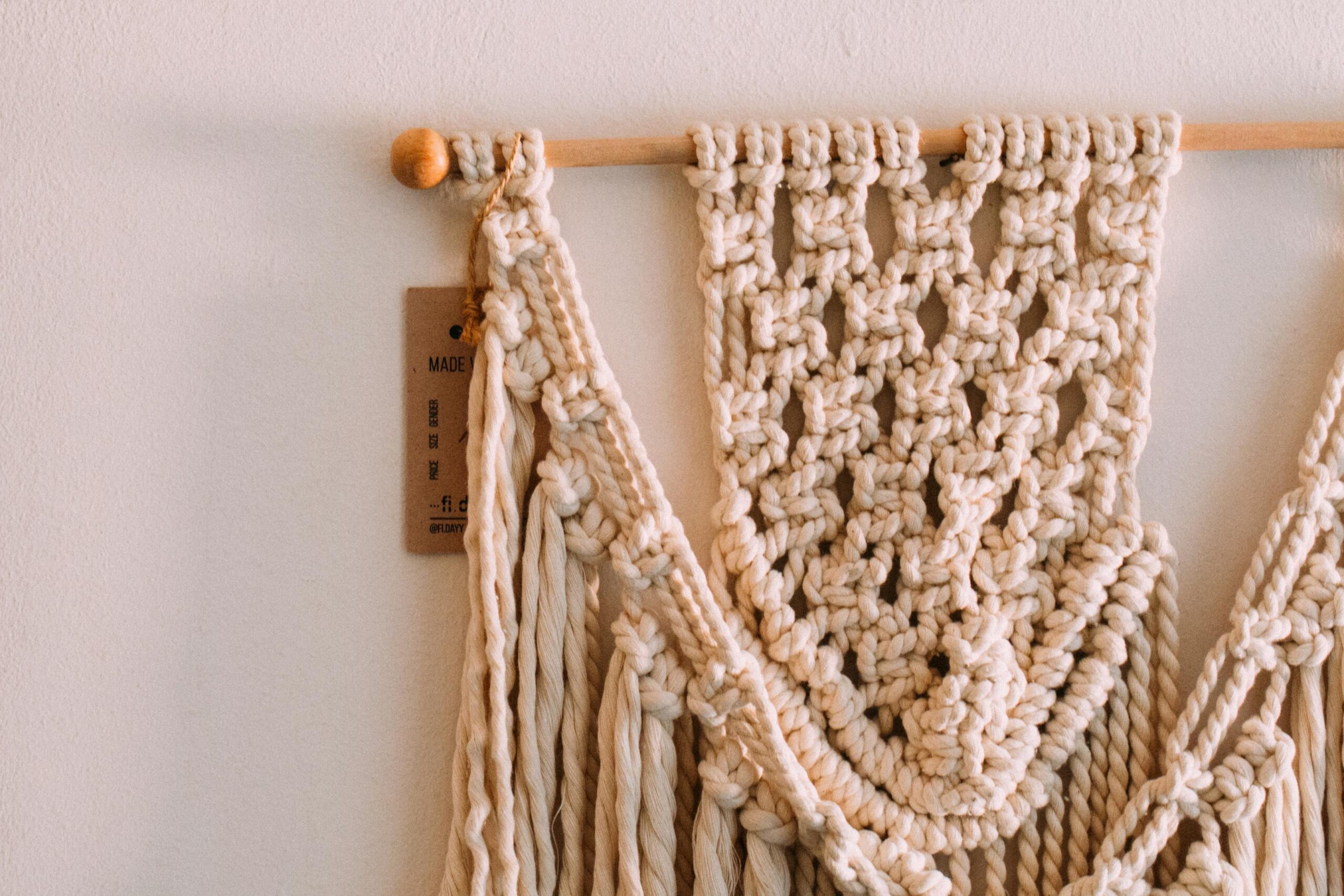
Three other materials anchor the look. Rattan and wicker for chairs, lampshades, and storage. Linen and loosely woven cotton for curtains, throws, and cushions. Clay and ceramics for vases and planters, ideally handmade and slightly irregular. The key is layering: boho thrives on combinations, not a single material.
And the plants. They’re not accessories-they’re central. Low-maintenance favourites like monstera, snake plants, or cacti bring life, while dried grasses and pampas grass add accents where real greenery would demand too much care. A plant in a seagrass basket is the quickest way to upgrade any empty corner.
How to Build Boho Without Buying New
The bohemian style isn’t built in one trip to the furniture store. Instead, it lives on time, serendipitous finds, and an eclectic collection of odds and ends. That’s what makes it budget-friendly. Flea markets, heirlooms, second-hand pieces, and a few DIY touches get you further than a brand-new set.
Start with a calm base-pale walls or a neutral sofa-and layer on top. A patterned rug, two or three cushions in different textures, a throw over the sofa back, a plant, a basket. If you want to blend styles, the related eclecticism offers the perfect mixing technique, and if you prefer clarity and cool tones, pair boho with the pared-back Scandi style for what’s known as Scandi-boho.
Ultimately, boho is a style that grows with you and is never truly finished. You don’t need it all at once. You collect, swap, and rearrange. That unfinished quality is the whole point.
Quick Answers
▸Is Boho-Chic still in for 2026 or already passé?
It’s still in, but evolved. The over-the-top maximalism of a few years ago is out; streamlined Boho with earthy tones, natural materials and a few carefully chosen pieces is now firmly on trend. The look remains, but the chaos is gone.
▸Which colours pair with modern Boho style?
Warm, muted earth tones lead the way: terracotta, sand, cream, rust, olive green and brown. Pair them with natural white as a base. Bold accents are possible, but sparingly-otherwise the room tips from cosy to restless.
▸Do I absolutely need macramé for Boho?
It’s the signature element, so almost mandatory if you want to nail the style. A single, well-placed wall piece is enough. You don’t have to cover every wall; on the contrary, one accent piece packs more punch today than a full-on installation.
▸Can I pull off Boho on a tight budget?
Boho is especially budget-friendly. The style thrives on flea-market finds, second-hand pieces, heirlooms and DIY. One large plant, a patterned rug, a few textured cushions and a basket can transform a room without any new furniture purchases.


