
BMI, waist, ponderal index: Do the weight formulas really work?
The BMI has long been the standard measure for weight. But for athletes it can quickly become absurd: a six-pack athlete lands mathematically in the obesity range. Which indexes really tell us something and how to find your measure without an online calculator.
The BMI has been the standard measure for decades when it comes to classifying your own weight. For highly trained people, however, it quickly tips into absurdity: an athlete with a six-pack can end up mathematically in the obesity range. Which indexes really provide meaningful information and how you can find your ideal measure without an online calculator.
- BMI = weight in kg divided by height in m squared. Fast, but blind to muscle mass.
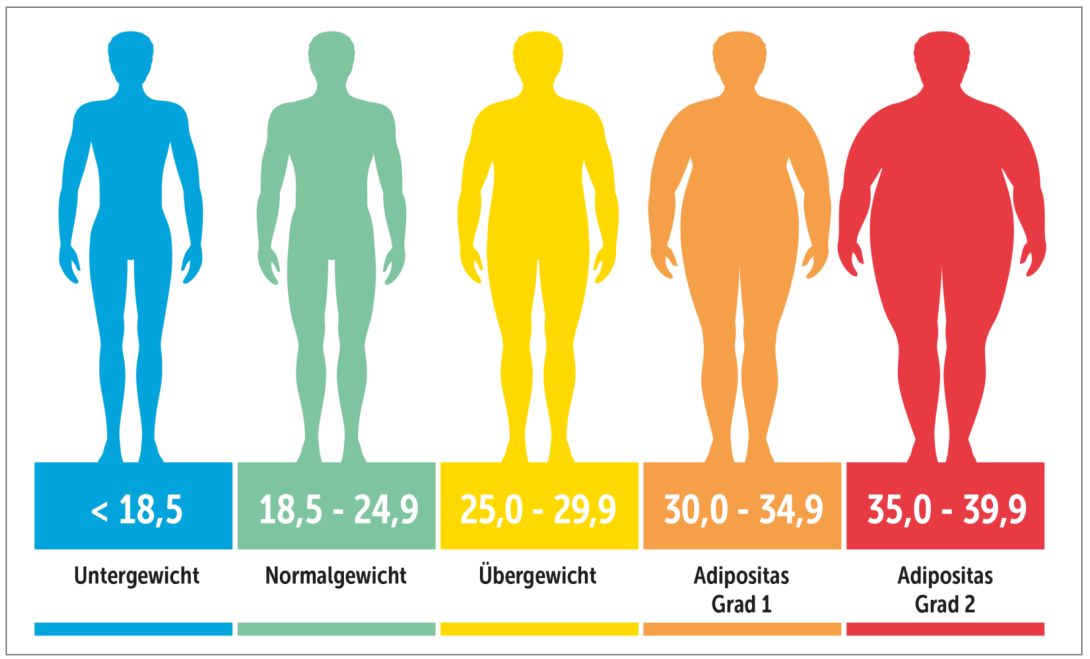
- Normal weight according to the WHO is a BMI of 18.5 to 24.9. Anything above that is overweight, from 30 obesity.
- The waist-to-height ratio (waist divided by height) is now considered more meaningful. Rule of thumb: waist should be less than half your height.
- Children, adolescents and athletes have their own benchmarks. A high BMI alone is not an alarm signal.
- In the end, your true feel-good weight trumps any formula.
After the festive season of indulgence and the occasional extra Christmas goose, the same question always comes up: am I too fat? Even if the New Year’s resolutions tend to fade later on, gyms see a massive surge in new members between the holidays and the start of the year.
If you’re worried about pitying glances, you might want to skip stepping on the scale at the gym and instead do it at home, where it usually just gathers dust. It’s never been a mood-booster-unless you’re in the middle of a successful power diet. But without it, it’s hard to gauge where you stand weight-wise.
Simple formulas for normal and ideal weight
In the past, you didn’t have to jump through hoops. You simply subtracted 100 from your height in centimetres to arrive at your normal weight in kilograms. French physician, surgeon and anthropologist Paul Broca (1824-1880) then derived the Broca index for ideal weight from this: 90 percent of the normal weight for men, 80 percent for women. In other words, you subtract 10 or 20 percent from the normal weight to reach the ideal weight according to Broca.
A man who is 1.80 m tall should therefore weigh only 72 kg (180 minus 100 equals 80, minus 10 percent), while a woman of the same height should weigh 64 kg. The latter corresponds to a BMI of around 19.75-right at the lower end of the normal weight range, mind you, for adult women. Teenagers follow different standards, which we’ll cover later.
The BMI doesn’t need an online calculator
The Body Mass Index, or BMI, long stood as the gold standard for determining whether someone is underweight, normal weight, overweight or obese. Critics point out that it gives short shrift to age, body type and muscle mass. Yet the BMI remains robust enough for WHO statistics and international comparisons, because fewer than 5 percent of the population can plausibly blame heavy bones or muscle for their readings.
In the metric system the formula is delightfully straightforward: kg/m². In the imperial system (US Customary Units) it gets messier: lbs/in² × 703. You usually don’t need an online calculator. The abbreviations lb(s) and in stand for pounds and inches.
Things get even trickier in the Anglo-American system, where height is typically given in feet and inches. You first multiply the feet by 12 to convert to total inches for the formula.
An NFL pro can have a BMI over 30 without an ounce of visible fat. That’s where the formula hits its limit.
BMI: why NFL pros are officially obese
Brad Pitt is officially about 1.80 m tall and reportedly weighed only about 155 pounds-roughly 70 kg-during Fight Club (1999). That yields a BMI of about 21.6. Yet in that anti-consumerist film with Ed Norton, Pitt was practically all muscle and could easily have carried a higher number.
For comparison, Wladimir Klitschko tipped the scales at a BMI of around 28.6 during one of his last bouts in 2014. Some NFL players clock in above 30.0 and are therefore technically obese-yet carry almost no fat. The WHO adult BMI categories are as follows:
| BMI | Category |
| < 16.00 | Severe underweight |
| 16.00 – 16.99 | Moderate underweight |
| 17.00 – 18.49 | Mild underweight |
| 18.50 – 24.99 | Normal weight |
| 25.00 – 29.99 | Overweight / Pre-obesity |
| 30.00 – 34.99 | Obesity class I |
| 35.00 – 39.99 | Obesity class II |
| ≥ 40.00 | Obesity class III |
On average, German men have a BMI of about 27, while German women are slightly lower. In the US the average is higher-not only because of well-muscled athletes, but mainly because of a large population with severe obesity that skews the mean. This is where the index’s biggest weakness shows: it cannot distinguish between muscle and fat.
Waist-to-Height Ratio: Often the Better Choice Today
This brings us to an index that is considered more reliable for active individuals: the Waist-to-Height Ratio (WHtR), or in German the ratio of waist circumference to height. Unlike the BMI, it provides a better assessment of body fat distribution, particularly dangerous abdominal fat.
You divide your waist circumference by your height. Since 2024, the British health authority NICE has recommended a simple rule of thumb: keep your waist circumference below half your height, meaning a WHtR under 0.5. Someone who is 1.80 m tall should therefore keep their waist circumference under 90 cm. From the mid-40s onward, the value may rise slightly.
| Age | WHtR Normal Range |
| < 40 | up to 0.5 |
| 40 – 50 | 0.5 – 0.60 |
| > 50 | up to 0.6 |
Measure your waist circumference roughly at the level of the navel, without sucking in your stomach or pushing it out. If you want to stay fit, pay attention even past 40 to ensure no “love handles” develop. How to actively tackle abdominal fat is shown in our sister magazine’s full-body boxing workout.
In addition to the WHtR, there’s also the Waist-to-Hip Ratio (WHR), or the ratio of waist to hip circumference. The German Sports Medicine Association classifies it by gender as follows:
| WHR Women | WHR Men | Meaning |
| < 0.80 | < 0.90 | Normal weight |
| 0.80 – 0.84 | 0.90 – 0.99 | Overweight |
| > 0.84 | > 0.99 | Obesity |
Children and Adolescents: Different Standards
According to the Federal Centre for Health Education (BZgA), children have their own BMI values. For 14-year-old girls, normal weight begins not at 18.5 as with adult women, but already at around 16.5. Parents need not worry that their daughter is suffering from an eating disorder at such a value. If you suspect a genuine risk in yourself or your children, seek medical advice rather than trusting a rigid formula.
Ponderal Index and a Reconciling Closing Word
Another method that better accounts for tall and athletic builds is the Ponderal Index, introduced in 1908 by Swiss physiologist Fritz Rohrer and known in English as the Corpulence Index. It resembles the BMI but divides weight in kilograms not by height squared, but cubed. The formula is therefore kg/m³.
For adults, a Ponderal Index between 11 and 14 is considered normal, with different values for babies and toddlers. If you want to calculate yours, you’ll find online calculators. If your value is above this range, some providers will offer a comforting note: that your “comfort weight” is ultimately the most important.
That’s actually a nice closing thought. After all, constantly starving yourself, giving up every glass of alcohol, and moving into the gym just to achieve an ideal figure isn’t a solution either. Especially those seeking a polished appearance or relaxed lifestyle know: the right measure matters more than the last decimal place.
It’s all about finding the right balance-up or down. Someone who weighs 300 or 400 kg and can barely walk faces a similarly high mortality risk as someone with extreme anorexia. Studies also suggest that people with a BMI between 25 and 30 statistically do not live shorter lives than some normal-weight individuals. A consolation for anyone who doesn’t precisely match the norm. How to build healthy eating into daily life without deprivation is shown in our guide to meal prepping, and exercise doesn’t have to happen in a gym, as the feature on leisure sports without heavy equipment demonstrates.
Quick Answers
▸How do I calculate my BMI myself?
Divide your weight in kilograms by your height in meters squared. For 70 kg and 1.75 m, that’s 70 divided by (1.75 × 1.75 = 3.06), giving a BMI of about 22.9. That falls within the normal range of 18.5 to 24.9.
▸Why is BMI unreliable for athletes?
Muscle weighs more than fat. A well-trained person with a high muscle mass can end up with a high BMI even though they have very little body fat. Some NFL pros technically land in the obesity zone yet are in peak condition.
▸What’s a better measure than BMI?
The waist-to-height ratio is more telling because it captures dangerous belly fat. A handy rule from the UK’s NICE: keep your waist circumference under half your height.
▸Does BMI apply to children?
No-children and teens have their own age-dependent benchmarks. For 14-year-old girls, the BZgA considers a healthy weight to start at about 16.5 instead of the adult female threshold of 18.5.


