Audemars Piguet Royal Oak Openworked 2026: The Quiet Statement
Audemars Piguet unveils the Royal Oak Openworked 2026 in titanium, BMG, and gold. Exposed mechanics instead of loud colors. That’s exactly what makes the skeletonized 2026 so coveted.

 //STYLE
Audemars Piguet unveils the Royal Oak Openworked 2026 in titanium, BMG, and gold. Exposed mechanics instead of loud colors. That’s exactly what makes the skeletonized 2026 so coveted.
Audemars Piguet strips the Royal Oak 2026 bare once again: the Jumbo Extra-Thin Openworked and Perpetual Calendar Openworked arrive in titanium with a BMG bezel, while the Double Balance Wheel Openworked comes in yellow gold. Skeletonized, not colorful. And that’s the real point.
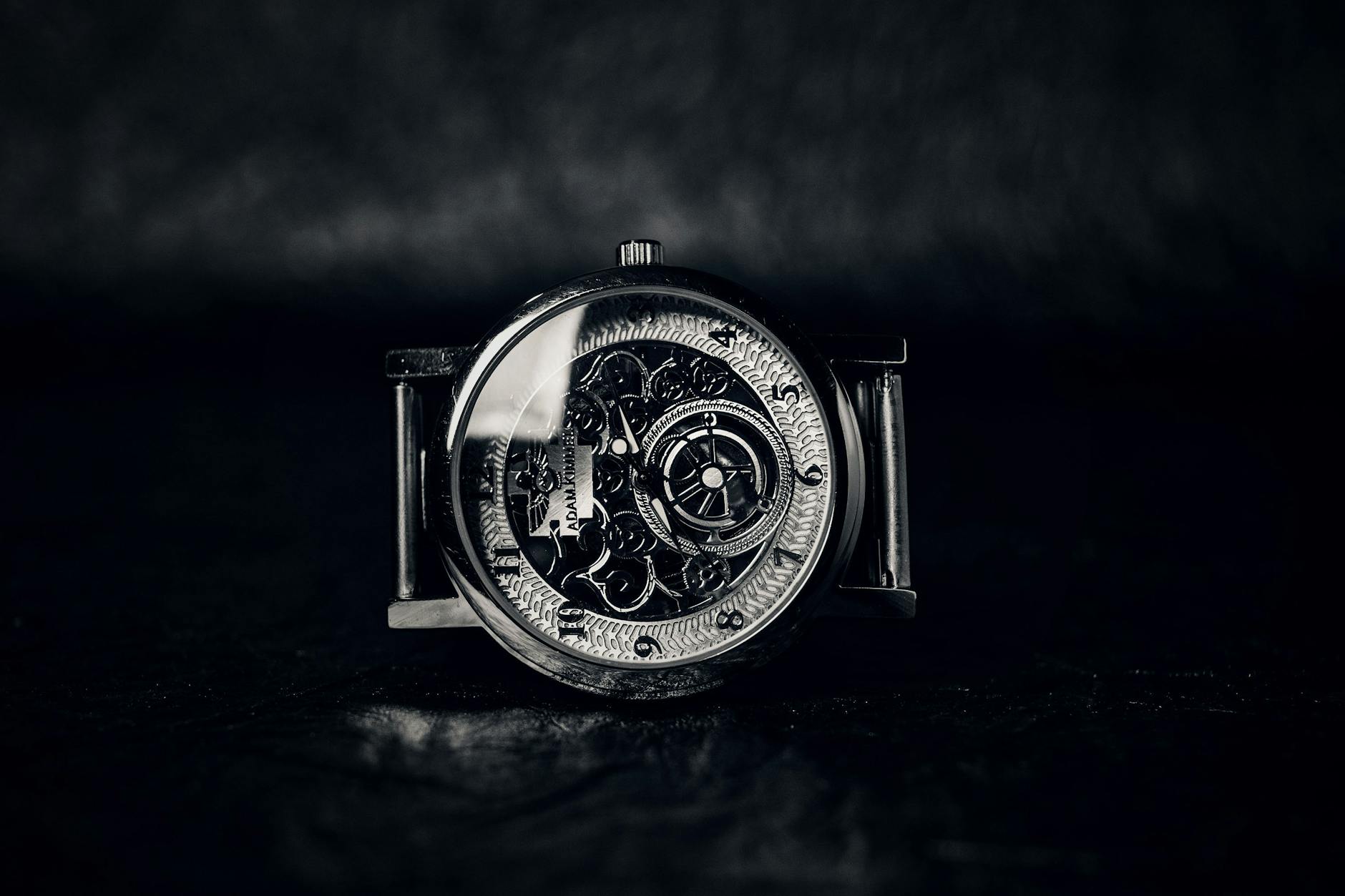
Most new watches play with the surface. A new dial, a different color, an extra gem. The Royal Oak Openworked goes deeper. It removes the dial and lets you see the movement-from the front and, through the sapphire caseback, from behind. You’re not just looking at a watch; you’re looking inside it.
In 2026, Audemars Piguet presents this concept in several variations. The ‘Jumbo’ Extra-Thin Openworked and the Perpetual Calendar Openworked feature titanium with a BMG bezel, which appears matte and technical rather than shiny. The Double Balance Wheel Openworked arrives in yellow gold, tone-on-tone, without contrasting colors. Three approaches, one philosophy: the mechanics are the ornament.
Skeletonization means milling a movement down to its essentials-leaving only what’s necessary. Every bridge, every plate is reduced to its structural form. What remains must function and be beautiful, because everything is visible. There’s no cover to hide rough workmanship.
That’s precisely why an openworked Royal Oak is harder to build than a closed one. Edges are hand-chamfered, surfaces polished, and the gear train sits exposed in the light. The Double Balance Wheel adds a special touch: two balance wheels on one axis, visible in motion. This isn’t a gimmick-it’s Audemars Piguet’s answer to making a balance wheel run more stably. You see the solution at work.
You might think a skeletonized watch craves attention. The 2026 titanium models say otherwise. Titanium is lightweight and matte, shimmering gray instead of flashing. The BMG bezel continues this technical tone. No precious metal posturing, no diamond bezel-nothing that screams from across the room.
The real tension lies in the details. Only up close do you grasp what’s happening: a highly complex movement, exposed, in a case that recedes in color. This is luxury for those who don’t want their table neighbor to recognize the watch at a glance, but who discover something new with every look. The Jumbo remains slim enough to slip under a cuff, its ultra-thin build a decades-old hallmark of the line.
The Royal Oak debuted in 1972, designed by Gérald Genta, as a sporty steel watch priced at the level of a gold one. It caused a scandal back then and later became the blueprint for an entire genre. The octagonal bezel with its eight visible screws is now recognized by anyone who even dabbles in watches.
The skeletonized version arrived later and fits the concept perfectly. A watch that displays its shape so confidently should also reveal its interior. Audemars Piguet manufactures in Le Brassus in the Vallée de Joux, a valley that has been synonymous with fine watchmaking for generations. Those who skeletonize there do it not for a quick effect but because the craft allows it.
The most intriguing watch isn’t the one that shouts the loudest. It’s the one that reveals another layer with every glance.
This is where the most common misunderstanding lies. Many equate open movements with garish colors and a bold presence. Audemars Piguet itself demonstrated in 2023 that it can be done quite differently: for the collaboration with Matthew Williams and 1017 ALYX 9SM, the dials were instead fully closed, smoothly satin‑finished, showing only hours and minutes. Maximum reduction instead of an open movement.
The 2026 Openworked line sits between these poles yet firmly on the restrained side. It opens the movement but eschews colour. It displays complexity without staging it. If you understand that the tension comes from the mechanics rather than the finish, you grasp the core of the matter. That’s exactly what’s occupying collector circles who usually gravitate toward closed‑case watches.
An open Royal Oak isn’t for everyone. Some prefer a clean dial that tells the time at a glance, and a skeletonized watch offers that only to a limited extent. It demands that you look. It rewards those who take the time, and ignores those who merely glance at the wrist.
Anyone who generally approaches the topic of men’s watches as a style statement will find a good entry point at Men’s watches as a style question and value sign.
But those who love mechanics will find few comparable pieces here. The Perpetual Calendar Openworked, for instance, displays an eternal calendar that accounts for leap years and runs far into the next century without correction, and it does so openly so you can see the indications and the movement behind them simultaneously. That’s watchmaking that doesn’t hide. For an audience that no longer needs to prove anything yet wants to know exactly what’s happening on the wrist, this is the right answer.
Anyone who extends this idea to the whole ensemble is also recommended to take a look at Tailoring and why the second fitting matters.
Audemars Piguet introduces the ‘Jumbo’ Extra‑Thin Openworked and the Perpetual Calendar Openworked 2026 in titanium with a bezel made of BMG, a metallic glass. It also adds the Double Balance Wheel Openworked in yellow gold. All three expose the movement and rely on material and mechanics rather than loud colours.