
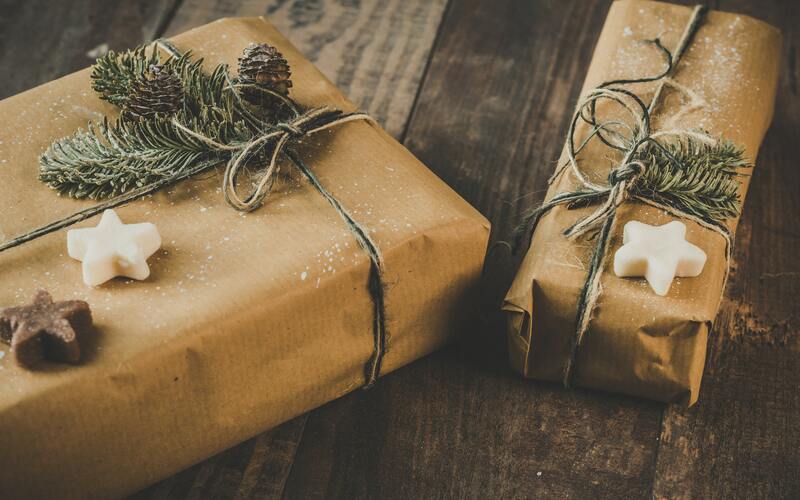
Zero Waste Packaging Ideas for Christmas
A small step, but still an important one. We show you our zero waste packaging ideas for Christmas – simple and yet so beautiful!
In 2019 we reported on zero waste packaging ideas for Christmas. What came of it? A topic that never gets old, because every gift gets unwrapped after a few seconds and the paper mountain still lies before us each year.
- The old article recommends newspaper, paper napkins, baking paper and paper bags as alternatives to gift wrap.
- Kitchen towels, fabric cloths and old jute bags work as packaging and can be reused.
- Pine branches, pinecones, rosemary, ivy or holly give the package a festive touch.
- This approach saves money and reduces gift wrap waste.
- An understated look matters more than perfect craftwork.
Christmas has this strange tension: You spend a lot of time making things look beautiful, only for them to be torn open moments later. The old youDRESSED article hit exactly this point. Gift wrap looks neat for a moment, then trash remains. Zero waste wrapping isn’t a moral crusade, but rather a pretty sensible design question.
The best ideas from the archive weren’t groundbreaking innovations. Newspaper, paper napkins, baking paper, old paper bags, kitchen towels, fabric cloths, jute bags and garden branches. All things you either already have or can get without much searching. That’s precisely where the charm lies. A good gift doesn’t need a new roll of glossy paper. It needs a wrapper that suits the contents and the person.
Paper That’s Already There
Newspaper was the first recommendation in the old post. Black-and-white newspapers, in particular, look calm, graphic, and surprisingly elegant when folded neatly. The trick isn’t in the material cost, but in the combination: a simple string, a twig, a small tag, and you’re done. Paper napkins add color to the mix without requiring you to buy a new roll of wrapping paper.
Baking paper and paper bags were also mentioned. Both sound pragmatic at first, but they can look great if you don’t over-decorate them. Baking paper has that matte, slightly translucent character. Paper bags evoke everyday life. Both suit gifts that don’t need to shout. Fold the edge neatly, tie some string around it, maybe add a small green accent. Rarely is more needed.
The most beautiful packaging is often the kind that doesn’t pretend to be more important than the gift itself.
Fabric Is Packaging and Part of the Gift
Kitchen towels, cloth napkins, and old jute bags were the second big idea. They solve a problem elegantly: after unwrapping, there’s no waste left, just something useful. A good kitchen towel can be wrapped around a cookbook, a bottle, ceramics, or a small delicacy. A jute bag works for books, care products, wine, or items that don’t fit into a perfect box shape.
The old post suggested simply wrapping the gift in fabric and tying it with cord or string. This is exactly right. Fabric doesn’t have to look like origami. It can fall softly. It’s precisely this imperfection that makes the package feel more human. It looks as though someone sat down briefly and really thought about it.
The Garden Provides the Final Accent
Spruce twigs and pine cones were mentioned as Christmas additions. Alternatively, according to the original text, rosemary, ivy, or holly from the garden work well. This is the moment when simple packaging suddenly feels intentional. A twig changes a package immediately because it brings scent, color, and seasonality with it. Rosemary is particularly nice because it’s not only decorative but also subtly fragrant.
It’s important not to overload it. One twig, one string, perhaps a handwritten name. If you glue, stick, and tie too much, you end up back in craft-show territory. The IBL perspective is calmer: beautiful materials, clear shapes, no plastic shine. This way, zero waste becomes not a restriction, but better design.
Why the Tip from 2019 Still Holds Up
The old article ended with Christmas greetings. That fits the origin, but the idea works far beyond December. Birthdays, invitations, and small souvenirs also benefit from packaging that doesn’t immediately end up in the trash. It doesn’t have to be perfect. It’s enough if it’s less careless.
Zero waste here isn’t a competition. It’s an invitation to give value back to existing things: a newspaper, a cloth, a bag, a twig. Exactly from these elements emerges a package that doesn’t look expensive, but attentive.
How to Make It Look High-End Without Buying New
Zero-waste wrapping looks good when materials are combined intentionally. Newspaper with coarse string, baking paper with rosemary, a cloth napkin with a simple name tag. The old post provided the building blocks; the design emerges through restraint. If everything gets a different color, a different pattern, and a different bow, the effect quickly becomes chaotic again.
It’s best to choose one line per gift. Paper and twig. Fabric and cord. Jute bag and small tag. This way, the package doesn’t look like leftover utilization, but like a conscious decision. That’s the difference between improvised and curated.
This calm is especially valuable at Christmas. The calendar is full, the gifts need to be ready, and suddenly packaging becomes the last stress point. The ideas from the old post take the pressure off because they work with what’s already there.
The result doesn’t have to look like a perfect sustainability project. It can look like home: a towel from the kitchen, a paper bag from the last shopping trip, a twig from a walk. Exactly from these things warmth emerges.
If children or guests help with wrapping, it gets even better. Then the package isn’t just lower-waste, but part of the ritual. That’s exactly what holidays are for.
Quick Answers
▸What paper alternatives does the old article mention?
Newspaper paper, paper napkins, baking paper and paper bags. They can be used calmly and beautifully with twine and a small natural accent.
▸Why are cloth napkins useful?
They wrap the gift and remain usable afterwards. The old article mentions kitchen towels, other cloth napkins and old jute bags.
▸Which natural accents fit?
Pine branches, pine cones, rosemary, ivy or holly from the garden. Usually, a small detail is enough.
▸Does zero waste packaging have to look perfect?
No. Clean folding, good material and a quiet accent are more important than craft perfection. The charm lies precisely in using what is already there beautifully.


