Material Study · Living with Fire
A fire in the morning, the stone warms through the night.
Why the Kachelofen is not nostalgia but the smartest way to warm a room.

 Interiors
Why the Kachelofen is not nostalgia but the smartest way to warm a room.
There is a kind of warmth no radiator can give. You touch the wall of your stove in the morning, the fire from last night long gone. The stone is still warm. Not hot, not technical. Warm like an animal that lay beside you through the night.
The Kachelofen, this masonry stove with its skin of ceramic tiles, has stood in Central European homes for centuries. For a long time it was seen as your grandparents’ furniture, heavy, immovable, a little out of time. Now it is back. Not because of a trend. Because it does something better than almost anything invented after it.
A cast-iron stove heats up fast and cools down fast. It burns the air. The Kachelofen does the opposite. Its core of chamotte, fired clay, stores around eighty percent more heat than cast iron and passes it on forty-five times more slowly. The stone holds what the flame gives. Only over hours does it release it again.
Take soapstone instead of chamotte, this soft, soap-smooth stone and you get even more. Soapstone stores unusually high heat for its weight, conducts it more evenly than brick and survives constant heating and cooling without cracking. The warmth that follows is radiant warmth. It heats the things and the people in the room, just as the sun does. That is why a room with a Kachelofen feels warmer than the thermometer says.
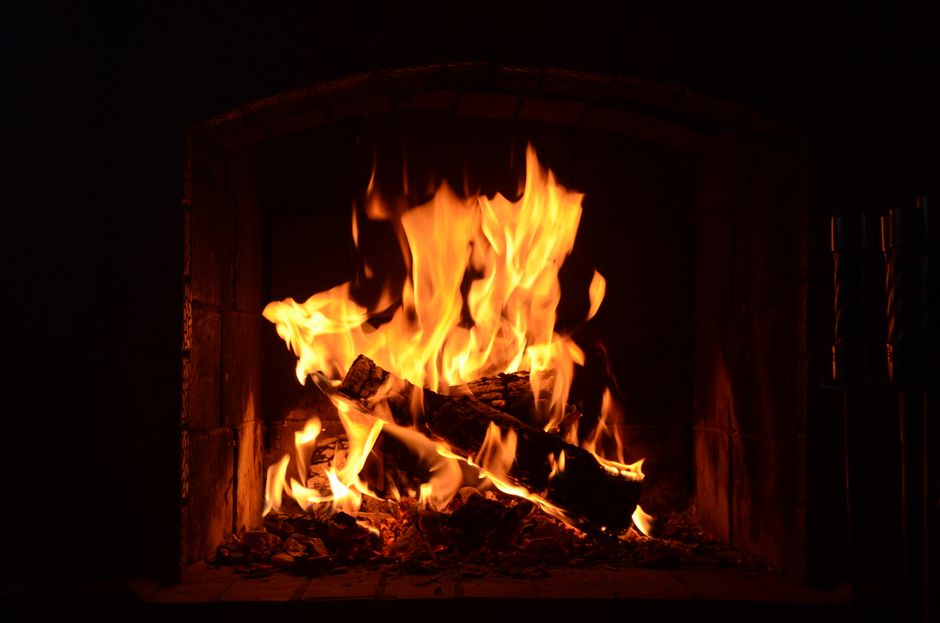
One fire a day. The room carries it through the night.//Living · Material Study
The real luxury is not the warmth. It is the rhythm. A Kachelofen is fired once a day, with a short, hot flame. Then it stays warm for twelve to twenty-four hours, long after the fire is out. No reloading every two hours, no flickering you have to watch. You make a fire, you sit with it for a while. And the room carries that one charge through the day and the night.
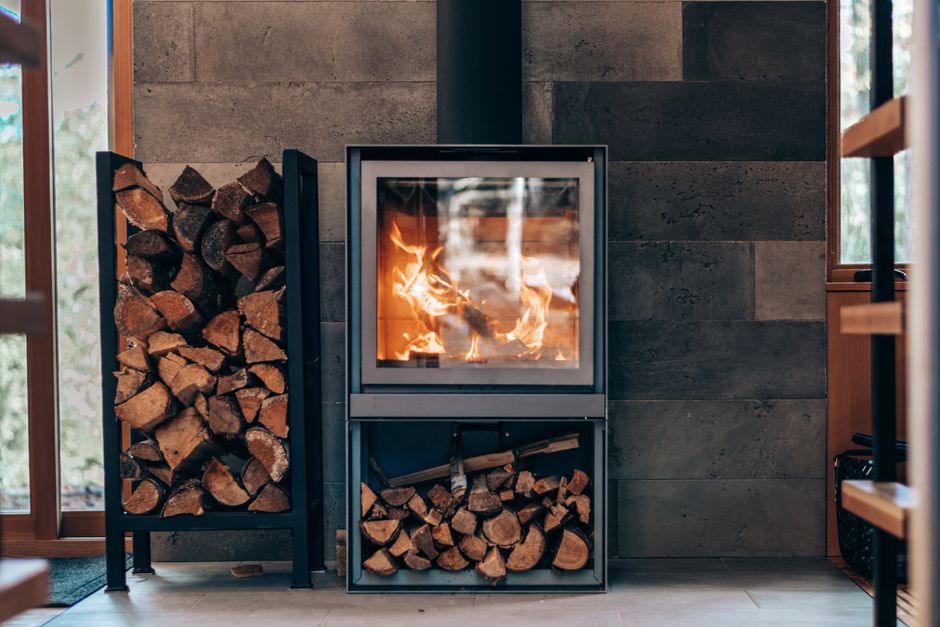
This short, hot combustion is the trick. Give the fire enough oxygen and the wood burns almost completely, with efficiencies of ninety-five to ninety-eight percent and very little smoke. A well-built Kachelofen is therefore not only comforting. It is one of the cleanest ways to heat with wood.
The Kachelofen is not a new product. It is an old one. For centuries it has stood in homes between the Alps and the Baltic Sea. In the eighteenth century it returned in strength and in the nineteenth German and Scandinavian stove setters refined the technique. The Swedes built from it the Kakelugn, the slender, tall sister of the Kachelofen.
The tiles that give it its skin are a craft of their own. They are not to be confused with floor or wall tiles. A stove tile is hollow at the back so it can absorb heat and release it again. It is made for exactly this one stove. A stove setter who knows the craft does not build you a machine. He builds a piece of furniture that lasts a lifetime and is then passed to the next. Sustainability here is a side effect, not a sermon. Something made so well that no one replaces it.
It is not cheap. Nor is it fast. A Kachelofen needs space, a chimney and a stove setter who spends weeks building it. To choose it is to choose decades over a season. That is exactly the point.
Perhaps that is the real reason for its return. We have grown used to warmth that comes at the press of a button and disappears in the same moment. The Kachelofen demands something else. A little patience in the morning, a fire, a few minutes in front of it. And in return it gives you the whole day back as warmth that lives in the stone. You touch the tile once more before bed. It is warm. The fire has long been out.
After a single hot firing it gives off warmth for twelve to twenty-four hours, even when the fire has long been out. The masonry stone core stores the heat and releases it slowly.
Chamotte stores around eighty percent more heat than cast iron and releases it much more slowly. Soapstone stores a great deal of heat relative to its weight and withstands repeated heating without cracking. The stone holds the heat tight instead of giving it up right away.
Yes. The short, hot burn with plenty of oxygen reaches efficiencies around ninety-five to ninety-eight percent and produces little smoke. That makes the Kachelofen one of the cleanest ways to heat with wood.
Rooms with character, materials with history and the light in between. Stay in //Living.


