
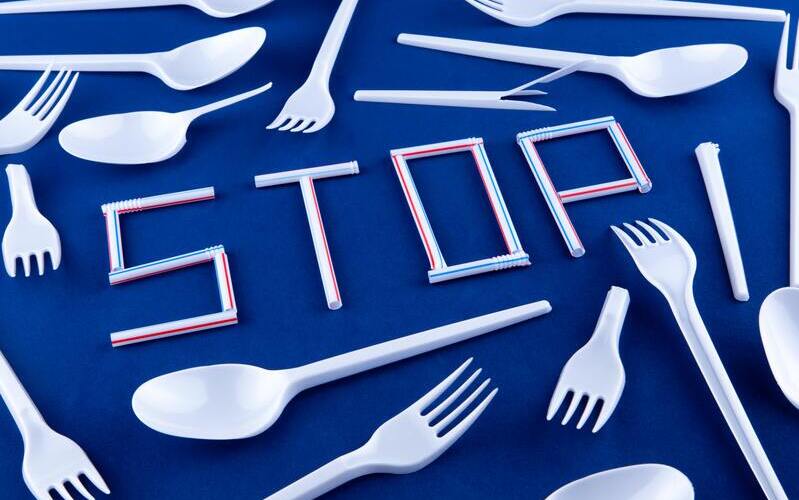
Avoiding plastic: A plastic-free life may not be as hard as you think!
In 2022 we asked whether a plastic-free life was really so hard. Three years, a new EU regulation, and alarming microplastic studies later, the answer is clearer.
A plastic-free life is doable-but it starts not in the bin, but at the checkout. Swapping packaging, takeaway cups, and plastic bottles one step at a time cuts more waste than any after-the-fact sorting. When we wrote about it in 2022, it sounded like a lifestyle choice. Today it’s a health issue and EU law.
- Depending on the source, plastic takes 400 years or more to break down; it is never truly biodegradable.
- By 2025, microplastics were measurably present in the human body, with the highest concentrations found in the brain.
- The biggest levers are mundane: reusable bottles, cloth bags, unpackaged shopping, and staying in the café instead of taking away.
- The EU Packaging and Packaging Waste Regulation (PPWR) entered into force in February 2025, pushing single-use plastics out of retail and hospitality.
- You don’t have to go perfectly plastic-free. Changing three or four habits makes more difference than a good intention.
Why the Effort is Worth It
Plastic is useful, cheap, and ubiquitous. That’s precisely the problem. The material doesn’t disappear: depending on the source, a plastic bag takes 400 to 500 years to break down, and even then it doesn’t biodegrade-it crumbles into ever-smaller particles. Animals eat the bags and scraps, get tangled in them, or starve with full stomachs. What remains on land and in the sea stays for generations.
In 2022, this was mainly an environmental and animal-protection argument. Now it’s also about your own body. A study published by the University of New Mexico in February 2025 detected microplastics in livers, kidneys, and-most prominently-in the human brain, at higher concentrations than in any other organ examined. The dominant plastic type was polyethylene, the very material used in plastic bags and packaging. Notably, within eight years the measured quantity in the brain has risen by roughly 50 percent.
Important caveat: detection isn’t the same as harm. Whether and how these particles affect health remains scientifically unsettled, and individual measurement methods are still debated in the expert community. Yet the tone has shifted. The moral “one should” has become a tangible “it ends up inside me.”
You don’t have to go plastic-free overnight. Three or four habits that stick are worth more than any perfect resolution that collapses after two weeks.
The Levers with the Greatest Impact
The good news from 2022 still holds: you don’t need a new life, just a few replaced routines. Four of them deliver the biggest payoff.
Ditch the plastic bottle. A single stainless-steel or glass bottle, once purchased, replaces hundreds of disposable bottles per year. You save money, avoid deposit hassles, and take in less microplastic that can leach from PET. Refilling is possible almost anywhere today.
Fabric over film. Plastic bags consume crude oil and vast energy for a lifespan of minutes. Jute tote bags or a cloth sack in your backpack solve the issue at the source because you never reach for a bag in the first place.
Stay in the café instead of grabbing takeaway. The disposable cup lives for half an hour and then lingers for centuries. If you give yourself twenty minutes and drink on-site, you produce zero waste. Where that’s not possible, reusable systems help. How a deposit-cup system like RECUP works in detail is covered in our feature on RECUP.
Watch what’s in your cosmetics and makeup. Many skincare and makeup products contain plastics, sometimes as microplastics. Natural cosmetics and lists from environmental groups help you sidestep the problematic ingredients without memorizing every label.
Shop Unpackaged Wherever Possible
Zero-waste stores were still a niche phenomenon in 2022; today they’re found in many larger cities. The principle is simple: bring your own containers and fill them with the exact amount of vegetables, pasta, shampoo, or detergent you need. No plastic, no overbuying, less food waste. Where such a store is nearby, it’s a real privilege worth using.
And if there isn’t one? Online shops with plastic-free assortments-from bamboo toothbrushes to solid shampoo-step in. Even conventional supermarkets can be used more consciously, for instance by choosing loose fruit and vegetables or multi-use deposit containers. How that looks in everyday life is shown in our feature on supermarket sustainability.
What has changed since 2022: the EU takes action
In 2022, almost everything still depended on your own behaviour. That’s changing structurally now. The EU Packaging and Packaging Waste Regulation (PPWR) came into force on 11 February 2025 and is now binding in all 27 member states. It shifts part of the burden away from individuals and places it where the waste is actually generated.
Concretely, this means, among other things, that single-use plastic for on-site consumption in cafés is banned, small single-use containers such as mini-shampoos in hotels or jam sachets are disappearing, and very light fruit and vegetables may no longer be wrapped in plastic. A gradual roll-out of mandatory reusable systems in the hospitality sector will also take effect, with takeaway drinks covered from 2030 in meaningful volumes. Per-capita packaging waste is set to fall by five percent by 2030 and by fifteen percent by 2040.
This doesn’t remove the need for you to make choices, but it makes the plastic-free path easier. What was a conscious exception in 2022 is increasingly becoming the built-in standard. If you act now, you’re not chasing the trend-you’re setting it. More ideas are waiting for you in our ongoing overview of sustainable urban living.
Quick Answers
▸How long does plastic take to decompose?
Depending on the polymer and source, anywhere from roughly 400 to 500 years-and often longer. It isn’t truly biodegraded; it merely breaks down into ever-smaller fragments that later become microplastics. That’s exactly why avoidance beats any form of downstream disposal.
▸Has microplastic really been detected inside the human body?
Yes. Studies published in 2025, including work from the University of New Mexico, have identified microplastics in human organs, with the highest concentrations found in the brain. Whether it causes specific harm remains scientifically unproven, and individual measurement methods are still debated. Yet the mere detection is reason enough to cut intake.
▸Where should I start?
With the habit you perform every day. For most people that’s the reusable water bottle or the coffee on the go. Swapping to a refillable bottle and skipping the disposable cup saves waste immediately and noticeably, without having to overhaul your life.
▸Do I now have to live completely plastic-free?
No-and it wouldn’t be realistic anyway. Plastic is woven into too many areas. A smarter approach is to replace the biggest sources consciously: bottles, bags, takeaway cups, cosmetics. Three or four solid habits deliver more than a perfect resolution that collapses after a few weeks.


