Valentine’s Day Gifts from the Heart
In February 2020 we wrote down three gift ideas for Valentine’s Day. Six years later, retailers confirm what was implied between the lines: the gesture outweighs the price tag. What remains of it.
The best Valentine’s Day gift rarely costs the most. It’s the one where you put in effort instead of money: breakfast you bring to bed yourself, a day off together, a bouquet from the florist instead of the gas station. We wrote about these three ideas in 2020, and six years later they read like a preview of what retailers are measuring in numbers today.
- The gesture matters more than the price. Breakfast in bed, shared time, and good flowers beat expensive obligatory gifts.
- Retailers expect an extra €1.18 billion in Valentine’s Day revenue for 2026, down from €1.3 billion the year before (HDE).
- Only one in five people spends money at all. Those who do usually stay under €50.
- Personalised gifts, flowers, and chocolate are tied for the top spot (13 percent each), followed by romantic experiences (11 percent, YouGov).
- Experiences beat material goods: a day together lasts longer than any object.
On 14 February, many couples feel the same quiet pressure: something special has to happen, ideally visible, ideally expensive. Yet in the buying frenzy, what really matters gets lost. Not the material, but the gesture. Whoever understands this saves themselves the stress and gives something that sticks.
Why the Gesture Matters More Than the Receipt
The numbers don’t lie. For 2026, the German Retail Association (HDE) expects around €1.18 billion in additional sales around Valentine’s Day, a noticeable drop from the €1.3 billion of the previous year. Only one in five people now plans to spend money, about eight percentage points fewer than before. One reason was self-inflicted: in 2026, Valentine’s Day fell on Carnival Saturday, and many simply shifted their budgets to the celebrations instead.
Those who do give are holding back. The majority spend up to €50, and more than one in five plans to spend less than last year. This isn’t a sign of stinginess, but of healthy skepticism toward the obligatory gift. A YouGov survey reveals where affection is heading: personalized gifts, flowers, and chocolate each top the list at 13 percent, closely followed by romantic experiences at 11 percent. The expensive takes a back seat. The personal moves to the front.
The most beautiful Valentine’s gift isn’t listed in any price list. It’s time, attention, and a little effort.
Breakfast in Bed, Please
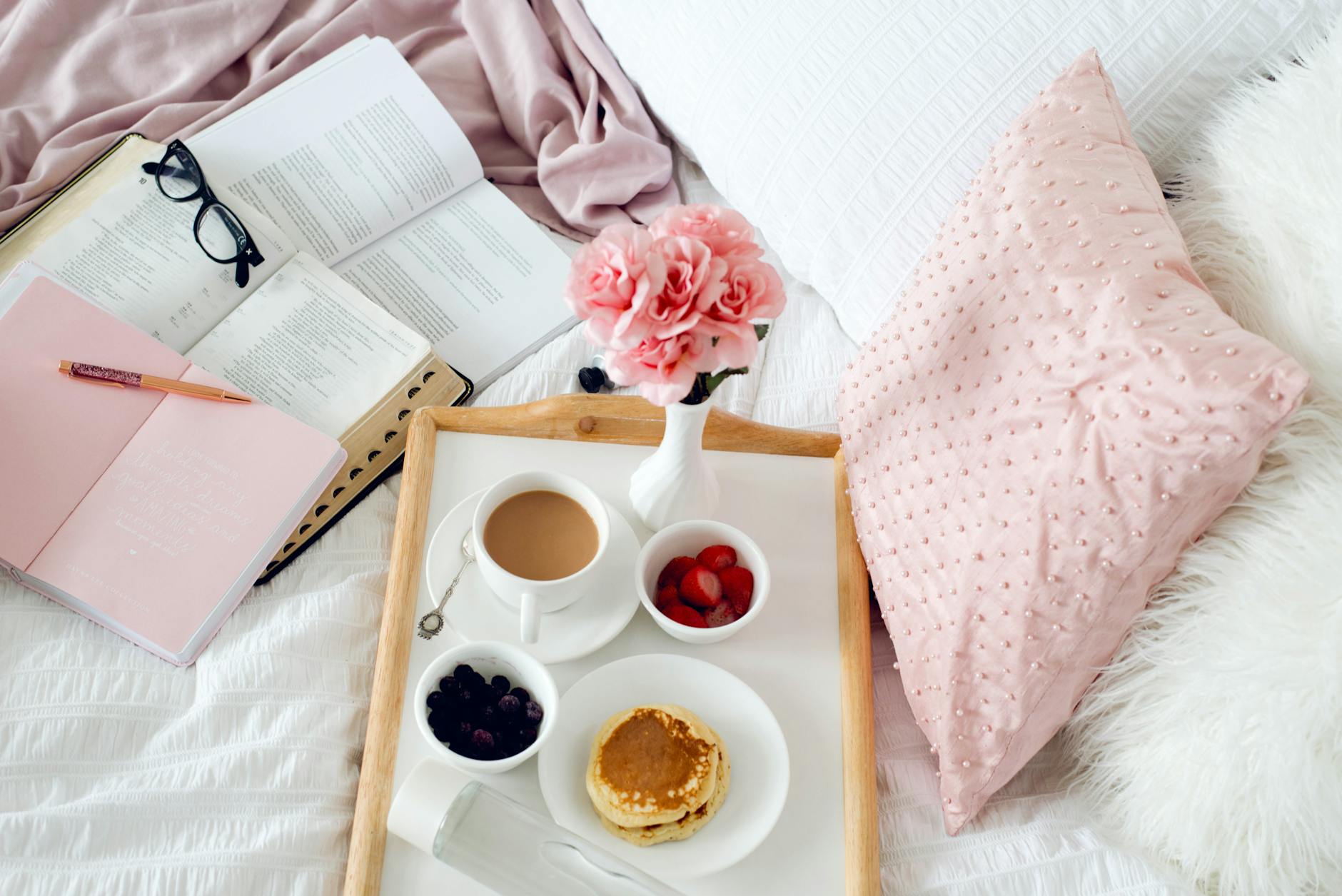
The alarm goes off, you jump up, grab a coffee on the run, and dive into the day. In everyday life, there’s rarely time for the little things. That’s exactly why the opposite makes such a strong impression. Prepare breakfast for your loved one and bring it to bed before the day even begins.
You don’t need a Michelin-star kitchen. A few fresh fruits, good bread, scrambled eggs, maybe pancakes, and an espresso that actually tastes like something. The secret isn’t in the effort, but in the timing: you’re giving away the most beautiful hour of the day before anyone else can claim it. If you want to go even further, flip the idea in the evening and serve breakfast for dinner-a concept that has more charm than any restaurant with a waiting list. We tried it out in Breakfast for Dinner.
Give Time, Not Things
Why reserve just the evening when an entire day is possible? The strongest trend of recent years is experiences over material goods. Internationally, money is visibly shifting toward shared moments-in the UK, cinemas saw a 138 percent increase in Valentine’s Day visitors, theaters 60 percent. The reason is simple: an object eventually ends up in a drawer, but a shared day becomes a memory.
You don’t need to travel. A hike in the mountains, a long walk, a day where you don’t have to do anything-it’s enough. If you prefer quiet, turn your own four walls into a mini getaway or treat yourselves to a weekend with a sauna and silence. How a relaxing wellness weekend can truly switch off the everyday is shown in our selection of the right spots. Giving time has one unbeatable advantage: it can’t be returned.
Will You Accept This Rose?
Let’s be honest: almost everyone is happy to receive a beautiful bouquet. What matters is the quality. The local florist has fresher, more beautiful flowers than the bucket at the gas station, knows what’s in season, and arranges a bouquet that lasts a few days longer. The difference lies in the hand, not the price.
And they don’t have to be the obligatory red roses. Tulips, ranunculus, or sunflowers often feel more personal because they look less like a mandatory program. If you want to escape the cliché entirely, take the gift one step further and give something lasting with integrity. How to do that without guilt is outlined in Jewelry from Fair-trade Gold, fairly produced and no less beautiful.
Whatever you plan-a dinner, an evening on the couch, a bouquet from the market-the biggest mistake is to stress about it. And if you’re missing the right company right now, spend the day with friends. After all, life is best lived in good company.
Quick Answers
▸How much should you spend on a Valentine’s gift?
There’s no right amount. Most Germans stay under €50 according to surveys, and many spend even less. What matters isn’t the price tag but the effort. A homemade breakfast costs a few euros and beats any obligatory luxury present.
▸What do you give when time is short?
Time itself is the best gift. A free day together, a walk, or breakfast in bed needs no long preparation and leaves a deeper impression than a hastily bought object. If you still want something tangible, a florist’s bouquet or homemade chocolates will do.
▸Are experiences better than gifts?
For most people, yes. Studies have shown for years that shared experiences create longer-lasting happiness than material things because they become memories. Even on Valentine’s Day, spending is visibly shifting toward experiences-from cinema and theatre to a weekend getaway.
▸What flowers work instead of red roses?
Tulips, ranunculus, anemones, or sunflowers make lovely alternatives and often feel more personal than the cliché. Ask your local florist what’s in season; quality is usually far higher than supermarket bouquets, and the blooms last longer.