

Travertine: The Stone That Lets Bathrooms Breathe Again
Between cold high-gloss finishes and the terrazzo hype, a stone as old as the Colosseum is making a comeback. Why travertine warms up spa bathrooms and guest WCs without looking rustic.
A bathroom doesn’t need to gleam to feel expensive. Sometimes all it takes is a stone that doesn’t mirror but breathes, with visible pores, irregular veining, and a surface that stays warm to the touch instead of cold. Travertine has done exactly that since antiquity and is now returning to bathrooms that want to escape the clinical spa aesthetic.
- Travertine is a porous limestone deposited from calcium-rich groundwater near springs and waterfalls, not an igneous or metamorphic rock
- The Colosseum in Rome is built from Tivoli travertine, making it one of Europe’s oldest luxury building materials
- For wet rooms, stone specialists recommend honed rather than high-gloss polished finishes, less reflective and closer to the stone’s warm character
A stone born from water
Travertine is a more or less porous limestone formed when calcium-rich groundwater precipitates near springs and waterfalls. That sets it apart from granite, which solidifies from magma, and from marble, which derives from metamorphic rock. Its hallmark features are visible pores and veining, sold commercially as filled or unfilled, sealed or open-pored, a key distinction for bathroom surfaces and maintenance.
The most famous quarries lie in Italy near Tivoli outside Rome and in Turkey around Denizli. Both regions have supplied building stone since antiquity. The Colosseum and many other ancient Roman structures are built from Tivoli travertine, making it one of Europe’s oldest luxury materials, not a fleeting trend but a nearly two-thousand-year track record.
Why matte outperforms gloss
For wet rooms, stone specialists typically recommend honed finishes over high-gloss polish. Less reflective, often more slip-resistant, and closer to the warm, matte-porous character that separates travertine from large-format high-gloss tiles. Anyone who has walked barefoot across heated, honed travertine in a spa bathroom knows the difference: warmer, less clinical, palpably more alive underfoot.
This tactile quality isn’t accidental; it’s a direct result of the material’s porosity. A stone that absorbs moisture differently than dense high-gloss behaves differently against skin. That difference is precisely what gives travertine its appeal, an effect mass-produced tiles can rarely match.
What pores mean for care
Porous natural stones in showers and at vanities require professional impregnation and regular resealing. Unsealed travertine absorbs moisture and cleaning products faster than dense high-gloss porcelain. That isn’t a flaw to hide; it’s part of the material’s identity. Choosing travertine means choosing a bathroom that asks for care, not one left to its own devices.
Open-pored travertine can develop a patina and subtle colour deepening if left unsealed or minimally maintained. That’s an argument for honest ageing instead of clinical high-gloss, but also a conscious decision. Not every bathroom is meant to grow old; some are meant to stay pristine forever. Travertine isn’t for those spaces.
A travertine bathroom doesn’t age worse than a high-gloss one. It simply ages more honestly.
Earth-toned hues straight from the ground
Typical travertine colour palettes range from cream-white and beige through walnut and noce tones to silvery-grey variants. These shades stand apart from monochrome high-gloss finishes without slipping into the rustic associations that some people still attach to natural stone. A washbasin in pale travertine reads not rustic but pared-back, almost as if an ancient find has been reimagined in modern form.
It’s important to distinguish travertine from a related but materially different trend: terrazzo is made from aggregate bound in cement or resin, whereas travertine is a monolithic natural stone with its own inherent pores. If you read travertine as the antidote to an exhausted terrazzo trend, you’re technically correct: these are two entirely separate material classes, not variations on the same look.
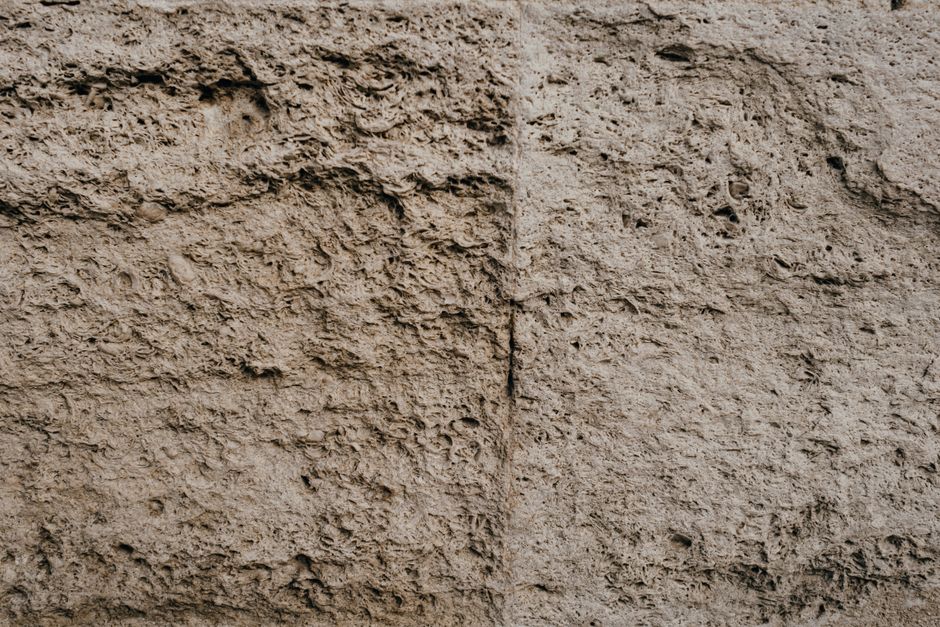
The effect only unfilled travertine delivers
A guest WC clad in unfilled travertine, lit by pinpoint wall sconces, lets the stone’s natural cavities catch shadows in the evening, a detail-loving effect exclusive to the open-pore version. Filled travertine, whose pores are sealed with resin or cement, feels smoother and easier to maintain but sacrifices that subtle play of light.
Choosing between filled and unfilled is therefore not merely a price question; it’s a matter of what you expect from the material. Prioritise low-maintenance living and you’ll reach for filled. Want the full sensory experience? Then accept the extra care that unfilled travertine demands.
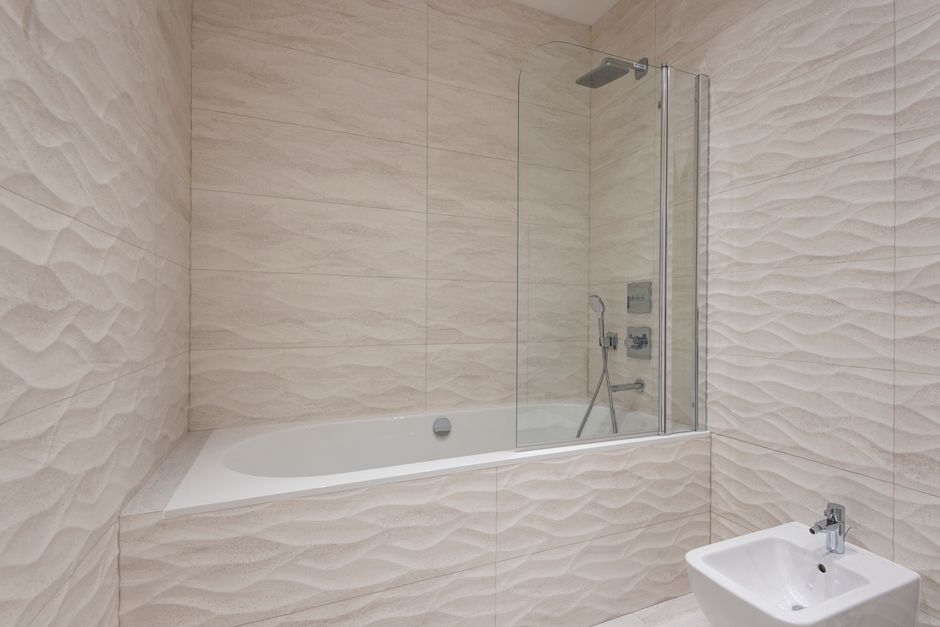
What to weigh up before your own bathroom renovation
If you’re considering travertine for a bathroom, decide first on the surface, honed rather than polished, then on porosity, filled or unfilled, before you settle on colour. Follow this order to avoid disappointment: a travertine bathroom treated like high-gloss tile loses precisely what makes the stone special.
In the end, travertine isn’t a material for everyone. It’s a material for bathrooms that are allowed to tell a story instead of merely performing a function.
Quick answers
▸How does travertine differ from marble or granite?
Travertine is a porous limestone deposited from calcium-rich spring water. Granite forms from solidified magma, marble from metamorphic rock. The visible pores and laminations are travertine’s signature trait.
▸Does travertine need special bathroom care?
Yes. Porous travertine requires professional impregnation and periodic resealing because it absorbs moisture faster than dense porcelain stoneware. Left unsealed, it develops a visible patina over time.
▸Is travertine the same as terrazzo?
No. Terrazzo is aggregate bound in cement or resin; travertine is a monolithic natural stone with its own pores. They belong to two materially distinct classes.
Image source: header and in-article images Pexels.


