These are the coffee trends of 2018!
In 2018, mushroom coffee, pink lattes, and Vietnamese egg coffee sounded like madness. A few years later, three of them are on the menu at your favorite café. We look back to see what’s left of the hype.
When we wrote about 2018’s coffee trends, much of it sounded like culinary experimentation: espresso with whipped egg yolk, coffee with mushroom extract, a neon-pink latte perfect for Instagram feeds. Today, a few years later, it’s time for an honest reckoning. Which of these flights of fancy have made it into everyday life, which turned out to be mere photo ops, and what’s actually worth trying? We revisit the four trends from back then and tell you what became of them.
- Vietnamese egg coffee has gone from hidden gem to café staple across Europe and social feeds. It’s here to stay.
- Mushroom coffee is now its own product category. Functional coffee with fungi and adaptogens is a billion-dollar market.
- The pink latte was a flash-in-the-pan photo trend. Its colorful legacy lives on in matcha and turmeric lattes.
- Maca coffee has settled into the wellness niche, with far less dramatic promises than it once made.
- Cold brew has quietly gone from trend to standard on every menu.
Vietnamese Egg Coffee: From Niche to Café Staple
In 2018, Cà phê trứng-Vietnam’s espresso topped with whipped egg yolk-was still a closely guarded secret in Europe. That has changed. Vietnamese cuisine has achieved cult status across the continent, and with it, the country’s coffee culture has stepped into the spotlight. Egg coffee and its sweeter sibling, Cà phê sữa đá-filtered over condensed milk and served over ice-now appear on café menus and social feeds from Lisbon to Berlin.
The origin story behind the trend is what makes it so compelling. The drink was invented in 1940s Hanoi, when condensed milk was scarce and a bartender at the Metropole Hotel whipped egg yolk into the brew instead. What began as a stopgap became a classic. This isn’t a marketing gimmick; it’s a recipe with substance, and that’s why it endures.
What sounded like a dare in 2018 now sits proudly on café menus: egg coffee has moved from experiment to permanent fixture.
Mushroom Coffee: From Wellness Gag to Product Category
We called this one right in 2018-though we didn’t realize just how far it would go. Coffee blended with functional mushrooms like reishi, chaga, cordyceps, or lion’s mane once belonged in the esoteric corner of the shop. Today, it’s a global market worth billions. Functional coffee-coffee enhanced with mushrooms, adaptogens, and other additives-is now stocked from organic grocers to major retail chains. Brands like Four Sigmatic have made the leap.
The rationale behind it is more practical than the hype suggests. Want the caffeine kick with less acidity and a smoother energy curve? Reishi brings calm, cordyceps fuels energy, and lion’s mane sharpens focus. Rigorous studies supporting many of these claims remain thin on the ground-that’s part of the honest picture. Still, as a flavor experiment and ritual upgrade, mushroom coffee has carved out a permanent spot.
Pink Latte: Pretty for the Gram, Short-Lived in Reality
The pink latte-espresso sweetened with forest honey and frothed milk dyed beetroot red-was 2018’s Instagram darling. And that’s exactly what did it in. A drink that relied on color over taste and divided palates had a short shelf life. The neon-pink beetroot latte is rarely ordered seriously these days.
But the idea isn’t dead; it just evolved. Colorful, photogenic lattes live on in more durable forms: matcha latte is now mainstream, golden turmeric latte holds steady in the wellness niche. The lesson? A trend built only for the feed fades faster than the hashtag cools.
Maca Coffee: A Correction to the Hype of Yesterday
We need to correct ourselves on maca coffee. In 2018, we reported that the Andean root delivered three to five times the caffeine of regular coffee and contained guarana. Neither claim holds up. Maca contains no caffeine, and guarana is a separate South American plant entirely. Anyone expecting an extra jolt in 2018 came away disappointed by the root alone.
What remains is honest and modest. Maca is valued in wellness circles as a supplement, often stirred into coffee, smoothies, or porridge. Its malty-nutty flavor pairs well with coffee. The caffeine kick still comes from the espresso, not the maca. A useful reminder to fact-check trend promises before swallowing them whole.
The Quiet Winner: Cold Brew
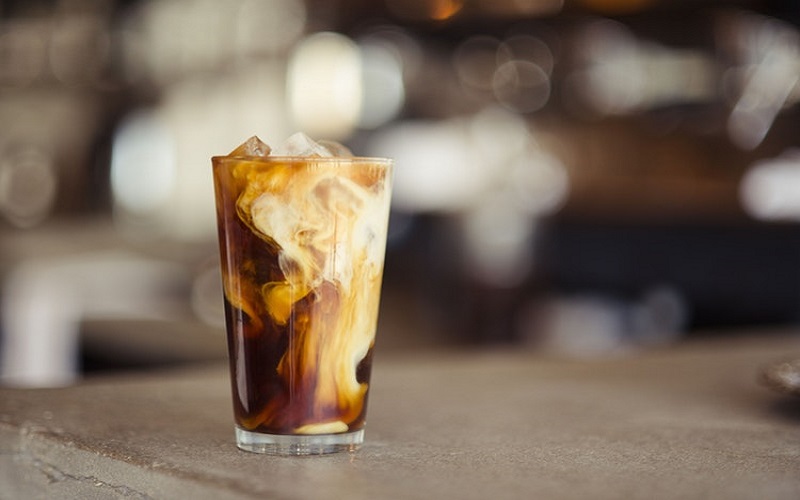
One trend we almost overlooked in 2018 was cold brew. Back then, it was still a specialty item. Today, it’s standard. Found on almost every café menu, served in summer as cold brew tonic with tonic water-smooth, low-acid, and unassuming. The least flashy trend of the bunch has become the most entrenched. Sometimes, the quietest drink wins, not the loudest.
If you’re ready to think deeper about coffee, we’ve tackled the most persistent coffee myths, from whether it wakes you up to whether it makes you beautiful or even sober. And if you want to bring more mindfulness to breakfast, our Eat-the-Rainbow guide shows how color on your plate fuels health. For those using caffeine strategically around workouts, our sister magazine InspiredBySports offers the performance and recovery perspective.
Good to Know
▸Which of the 2018 trends has stood the test of time best?
Cold brew and Vietnamese egg coffee. Both still appear on many café menus today. Cold brew as a low-acid summer classic, and egg coffee as a creamy specialty with real history. Both have endured because of taste, not appearance.
▸Does mushroom coffee really do anything, or is it just marketing?
Functional coffee with mushrooms is indeed a big market today. However, the health claims around focus, calm, or energy are still thinly backed by science. As a flavorful, low-acid alternative, mushroom coffee is a solid recommendation. As a miracle cure? We wouldn’t go that far.
▸Is it true that maca increases caffeine content in coffee?
No. Maca itself contains no caffeine, and the often-cited guarana is a different plant entirely. Maca may be an interesting supplement, but the wakefulness effect still comes from the espresso. This clarification is important-back in 2018, we saw it differently.
▸Is the pink latte still worth it today?
Probably not as an everyday drink. The neon-pink beetroot latte was mostly a photo trend. If you love colorful, photogenic latte ideas, matcha or turmeric lattes are the more lasting successors-with far more flavor to offer.