Guide · Panettone
Panettone: How to recognise skilled craftsmanship
How to recognise a good panettone: what the Italian decree requires, how lievito madre and upside-down cooling work, and what the crumb and aroma reveal.

 Hosting
How to recognise a good panettone: what the Italian decree requires, how lievito madre and upside-down cooling work, and what the crumb and aroma reveal.
On the shelf, one panettone can look much like the next: a tall dome, a paper wrapper, a ribbon. What lies inside varies considerably. Italy has established a clear rule setting out which ingredients a panettone needs and how it must rise. With that in mind, you can read the ingredients list, check the crumb and smell the difference.
An Italian ministerial decree from 2005 reserves the name Panettone for a soft bake naturally leavened with sourdough. The decree also describes its appearance: a round base, a cracked and characteristically scored top crust, a soft crumb with elongated air pockets and the aroma of sourdough fermentation.
The dough must contain certain ingredients, some in specified minimum amounts.
| Ingredient | Requirement under the decree |
|---|---|
| Wheat flour | Required |
| Sugar | Required |
| Grade A eggs or egg yolk | at least 4 per cent egg yolk |
| Butterfat | at least 16 per cent |
| Raisins and candied citrus peel | at least 20 per cent combined |
| Natural yeast from sourdough | Required |
| Salt | Required |
Source: Decree of 22 July 2005, Art. 1 para. 2.
The producer may also add milk, honey, malt, cocoa butter, natural flavourings and emulsifiers, among other ingredients. The preservatives sorbic acid and potassium sorbate are permitted too. Baker’s yeast is allowed only as an aid, at no more than one per cent.
Variants are regulated too. If raisins or candied fruit are omitted, this must be stated in the name. The Turin Chamber of Commerce illustrates this in its labelling guide with the example of a panettone senza uvetta. Under Article 8, small versions may be sold as panettoncino. Producers may add fillings, glazes and coatings. For these additions, the decree expressly excludes fats other than butter. The base dough must make up at least half of the finished bake.
There is one limitation you should know about. Under Article 9, the decree does not apply to goods lawfully made or sold in another EU member state. A panettone from a German bakery may therefore contain different ingredients. The Italian rule is still a useful benchmark because it describes what makes the classic.
The same decree also governs two related bakes. Pandoro contains no fruit, has an eight-pointed star shape and requires at least 20 per cent butterfat. Dove-shaped colomba calls for at least 15 per cent candied citrus peel, a glaze and at least 2 per cent almonds. All three are leavened with sourdough. Panettone sits in the middle: less butter than pandoro, but the highest fruit content of the family.
At the heart of the craft is lievito madre, a sourdough starter that the bakery refreshes regularly. It brings acidity, aroma and leavening power to a dough rich in butter, egg yolk and fruit. To rise high despite that weight, the dough needs time in several stages.
A professional recipe for bakeries from baking ingredients manufacturer Ireks shows just how long the process takes. First, a pre-ferment is made with lievito madre. It rests for 12 to 14 hours at 26 to 27 degrees. Only then are sugar, honey, more egg yolk and butter added to the main dough, followed right at the end by raisins and candied orange peel. After shaping, each piece of dough proofs for another 5 to 6 hours at 30 degrees, until it has doubled in volume.
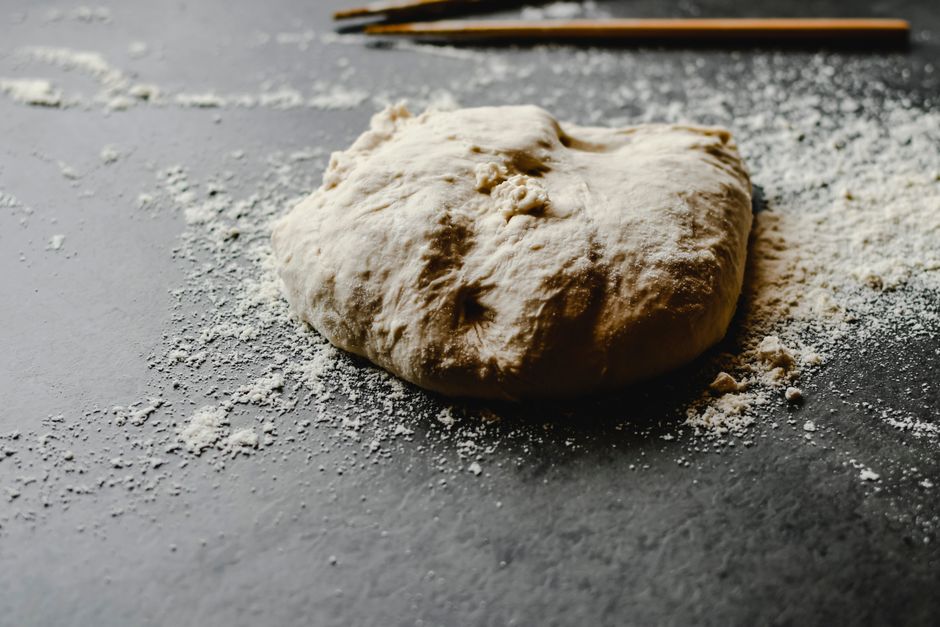
The panettone is baked at 175 degrees, falling to 160 degrees. A 700-gram panettone takes 45 to 50 minutes, while a one-kilogram panettone takes 50 to 55 minutes. The recipe specifies a core temperature of at least 94 degrees. Add together the dough rest, final proof, baking and cooling, and the recipe takes around 20 hours or more. That is well over a working day.
Then comes the step that surprises many people. Straight from the oven, bakers pierce the panettone with skewers and hang it upside down. Butter producer Lurpak explains why: this stops the dome from collapsing and preserves the airy crumb. The panettone should hang for at least two to four hours before slicing.
Annex II of the decree sets out the order of the steps. It begins with preparing the sourdough starter and fermentation. The bakery then kneads the dough with all the ingredients, divides it into portions, shapes them and places them in the baking mould. Proofing, scoring, baking, cooling and packaging follow. A bakery may combine individual steps.
Add together the dough rest, final proof, baking and cooling, and the recipe takes around 20 hours or more.
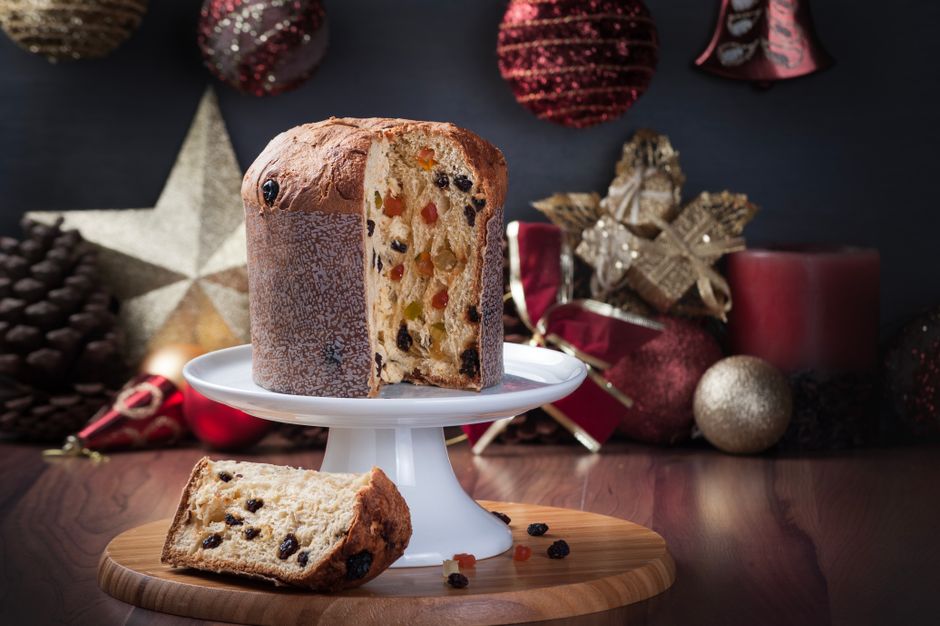
Cut into the panettone and you can see whether the long proof has done its work. The decree describes the crumb as soft, with elongated air pockets. These run from bottom to top as the dough rises inside the tall mould. Gently pull a piece apart: a good crumb separates into strands, almost like candyfloss made of dough. A dense, uniformly fine crumb like that of a sponge cake does not match the picture the decree describes.
The colour depends largely on the egg yolk. A rich yellow is consistent with a dough containing plenty of yolk, while a very pale dough suggests little egg. The fruit should be evenly distributed, not sitting in a layer at the bottom. That happens when the dough is stable enough to support it.
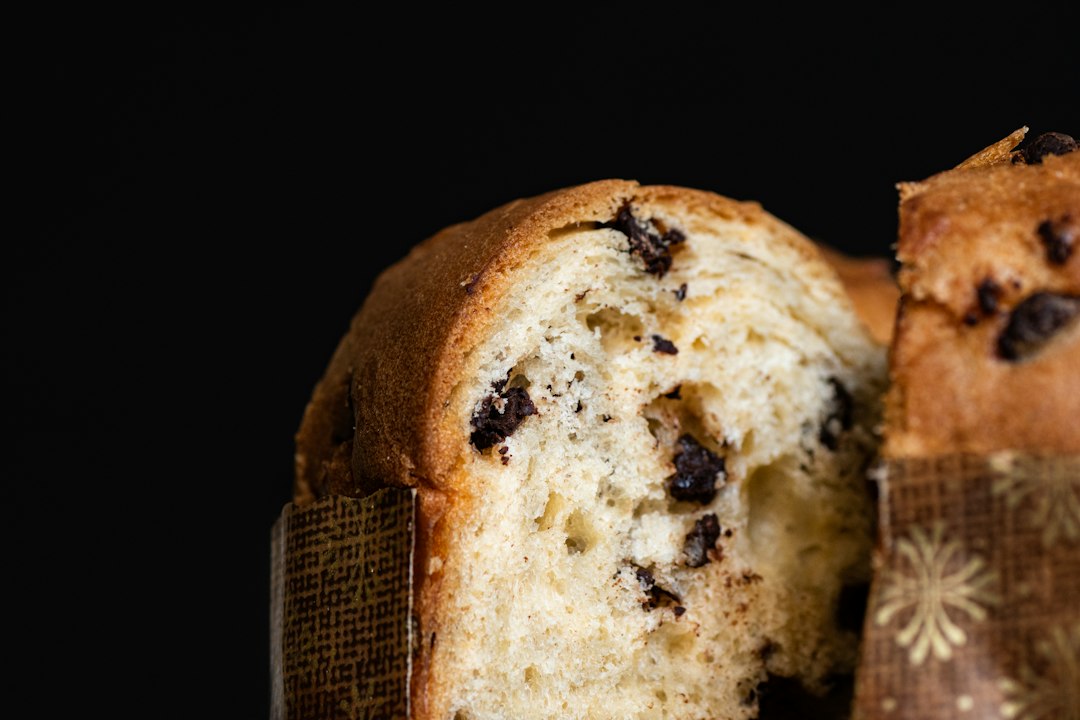
The surface tells you something too. The decree requires a cracked and scored crust. In the professional recipe, bakers score the dough in a cross and place a piece of butter in the centre. As it rises, the dome opens along these cuts.
The ingredients list is the quickest test in the shop. Butter is the main fat. The decree also permits cocoa butter as an addition; margarine and other vegetable fats do not appear on its list. Sourdough or lievito madre should be on the list. If yeast appears near the top, it has probably done more of the work than the sourdough. Under Annex I, the one per cent limit for baker’s yeast applies to the dough as it is. The decree calculates the minimum amounts of egg yolk, butterfat and fruit, however, against the dry matter of the dough ready for kneading. Check the flavourings too: the decree permits natural flavourings, and a good bake needs vanilla, citrus and butter above all.
Check the fruit when you cut into it. Candied orange and lemon peel should be soft, juicy and distinct in flavour. Raisins should look plump. Hard, dry cubes are a warning sign. If the fruit is missing altogether, an Italian panettone must say so in its name, for example as senza uvetta. Take a second look at versions with cream or chocolate: the decree requires the classic base dough to make up at least half the weight.
The aroma comes last and tells you the most. A sourdough panettone smells of butter, citrus and a gentle acidity. If it smells only flat and sweet, that part of the aroma is missing. Pay attention to preservatives too. Sorbic acid is permitted, but its main role is to extend shelf life.
Read the ingredients list first. Butter as the main fat, egg yolk and sourdough should all be there, with baker’s yeast playing at most a minor role. Cocoa butter is permitted as an addition; other vegetable fats do not fit the Italian standard. Then look to the crumb and aroma. If the crumb pulls apart in long strands and the cut surface smells of butter and citrus, the bakery has invested the time this bake needs. With a panettone from another EU country, the Italian name alone does not protect you; the ingredients list does.
The hot panettone is so soft that its dome can collapse as it cools. Hung upside down, it keeps its shape and airy crumb. It is recommended to leave it hanging for at least two to four hours before slicing.
Wheat flour, sugar, eggs or egg yolk with at least 4 per cent egg yolk, at least 16 per cent butterfat, at least 20 per cent raisins and candied citrus peel, natural yeast from sourdough and salt.
It is not binding there. Under Article 9, the decree does not apply to goods lawfully made or sold in another EU member state. It is still a useful benchmark for a classic panettone.
What comes to the table, where it comes from and why it makes a difference. Stay in //Taste.