Salzkammergut: 76 Lakes and Not a Single Traffic Light
Exploring the Salzkammergut by ship instead of car replaces Alpine transit with something rarer, genuine tranquillity across three federal states and 76 lakes.
The Salzkammergut cannot be summed up at a single motorway exit. The region stretches across Upper Austria, Salzburg and Styria and officially counts 76 lakes, more a scatter of water bodies than a single destination. Travelling them by ferry rather than car soon reveals that the boat is often the faster and almost always the more beautiful choice.
- 76 lakes across three federal states linked by historic shipping routes
- The paddle steamer Austria on Lake Wolfgang has sailed since 1883; the Gisela on Lake Traunsee since 1872
- Hallstatt may be an overtourism hotspot, but the Attersee and the eastern arm of Lake Wolfgang offer quieter alternatives
A landscape made of water
The regional marketing consistently leans on the “76 lakes” thesis: 76 bodies of water spread across three federal states. Lake Wolfgang, roughly 13 kilometres long and up to 114 metres deep, is one of the central waterway hubs, linked to lakeside towns such as St. Wolfgang, St. Gilgen and Fürberg. It is joined by the Attersee, with about 46 square kilometres Austria’s largest lake entirely within its borders, and the more compact Mondsee, straddling the Salzburg–Upper Austria border.
Ships older than most museums
Lake Wolfgang is served by the paddle steamer Austria, launched in 1883 and one of the world’s oldest still-scheduled paddle-wheel vessels. Its characteristic steam whistle cuts across the water as the wooden paddles rhythmically slap the surface, sounds no modern motorboat can replicate. On Lake Traunsee the flagship role falls to the Gisela, built in 1872, the pride of the Traunsee fleet. Neither ship is a static museum piece; both remain active carriers that keep published timetables throughout the summer season.
Hallstatt and the curse of its own fame
Hallstatt belongs to the UNESCO World Heritage site Hallstatt-Dachstein/Salzkammergut, inscribed in 1997. It is also one of Austria’s most visited destinations, where tour buses and day-trippers have created documented overtourism pressures. The region is fighting back with dispersal tactics: ferries instead of buses, early-morning time slots instead of midday rushes.
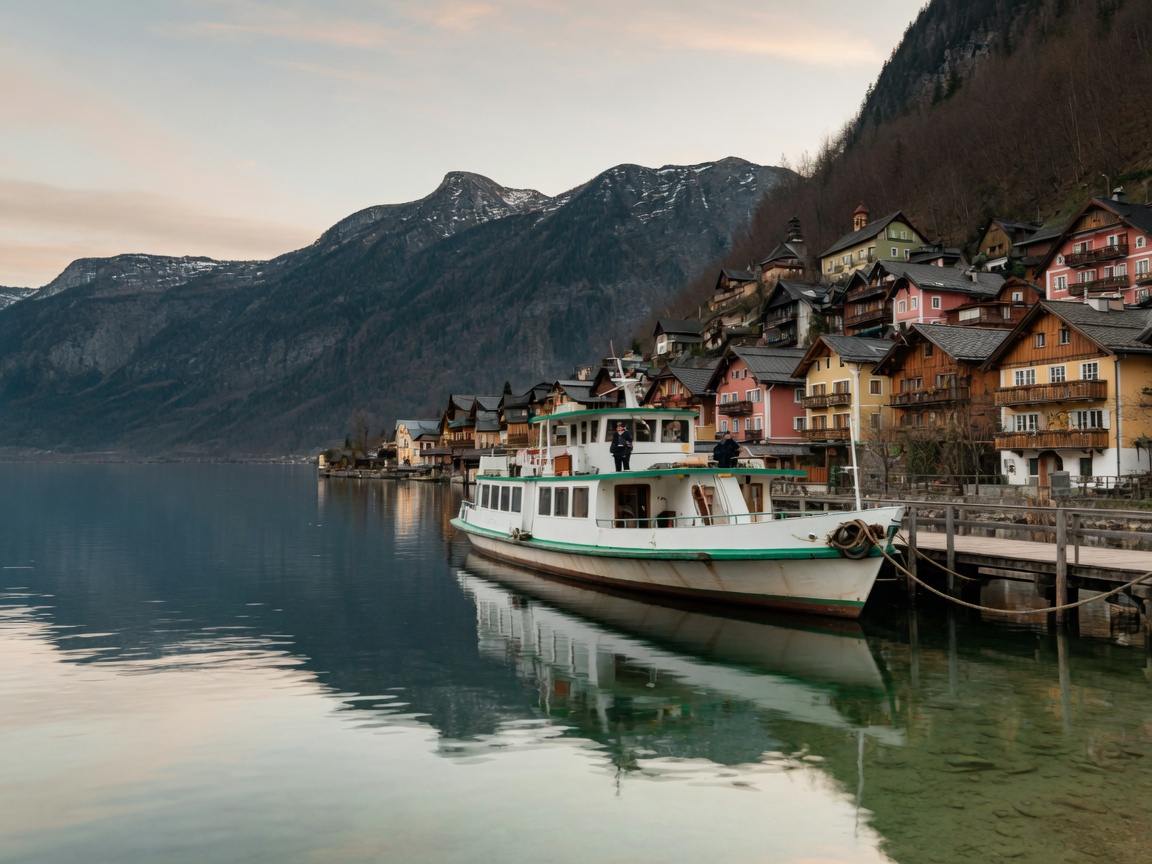
On Hallstätter See itself, ferries shuttle between Hallstatt, Obertraun and Steg, usually a handier option than the narrow shoreline road. Boarding the first ferry of the morning lets you cross before the tour buses arrive, bathing the village in a far calmer light.
Where silence remains the norm
Skip Hallstatt and the Attersee offers a quieter stand-in. A signed lakeside trail skirts the 46-square-kilometre sheet of water, gravel and pebbles underfoot; the stillness along the northern shore is a stark contrast to the engine noise clinging to transit corridors elsewhere in the region. The Mondsee feels similarly unhurried, small enough for a single afternoon stroll yet far enough off the main routes to stay uncrowded.
Ferries instead of buses, early-morning time slots instead of midday rushes.
Both lakes sit only a short hop from their better-known neighbours yet share none of the queues. Experiencing the leap from a packed shoreline to an almost empty one within the same day quickly shows how much the Salzkammergut’s perception hinges on the route chosen, not on the landscape itself.
Stay where others just pass through
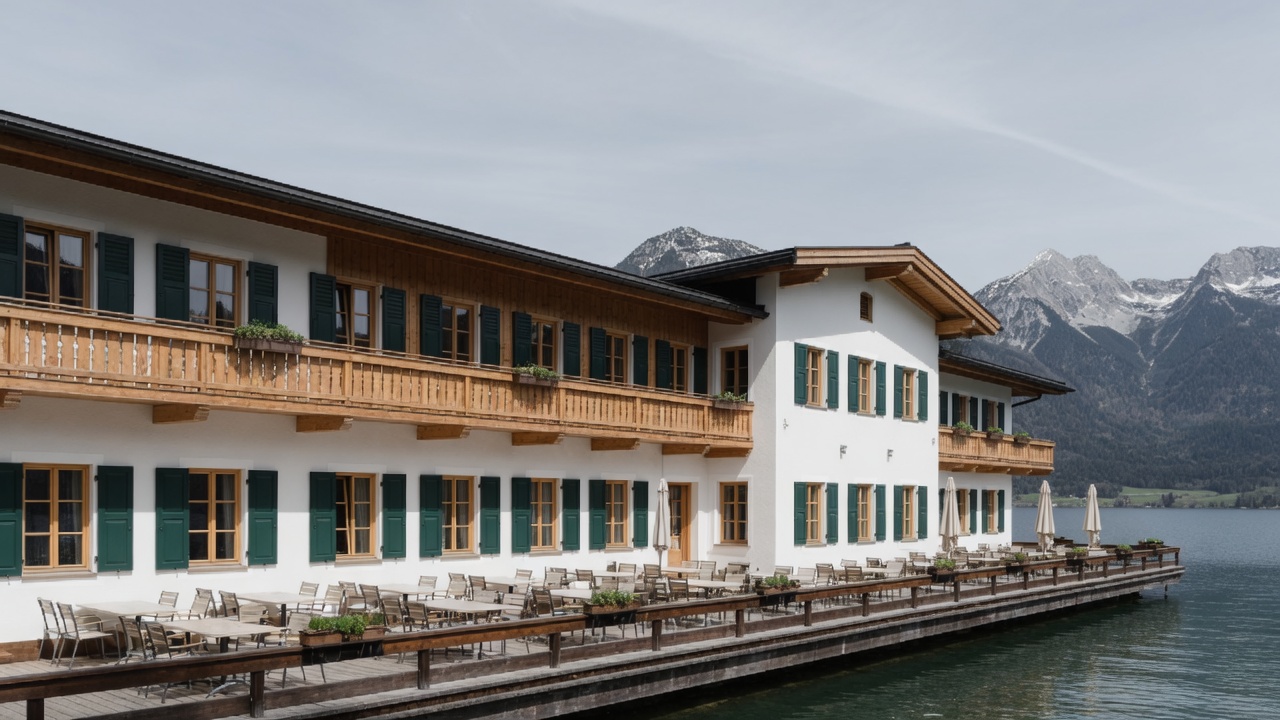
By Lake Wolfgang, the Seehotel Im Weissen Rössl in St. Wolfgang has stood since the 15th century, a cultural-historical anchor for the principle of living right on the water instead of just driving past it. On Lake Fuschl in Salzburg, Schloss Fuschl, now part of an international luxury collection, ranks regularly among the country’s top hotels in global rankings. Both addresses prove that luxury in the Salzkammergut is rarely built anew; instead, it usually merges historic fabric with modern comfort. It’s this very continuity, a house that has stood on the same shoreline for centuries, that offers a promise unlike the interchangeable new-build aesthetics of so many Alpine destinations. Guests here don’t stay beside the place’s history; they stay inside it.
A route worth choosing
If you want to experience the Salzkammergut in just a few days, pick one axis instead of trying to see all 76 lakes at once. The Wolfgangsee–Hallstatt combo delivers history and postcard views, but demands patience with fellow travelers. Choose the Attersee and Mondsee instead and you trade some fame for markedly more tranquility. Both routes share one thing: the boat beats the car every time.
Good to know
▸How many lakes belong to the Salzkammergut?
Officially 76 lakes spread across Upper Austria, Salzburg and Styria. The best-known are Wolfgangsee, Attersee, Hallstätter See, Traunsee and Mondsee.
▸Why is Hallstatt cited as an overtourism example?
The tiny village attracts huge numbers of day-trippers despite limited capacity, often arriving by bus. The region counters with visitor-flow management, such as boosting ferry traffic instead of road traffic.
▸What’s an alternative to overcrowded Hallstatt?
The Attersee and Mondsee offer similar Alpine-lake scenery with far less tourist pressure, as does the quieter eastern arm of Wolfgangsee. Arriving in autumn, you’ll often have the shoreline paths entirely to yourself and see the lakes bathed in light that high season never knows.
Image source: title image and article images AI-generated.