Queen Mary 2: Crossing the Atlantic in Style
In 2019 we reported on the Cunard Line’s transatlantic routes. What has endured, what has changed, and does a seven-day crossing on the last true ocean liner still hold its magic today?
When we wrote about the Queen Mary 2’s transatlantic crossing in 2019, we focused on specific summer routes and daily fares-details that have since faded. What remains is the bigger question: does a seven-day sea voyage from Southampton to New York still make sense when a flight can get you there in under eight hours? The honest answer is yes, but for reasons most travellers never expect.
- The Queen Mary 2, at 345 m long, is the largest and last true ocean liner, built for the open North Atlantic-not the Caribbean sun deck.
- Standard crossings take seven nights between Southampton and New York; longer routes from Hamburg via Iceland and Scotland run seasonally.
- In 2025 Cunard celebrates its 185th anniversary, tracing its roots to Samuel Cunard’s first mail-steamer route of 1840.
- On board: roughly 2,700 guests, four pools, a planetarium, library, and a formal dress-code ritual you’ll either adore or avoid.
Why an Ocean Liner Isn’t a Cruise Ship
The difference may sound like semantics, but it’s built into the hull. A classic cruise ship is a floating holiday resort that hugs calm coastal waters and sells shore excursions in every port. The Queen Mary 2, launched in 2004, was built for a different mission: year-round crossings of the North Atlantic, one of the world’s roughest sea lanes. Deeper hull, reinforced outer shell, higher cruising speed. At 345 metres, she remains the largest ocean liner ever built – and the only one still operating scheduled transatlantic service.
That shapes the experience. You’re not booking an island-hopping tour; you’re deliberately choosing the crossing itself. Seven days without a port, without mobile reception for long stretches, with the Atlantic as the only view. To some, that’s the definition of boredom; to others, the ultimate luxury: time that isn’t pre-planned.
The Legacy of Samuel Cunard
The line bears the name of a man from Halifax, Nova Scotia. Samuel Cunard, born in 1789, was a wealthy shipowner and timber merchant when, in 1840, he took a gamble. The British Admiralty sought an operator for the first regular steamship mail route across the Atlantic. Cunard founded the British and North American Royal Mail Steam Packet Company. On 4 July 1840, the Britannia departed Liverpool, reached Halifax in just over twelve days, and sailed on to Boston. Regular passenger and cargo traffic across the Atlantic was born.
In 2025, Cunard marked the milestone with anniversary sailings. The historical twist lies in the detail: what took twelve days and was a risk in 1840 is today a calculated seven-night passage complete with an onboard planetarium.
You’re not booking the destination here; you’re buying the crossing. Seven days of Atlantic are not transport-they’re the product.
What Awaits On Board
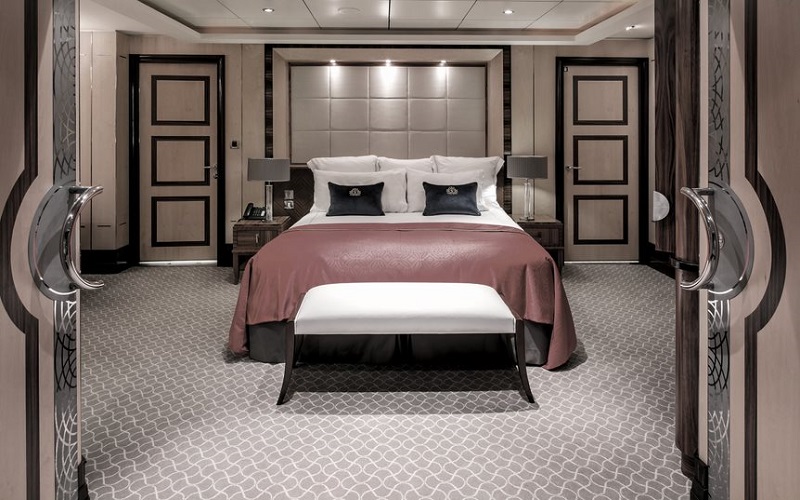
The numbers set the scale: room for roughly 2,700 guests, tended by about 1,250 crew across 13 passenger decks. Add four swimming pools, a spa, multiple restaurants and bars, a casino, a boutique row, and a library with several thousand volumes. The flagship remains the in-house planetarium-the only one at sea. With seven nights without a port call, this packed onboard programme isn’t an add-on; it’s the heart of the voyage.
Then there’s the dress code. The Queen Mary 2 holds fast to formal evenings: gala nights demand evening gowns or dark suits; the upscale restaurants insist on style. If that feels like a straitjacket, you’ll be happier on a more relaxed ship. If you’re after the old glamour of a transatlantic crossing, this is it-without irony.
Is It Worth It in 2026?
The answer hinges on your travel motive. If you need to get from A to B fast, the plane is unbeatable. If you want a varied port programme, a classic Mediterranean or Caribbean itinerary is the better fit. The transatlantic crossing aboard the Queen Mary 2 is something else entirely: a conscious choice for deceleration, a travel form steeped in history, and the sensation of actually crossing the ocean instead of flying over it. Whoever values that will find every day aboard worth the fare. Exact routes and prices fluctuate seasonally-check Cunard directly for the latest details.
More from our travel world: our discovery cruise with Cunard Line and three havens where silence is the ultimate luxury.
Good to Know
▸How long does a transatlantic crossing on the Queen Mary 2 take?
The standard voyage between Southampton and New York lasts seven nights. Longer routes, such as those departing from Hamburg with stops in Iceland and Scotland, can take significantly more time.
▸From which ports does the Queen Mary 2 sail across the Atlantic?
The three home ports are Southampton in England, New York in the USA, and Hamburg in Germany. Most crossings operate on a scheduled basis between Southampton and New York.
▸Is there really a dress code on board?
Yes. On gala evenings, Cunard requires formal attire-evening gowns or dark suits and tuxedos. This is a deliberate nod to the traditions of transatlantic travel.
▸How old is Cunard Line?
The line dates back to 1840, when Samuel Cunard established the first regular steamship mail service across the Atlantic. In 2025, Cunard celebrated its 185th anniversary.