Paradisiacal Holiday Destinations in Germany
In 2019 we recommended four German natural sites you didn’t need a plane to reach. Six years later, we’re taking stock: what still holds true for the Blautopf, Boddenlandschaft, Königssee and Externsteine-and what has changed?
You don’t need to fly to the other end of the world to see something that takes your breath away. Four places in Germany prove it: a turquoise-blue karst spring in the Swabian Alb, a nearly deserted Baltic Sea coast that hosts 60,000 cranes in autumn, an Alpine lake with drinking-water quality, and a rock formation older than the Alps. In 2019 we recommended them. Here’s the reality check.
- Blautopf, Baden-Württemberg: 22-metre-deep karst spring whose water glows turquoise to deep blue depending on the light. Reopened on 15 January 2025; the site is being renovated until approximately 2028.
- Vorpommern Boddenlandschaft, Mecklenburg-Vorpommern: Germany’s third-largest national park (786 km²) with pristine beaches; around 60,000 cranes stop over here every October.
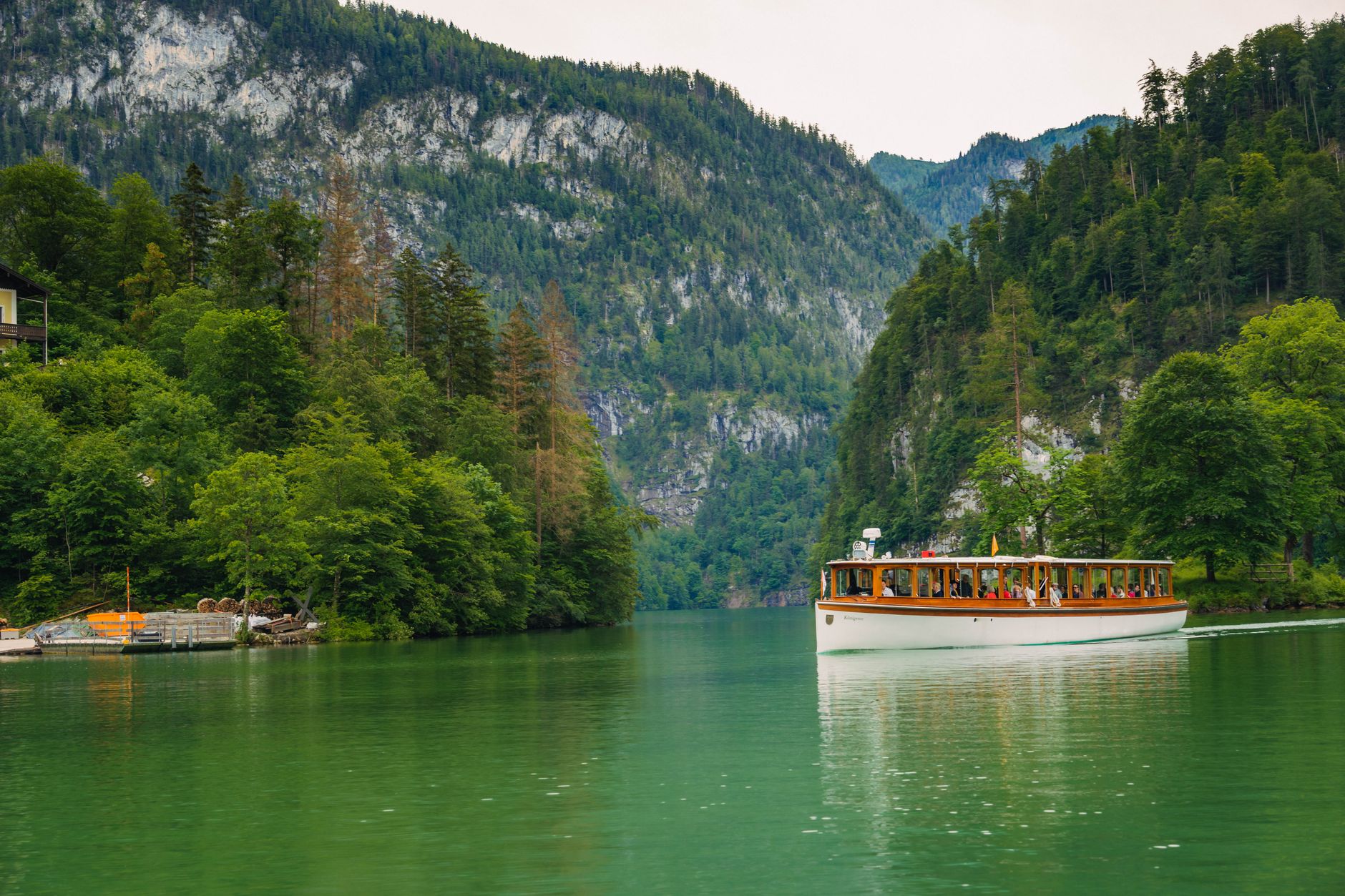
- Königssee, Bavaria: Fjord-like Alpine lake with drinking-water quality. Only electric boats have been permitted since 1909.
- Externsteine, North Rhine-Westphalia: Thirteen sandstone rocks up to 40 metres high, roughly 130 million years old. Half a million visitors annually.
- Reachable by train or car-no flight required. Perfect for a long weekend.
Eco-friendly holidays without the guilt: that wish wasn’t new in 2019, and it certainly isn’t today. As flying becomes pricier and less convenient, nearby destinations gain appeal. The good news? You don’t have to compromise. The four spots we recommended back then are still among the country’s most stunning natural backdrops. We checked what’s changed-and what hasn’t.
Blautopf: Caribbean on the Swabian Alb
Caribbean blue in Baden-Württemberg? You’ll find it at the karst spring in Blaubeuren, right on the edge of the Swabian Alb. The Blautopf is Germany’s second-deepest single spring at 22 metres, and the water glows from bright turquoise to deep blue depending on the angle of the sun. The effect isn’t a trick-it’s physics: fine lime particles in the water scatter the light so that the blue wavelengths are reflected back.
People used to explain it differently. A local legend claimed that a barrel of ink was poured into the spring every day. Since no one could reach the bottom with a sounding line, the pot was thought to be bottomless: a water sprite, so the tale went, stole the weight each time. Divers now know better. At the bottom lies the entrance to the Blautopf Cave, the largest explored cave system on the Swabian Alb. Researchers have so far mapped around eleven kilometres, including a chamber called the Mörikedom, 30 metres high and 125 metres long.
What’s changed since our last visit: the Blautopf was temporarily closed and has been fully accessible again since 15 January 2025. At the same time, a major renovation of the site is under way and is expected to run until 2028. In the nationwide vote for Germany’s Natural Wonder of the Year 2025, the spring came second. You can still get there, but expect building work all around.
Germany’s second-largest spring shines turquoise because lime particles scatter the light. No ink, no sprite-just physics.
Western Pomeranian Bodden Lagoons: Quiet with 60,000 Cranes
In the Western Pomeranian Bodden Lagoon National Park you’ll find something rare in Germany these days: unspoilt beaches with dunes, ringed by forests, free of deck-chair rows and promenades. At 786 square kilometres, it’s the country’s third-largest national park. The Darß Forest is Germany’s biggest coastal primeval forest, and the roughly 14-kilometre-long West Beach between Ahrenshoop and the northern tip of the peninsula is one of the few stretches of coast where nature still calls the shots.
It’s wild in the truest sense. Roe deer, red deer and, if you’re lucky, even seals cross your path. But the real stars are the cranes: every autumn around 60,000 of them pause on the shallow lagoons and undisturbed islands before continuing south. The region is one of Central Europe’s most important crane staging areas. To catch the show, aim for October, preferably at dawn or dusk when the birds shuttle between roost and feeding grounds.
Königssee: A Fjord in the Heart of Bavaria
Bavaria is famed for its Alpine lakes, yet the Königssee in the Berchtesgaden region is exceptional. Its glass-clear, green water sits like a fjord between sheer rock walls. The real drama unfolds from the water, and that’s where the twist lies: the lake has been served only by electric boats since 1909-not because of today’s climate debate, but from the start.
The reason is simple and consistent: no wastewater enters the lake; the Königssee has drinking-water quality and ranks among Germany’s cleanest. The fleet now numbers 18 quiet electric boats. A full circuit from the landing stage to Salet and back takes about an hour each way. If you listen closely during the trip, you’ll experience the famous echo: at the Echo Wall, a boatman traditionally plays a few notes on the trumpet, and the cliffs send them back again and again.
Since 1909 only electric boats have plied the Königssee. Its water is drinking-quality-a decision other places only adopted once climate debates heated up.
Externsteine: Older than the Alps
The Externsteine in the Teutoburg Forest are a genuine natural wonder with an impressive head start. The hard Osning sandstone formed about 130 million years ago on the edge of a primeval sea. Later, when the Teutoburg Forest folded upward, the once-flat layers were tilted upright. Today thirteen grey, jagged monoliths rise up to 40 metres. Geologically, they pre-date the Alps by a long chalk.
Climb one of the two staircases and you’re rewarded with sweeping views across the Teutoburg Forest. Roughly half a million visitors come every year, making the site one of Germany’s best-known cultural and natural monuments. The climb costs a small entry fee-about €4 for adults (as of 2025). Tip: arrive early in the morning or on a weekday to beat the queues.
Good to Know
▸Why does the Blautopf glow blue?
Tiny particles of lime float in the spring water. They scatter the incoming light so that the blue wavelengths are reflected back while red light is absorbed. Depending on the sun’s position, the water therefore appears turquoise to deep blue. It has nothing to do with the old legend about ink.
▸Can you visit the Blautopf in 2025?
Yes. The Blautopf reopened to visitors on 15 January 2025. However, the surrounding area is undergoing renovation that is expected to continue until 2028, so expect construction work nearby.
▸When can you see the cranes in the Bodden landscape?
The best time is autumn, especially October. Around 60,000 cranes then pause in the shallow Bodden waters before continuing their migration. The most spectacular moments come at dawn and dusk when the birds move between roosting and feeding sites.
▸Are you allowed to take your own boat onto Königssee?
No. Since 1909 the lake has been served exclusively by the 18 electric boats of the local shipping company. This keeps the water clean enough to maintain drinking-water quality. The full circuit to Salet takes about one hour each way.
▸How old are the Externsteine?
The Osning sandstone of the Externsteine formed about 130 million years ago. The rocks are therefore far older than the Alps. The layers, once flat-lying, were tilted upright when the Teutoburg Forest range folded.
Four destinations, no flights, and each still delivers on its promise six years after our first recommendation. If you crave more water, check out our ranking of Germany’s five most beautiful lakes. Travellers eager to stray off the beaten track will find further inspiration in the hidden gems of Europe. And since two of these spots are best explored on foot, here’s another read: what hiking really does to your body, explained by the team at InspiredBySports in Hiking in Spring: Your Body on the Trail.