Craft · Glass
Lauscha glass: How Christmas baubles are made by hand
Glass tube, gas flame, breath: how Christmas baubles have been made by hand in Lauscha since the 19th century, and where you can experience the craft today.

 People & Places
Glass tube, gas flame, breath: how Christmas baubles have been made by hand in Lauscha since the 19th century, and where you can experience the craft today.
A glass Christmas bauble weighs almost nothing, yet carries a long history. It begins in a narrow valley in the Thuringian Forest, in a town that grew out of a glassworks. In Lauscha, baubles are still blown over a flame, silvered on the inside and painted by hand. Once you have watched a bauble take shape from a glass tube over the flame, you will look at your own tree differently.
Lauscha is regarded as the birthplace of glass Christmas tree and festive decorations. The story is not entirely free of legend, but its central facts are well documented. The craft behind it remains so alive that it is now recognised as cultural heritage.
It began with a glassworks. According to the town’s history the glassmakers Hans Greiner and Christoph Müller were granted permission by Duke Johann Casimir zu Sachsen-Coburg in 1597 to operate a glassworks in the valley. The town grew out of that glassworks.
In the 18th century, there was no longer enough work in the glassworks for everyone. Between 1730 and 1770, the glassblower Johann Greiner Habakuk brought a new technique to Lauscha: lampworking at home. This involved heating and shaping prefabricated glass over a flame. Around 1762, hollow-blown beads were made this way and soon sold in large quantities, followed by glass figures and animals. The material was later supplied by a dedicated glassworks in the town. The coloured glassworks founded by Elias Greiner in 1853 produced glass rods and tubes as semi-finished materials for the cottage industry.
This division of labour shaped the village. The glassworks supplied the semi-finished materials, and the glassblowers worked at home, shaping them into their wares over a lamp. Glass tree decorations later emerged from this cottage industry. The Thuringian decorations had little in common with the glass ornaments from Gablonz in Bohemia, which consisted mainly of hollow glass beads and thin glass tubes.
The Christmas bauble itself comes with a lovely story. According to one legend a poor Lauscha glassblower blew glass baubles in 1847 because he could not afford walnuts and apples for his tree. There is no evidence for this. What is documented is an order book: in 1848, it records an order for six dozen Christmas baubles in various sizes for the first time. The baubles, then, were not intended for the glassblower’s own tree.
Reference works show just how blurred the line between legend and evidence remains. The Wikipedia article on Lauscha states briefly that a Lauscha glassblower invented glass Christmas tree decorations in 1847. The article on Christmas tree decorations calls the same story a legend. The town of Lauscha’s press text is more cautious: it says that the decorations, particularly the glass baubles silvered on the inside, were developed in Lauscha in the mid-19th century. All versions point to the middle of the 19th century.
Making a mouth-blown bauble follows a clear sequence. First, the glass blank is warmed slowly. Then the glassblower heats the glass tube in the flame of a gas burner to around 800 degrees Celsius, turning it constantly and evenly. Only then does he blow it into shape.
In Lauscha, this process is part of everyday life. In the glassblowing town, glass Christmas decorations are still made using traditional craftsmanship. Many workshops use techniques, moulds and tools, some of which are over 100 years old.
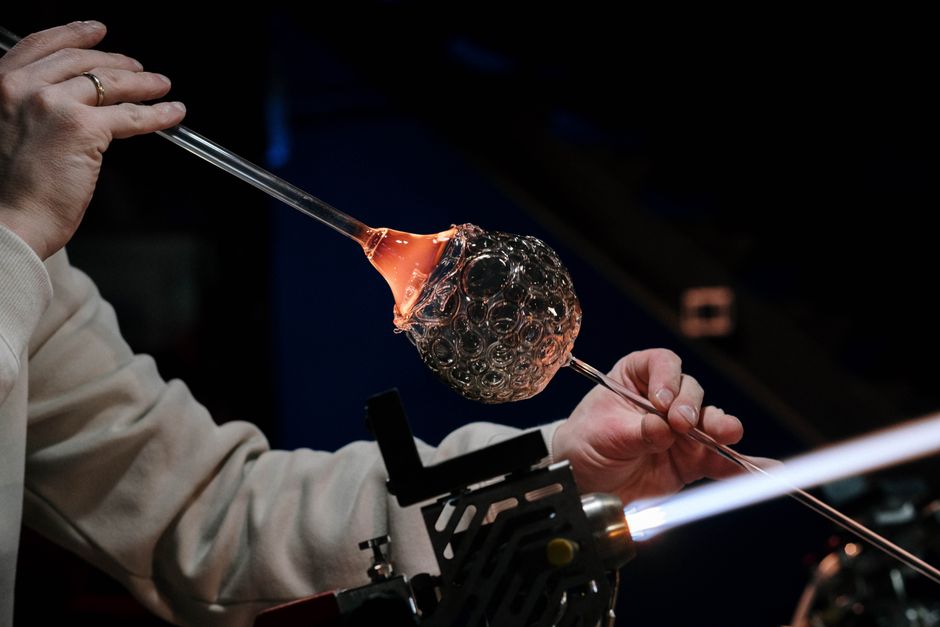
For figures and patterned pieces, he blows the glass into moulds, sometimes made of ceramic. Simple, smooth baubles are shaped freehand, without a mould. After blowing, he briefly passes the piece through the flame again to relieve stress in the glass. He then places the baubles on a nail board to cool.
Lauscha owes its ability to supply large quantities of thin-walled baubles to a technical innovation. The construction of a gasworks in 1867 made mass production of the new tree decorations possible. Only a very hot gas flame could produce large, thin-walled baubles. Before that, the glassblowers had fuelled their burners with rapeseed oil and paraffin. The new flame changed the size and quantity of the decorations.
Only a very hot gas flame could produce large, thin-walled baubles.
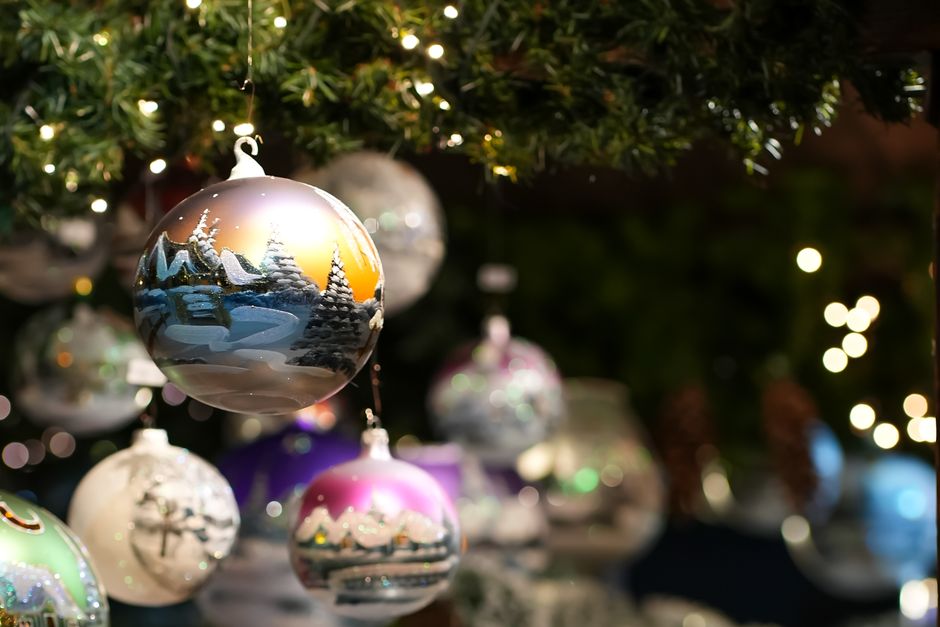
The bauble gets its mirror finish from within. In the early years, glassblowers used an alloy of tin and lead that was harmful to health. From 1870, they silvered the baubles with silver nitrate, which is also used to make mirrors. The solution is put into the bauble and coats the inside. The mirror layer sits behind the glass; the colour is applied to the outside afterwards.
Only then comes the colour. In the past, family members dipped the silvered baubles in paint and sometimes decorated them with mica particles. Today, the baubles are lacquered and decorated after silvering. Finally, the glass stem by which the blower held the bauble is removed. In mouth-blown tree decorations, this handle is known as a blowing stem. Only then is the hanger attached.
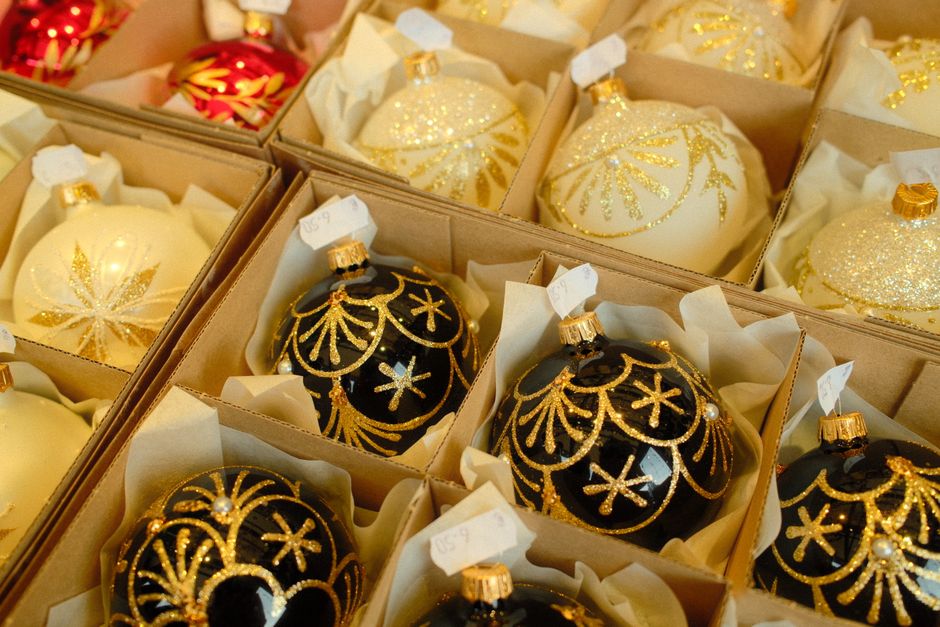
With this sequence of blowing, silvering and colouring, Lauscha became a centre of glass bauble making. Merchant houses in nearby Sonneberg handled distribution. Around 1880, the American Frank Winfield Woolworth imported the first Christmas baubles into the United States. According to the town of Lauscha’s press text Lauscha’s decorations became a successful export, particularly there.
The town’s history has seen its share of upheaval. In the GDR, the state-owned enterprises Glaskunst and Glasschmuck took over production, using machines for mass manufacture. Glass production in the town had already been organised under VEB Glaswerke Lauscha in 1946 and in a craft cooperative in 1948. After reunification, Lauscha returned to traditional production. In 2021, the making of mouth-blown Lauscha glass Christmas decorations was added to Germany’s Nationwide Inventory of Intangible Cultural Heritage.
An example from London shows how long moulds can remain in use. The Victoria and Albert Museum holds Christmas decorations from Lauscha, blown and painted by hand. The pieces were made in 1993 from moulds that may date from around 1900. Their makers donated them to the museum.
If you visit Lauscha, you can watch many glassblowers at work. The Museum für Glaskunst displays glass from the late Middle Ages to the present day, from early forest glass to glass beads and glass eyes. At the Berufsfachschule Glas, young people learn the craft, specialising in glass design, Christmas decorations and the making of artificial eyes. On the first two Advent weekends, the entire town centre becomes a pedestrian zone for the Lauschaer Kugelmarkt.
For you as a buyer, a mouth-blown bauble from Lauscha represents a sequence of gas flame, breath, silver nitrate and colour that took shape in the late 19th century with the gasworks and silver nitrate. It is this very process that the German UNESCO Commission recognised as cultural heritage in 2021.
An order book provides the evidence: it records an order for six dozen Christmas baubles for the first time in 1848. The story of a poor glassblower in 1847 is considered a legend.
A silver nitrate solution is put into the bauble and coats the inside. Lauscha’s glassblowers have used this process since 1870. Before that, they used an alloy of tin and lead that was harmful to health.
The Kugelmarkt takes place on the first two Advent weekends. The entire town centre is transformed into a pedestrian zone for the occasion.
More about the places and people behind special things.