Collecting · Books
First edition or first impression: What collectors need to know
First edition, first impression, first printing: how to read the imprint, number line and dust jacket, and recognise a good copy.

 Books & Film
First edition, first impression, first printing: how to read the imprint, number line and dust jacket, and recognise a good copy.
The title page says what a book wants to be. The reverse says what it is. If you collect first editions, that is why you turn the page first: to the printing details, the dates and a small row of numbers. These details tell you whether a book belongs to the first printing or a later one that looks almost identical.
The field is full of terms that sound related yet mean different things. The Verband Deutscher Antiquare explains them in its handbook, the Antiquarian Booksellers’ Association of America (ABAA) in its glossary. Together, these sources help you assess a copy objectively before your enthusiasm for a beautiful binding takes over.
The Verband Deutscher Antiquare, or VdA for short, defines a first edition as the first appearance of a printed work in the book trade. Catalogues often use the abbreviation EA. What matters is that the work was released through the usual publishing and bookselling channels. By this definition, advance publication of individual parts in a newspaper does not yet count as publication. The same applies to a few copies printed as manuscripts.
A first impression is a separate matter. The VdA uses the term to mean a work’s first appearance with a particular publisher. If a work changes publishers, there can therefore be several first impressions, even though the actual first edition appeared elsewhere years earlier. So if you see the words first impression in a listing, you do not necessarily have a first edition in your hands. Antiquarian booksellers also use the term editio princeps for the earliest editions of Greek and Latin classics.
The English-language trade adds another layer. In its glossary , the ABAA describes a first edition as all copies printed from the same first setting of type. A first edition can therefore include several printings. The glossary gives an example: 500 copies in the first printing, followed by 300 more in the second. Both batches belong to the first edition. Collectors, however, usually mean the first printing when they use the term.
This is the heart of the matter. First edition describes an edition; first printing describes that edition’s first run through the press. If you are offered a book as a first edition, it is worth asking exactly which printing it is. The ABAA expressly warns against placing blind trust in the words First Edition printed in a book.
The most important page for identifying a book lies directly behind the title page. The VdA describes the imprint, or printer’s note, as information found on the reverse of the title page or at the end of the volume. It names the people who made the book, namely the printer and bookbinder. In more valuable and finely produced books, it also gives the origin of the paper, the typeface used and the designers of the binding and jacket. It may also include the copyright notice, the size of the print run and details of special features.
Before title pages became established, this information appeared in the colophon at the end of the book: the title, place and date of publication and the printer’s name. For very early printed books, then, you need to turn to the end of the volume.
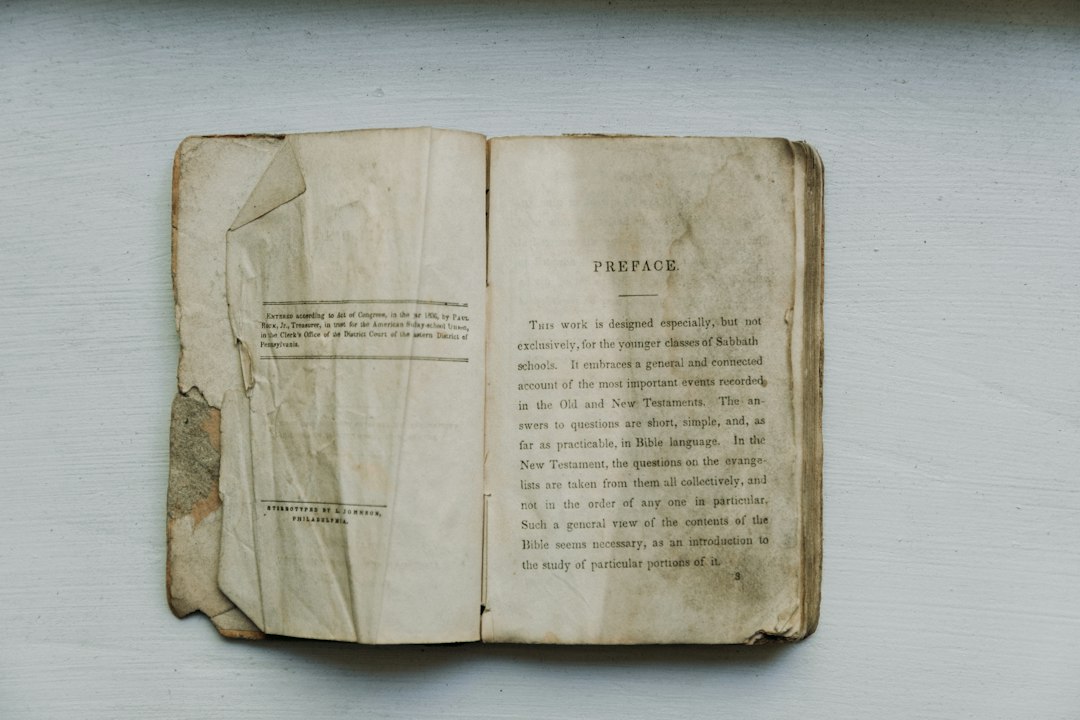
Dates call for caution. If the year is missing from the title page, the VdA says the date in the copyright notice should be treated as the year of publication only with great caution. A single date is a clue, not proof.
In English-language publishing, a number line on the copyright page can help. In the trade, it is called the printer’s key or number line. It began to appear in the middle of the 20th century and became standard practice after 1970. A typical line reads 10 9 8 7 6 5 4 3 2 1. With each new printing, the publisher removes the lowest remaining number. If the 1 is still visible, you have the first printing of that edition. If the line ends with 2, it usually points to the second printing.
The line does not follow a uniform pattern, however. It can be printed in descending or ascending order. Some publishers alternate the numbers from the outside inwards so that they remain centred in later printings. Others add year codes. The principle remains the same: the lowest number is what counts. Even so, it is worth consulting a bibliography for each publisher, as house practices vary.
The most important page for identifying a book lies directly behind the title page.
The book trade has long had copies that appear older than they are. The VdA describes the title issue: remaining copies from a print run are given a new title page and returned to the market, for example to better match current buyers’ interests. This method was occasionally used to pass off a book as a new edition without authorisation. It involves what is known as a cancel: the old title page is removed and a new leaf pasted in.
Then there are reprints, later printings of a work that has already appeared. Because the text and typesetting can be identical, the content alone tells you little about a copy’s age. The paper, binding, imprint and jacket reveal more.

An experienced antiquarian bookseller checks and records precisely these details. The VdA calls the process of checking a book for completeness collation. If a plate is missing or a gathering has been bound in incorrectly, it changes how a copy is assessed. A good description therefore states the printing, condition and any defects explicitly.
The professional standards of the trade matter too. The VdA has belonged to the International League of Antiquarian Booksellers since 1951. Its members commit to fair and professional trading through a Code of Ethics. For you as a buyer, this means that a dealer who has identified the printing can record that assessment in writing. That information lets you and every subsequent owner trace the basis for the book’s identification.
Once the printing has been established, a second question arises: how good is this particular copy? With more recent books, the dust jacket is the first thing to look at. The VdA writes that dust jackets were the exception on books published before 1900. At first, the jacket was a simple paper covering to protect against dirt and fading. Later, it became a means of advertising. Because it is fragile and can provide clues to the edition, it has become a major factor in determining price, particularly in the English-speaking world. In catalogues, it is abbreviated to SU, or DJ in English, for dust jacket.
Provenance tells the story of a book. The VdA uses the term to mean evidence that a book comes from a famous library, such as an ownership inscription, a bookplate or an owner’s stamp on the binding. A bookplate is a small sheet bearing the owner’s name or coat of arms, pasted inside the front cover. An owner’s stamp is a mark, usually a coat of arms, impressed on the front cover of the book.
Limited editions form a category of their own. The VdA describes them as editions with a small number of copies, limited from the outset. Collectors’ editions, luxury printings and private printings are often produced this way. Deluxe editions are particularly common among finely produced books. They are usually numbered, and part of the print run is often printed on better paper. With books like these, the copy number is part of their identification.
In the end, the picture comes together from several clues: imprint, number line, jacket, completeness and provenance. Together, they allow you to identify an old book as a first printing. Once you know how to read these clues, you can buy with greater focus and spot gaps in a description more quickly.
According to the Verband Deutscher Antiquare, a first edition is the first appearance of a printed work in the book trade. A first impression refers to its first appearance with a particular publisher, so an earlier first edition may already exist.
The most important place to look is the imprint on the reverse of the title page. Many English-language books have a number line there, with the lowest number indicating the printing. If the 1 is still visible, you have the first printing of that edition.
The dust jacket is fragile and can provide clues to the edition. According to the Verband Deutscher Antiquare, it has therefore become a major factor in determining price, particularly in the English-speaking world. Dust jackets were the exception on books published before 1900.
More about books, films and the people who collect them.