
How to make your everyday life a little more sustainable
In May 2022 we showed you how to live a more sustainable daily life without giving anything up. Three years later, we take stock: which routines have really stuck and which trend has quietly disappeared.
In May 2022, sustainability still sounded like deprivation to many. Three years on, it’s clear: the small routines we recommended back then have stuck around. One trend, however, has quietly vanished. Here’s what has actually proven its worth in everyday life.
- Conscious shopping with a list beats any expensive sustainability gadget: cutting waste is the biggest lever of all.
- Glass straws were all the rage in 2022, but since the EU ban of 3 July 2021, reusable alternatives have become standard rather than a statement.
- Unpackaged stores have roughly halved in number since their 2020 peak. Where one still exists near you, the trip is still worth it.
- Solid shampoo and reusable nets have passed the practical test, saving plastic for good with barely any extra cost.
- Seals such as Demeter, Bioland and Naturland remain the most reliable guide on the shelf.
Sustainability means using natural resources, living beings and the biosphere responsibly. That definition hasn’t changed since 2022. What has changed is daily life: much that once looked like extra effort is now second nature, while some trends have simply faded away. It’s that very distinction we’re making here.
The biggest lever is before you buy
The most effective step costs nothing and requires no special product: throw away less. Food is most frequently wasted because too much ends up in the basket. A shopping list before every supermarket trip may sound unspectacular, but it’s the point where sustainability and saving overlap. If you only buy what’s missing, you throw away less and spend less.
This applies to clothing just as much. The question before every purchase-whether you really need the item-is more relevant in 2026 than in 2022, because fast fashion is now moving faster than ever. Vintage and second-hand have long since moved out of the niche. A good address for long-lasting fashion is our look at linen as a fabric that lasts longer.
Shopping without harming the environment
The supermarket is where most packaging sins lurk. Fresh products are often wrapped in plastic that ends up in the bin after a short time. An alternative is unpackaged stores, where you fill nuts, oats, or pasta into your own containers. Here’s an update since 2022: the sector peaked with over 330 stores at the end of 2020, but by April 2025 the Unpackaged Association counted only around 169. High living costs have made many customers more price-conscious, putting pressure on these concepts.
For you, this means: if there’s still an unpackaged store near you, it’s worth the trip. Don’t rely on it alone. Produce from weekly farmers’ markets is the more robust solution-it works regardless of whether the unpackaged concept is fighting for survival.
Everyday sustainability isn’t decided by the bathroom gadget, but by the list before you shop.
What the label really tells you
The label on the product tells you under what conditions it was made. If you’re after the strictest organic quality, look for Demeter, Bioland, or Naturland. All three farming associations operate with significantly stricter rules than the EU organic label, including animal husbandry. That was true in 2022 and remains unchanged.
For clothing, the Fairtrade label is the key anchor. It ensures that people along the supply chain receive fair wages. Those who think one step further will find similar movements in jewelry, such as the sustainability trend in the jewelry sector, where origin and materials are increasingly made transparent.
Three everyday helpers after three years
In 2022 we recommended three concrete products. Here’s how they’ve performed since then.
1. Glass straws: from statement to standard
Since 3 July 2021, the sale of single-use plastic straws has been banned in the EU under Directive (EU) 2019/904. In 2022, glass straws were a small lifestyle statement. Today, reusable straws made of glass, stainless steel, or bamboo are available in almost every home and supermarket-they’ve become the norm. If you like the look, keep using them. They’re not essential for sustainability; the ban has already done the work.
2. Reusable produce bags: the quiet long-term winner
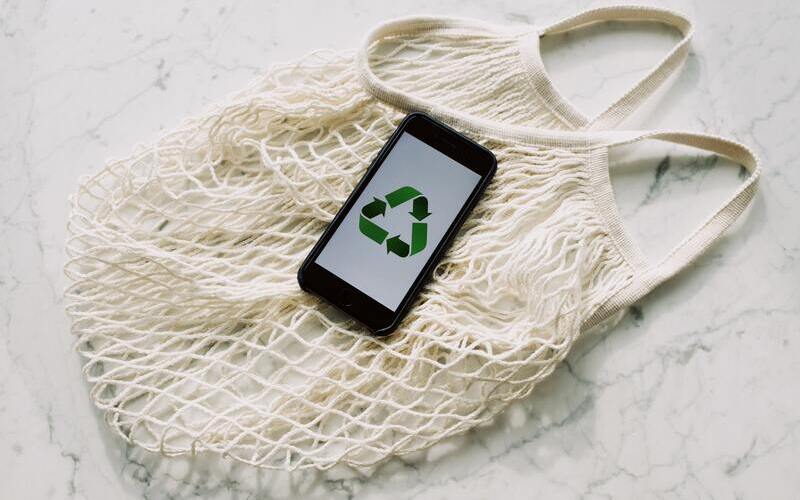
Plastic bags in supermarkets are now only available for a surcharge, and thin knot bags are increasingly being replaced. A cotton produce net costs around €3 once and lasts for years. You can find it in organic markets, drugstores, and online. Of the three recommendations, this is the most unassuming yet the most durable-it saves packaging with every shop without you having to think about it.
3. Solid shampoo: passed the practical test
A shampoo bar replaces about two bottles of liquid shampoo and comes with less packaging and fewer chemicals. A bar costs around €5-6 and lasts a long time; a soap pouch for around €3 helps with lathering and saves product. In 2022, solid shampoo was still a niche for the convinced, but now every drugstore carries it. This is the category that has most clearly established itself because it simply works in daily life. Those who take it further will find the next level in vegan cosmetics without animal testing.
What Sticks, What Doesn’t
The lesson from three years is refreshingly clear: sustainability in daily life isn’t decided by any single product, but by a handful of routines you no longer question. Shop mindfully, waste less, and trust reliable seals. Glass straws were a nice start, but today their job is done by legislation. Solid shampoo bars and reusable nets, however, have stuck around because they demand no sacrifice. That was our point in 2022-and it still holds.
Quick Answers
▸Will zero-waste shops still be a smart choice in 2026?
Yes, where they still exist. Their number has fallen from a peak of over 330 stores at the end of 2020 to roughly 169 in April 2025-about half. If one survives near you, it’s worth shopping there. As a sole solution, though, the concept no longer suffices; the weekly farmers’ market is the sturdier supplement.
▸Does solid shampoo really deliver?
For most people, yes. One bar replaces about two bottles, costs €5 to €6, and lasts ages. You cut plastic waste and shrink your chemical load. The only adjustment is the first few uses; after that, it behaves like any other shampoo.
▸Which organic label is the strictest?
Demeter, Bioland and Naturland go beyond the EU Organic standard, including stricter rules on cultivation and animal welfare. If you want the highest quality, look to these three associations. For clothing, Fairtrade is the key benchmark for fair wages.
▸Do I need to switch to glass straws?
Not necessarily. Since the EU ban on single-use plastic straws took effect on 3 July 2021, they’re off the market anyway. Reusable straws made of glass, stainless steel or bamboo are a nice touch, but not mandatory. The bigger lever is mindful shopping, not the straw.


