Our ranking of Germany’s 5 most beautiful lakes
Relax, swim, or try water sports-no long-haul flight required. Here are five of Germany’s most stunning lakes.
In 2021 we ranked five lakes across Germany. The list itself isn’t the point; it’s the reminder that water, mountains, islands, sails, and swim days are often closer than you think.
- The Steinhuder Meer was highlighted as north-west Germany’s largest lake, covering roughly 29 square kilometres.
- The Chiemsee pairs Alpine vistas with the island palace of Herrenchiemsee.
- The Bodensee blends water with vineyards, orchards, and proximity to Austria and Switzerland.
- The Müritz stands for the Mecklenburg Lake District, national park, sailing, and swimming.
- The Eibsee, tucked below the Zugspitze, wows with turquoise waters, secluded coves, hiking, and cycling.
Why Lakes Are the Better Short Getaway
The old article makes a simple claim: you don’t need to spend hours on a plane to relax, swim, or stay active. Today, that statement feels even more soothing than it did back then. A lake demands less planning than a long-haul trip and still gives back so much: light dancing on water, icy toes, a boat tied to the shore, a path that eventually curves around the next bay.
Of course, any ranking is subjective. The article lists five spots and ranks them from fifth to first. You could debate whether this exact order is correct-you don’t have to. What’s more interesting is what the selection reveals: Germany has lakes that each tell their own kind of vacation story. Some feel almost maritime, others alpine, and a few quiet and expansive.
Steinhude Lake and Lake Chiem
Fifth place in the archive goes to Steinhude Lake. At just over 29 square kilometers, it’s described as the largest lake in northwestern Germany. It also has two islands: Wilhelmstein with its namesake fortress and the Steinhude bathing island. That’s a nice combo because it packs sightseeing and a beach towel into a single day trip-history first, then water.
Fourth place belongs to Lake Chiem, the Bavarian Sea. The article calls it Bavaria’s largest lake and paints a picture of gorgeous water, Alpine vistas, and King Ludwig’s fairytale castle on Herrenchiemsee. That’s quite a backdrop. Lake Chiem never feels like just a lake-it’s landscape, excursion, stage, and postcard motif all at once.
Lake Constance and Lake Müritz
Third place goes to Lake Constance. The article ranks it Germany’s number one in size, yet places it third. Still, its offerings are vast: vineyards and orchards, tourist spots in Austria and Switzerland, and water fed by the Rhine. Lake Constance isn’t a place for a single glance-it’s more like an entire region that slowly unfolds.
Second place is Lake Müritz in Mecklenburg-Vorpommern, described as Germany’s second-largest lake and part of the Mecklenburg Lake Plateau. The article mentions Müritz National Park, hikes around the lake, sailing tours, and swimming at numerous beaches. Lake Müritz is less dramatic than Lake Chiem, but that can be a good thing: wide-open space instead of spectacle, water instead of scenery.
Why Lake Eibsee Takes the Top Spot
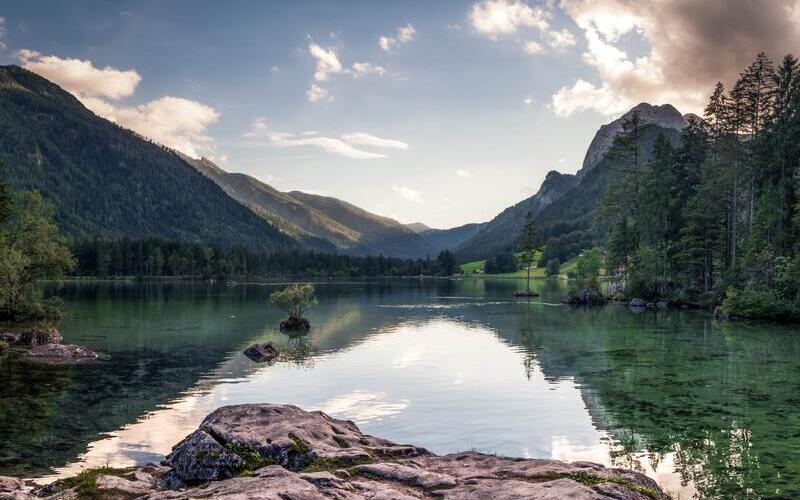
First place in the archive is Lake Eibsee, nestled below the Zugspitze. The article calls it less famous than its rivals yet still places it at the top. Reason: Caribbean-turquoise water, plenty of coves for swimmers, and a setting at the foot of the Alps. Add hiking and cycling, and you’ve got a powerful mix-because the lake doesn’t just invite lounging; it almost automatically brings movement along.
Maybe that’s why Lake Eibsee makes such a fitting closing image. It shows that proximity doesn’t have to mean small. Sometimes all you need is a lake that holds the light just right and a mountain in the background. The old article ends with the thought that the best spots are sometimes right under your nose-and you still don’t know them. That remains the real takeaway: look first at what’s nearby. Then pack your bags.
How to Use This Ranking
The order matters less than the question of which lake fits your day. Steinhude Lake blends bathing island and fortress, so you can switch from water to history in short order. Lake Chiem is bigger in scope, with Alpine views and a castle. Lake Constance is almost a trip in itself, where vineyards, orchards, neighboring countries, and water come together.
Lake Müritz comes across in the article as the lake for active movement without drama: hiking in the national park, sailing, swimming, the Mecklenburg Lake Plateau. That’s a vacation with plenty of open air. Lake Eibsee, by contrast, delivers a strong visual. Turquoise water, coves, the Zugspitze. It doesn’t need to explain much because the backdrop does the talking.
A great lakeside weekend therefore doesn’t start with the most beautiful name, but with the right expectation. Do you want to swim, sightsee, hike, sail, or simply visit a place that feels far away after a short drive? The old article offers five very different answers. And that’s exactly why it works better as inspiration than as a final verdict.
What makes proximity valuable
The old text has a pleasant anti-itch-to-travel core. It doesn’t say distant trips are uninteresting. It simply points out that you don’t need to go far for water, sport or a view. That’s a fine luxury thought: better choices, not longer distances.
Lakes are ideal for this because they require so little explanation. You can swim, hike, cycle, sail or simply gaze. Each of the five lakes in the ranking puts a different accent on the experience. That’s exactly why it’s worth remembering more than just first place. One weekend the Chiemsee might fit better; another, the Müritz. Proximity is valuable when it matches the mood.
In this way, a ranking becomes a small map for different weekends.
Anyone who takes this seriously won’t automatically head for the best-known body of water, but for the one that suits best. Sometimes that’s the bathing island; sometimes the bay below the Zugspitze.
Often, that’s the best travel decision of all.
So a holiday needn’t be meticulously planned to feel like a real change of scenery.
A lake is never just water. It’s temperature, a view, a path, the light and the decision not to travel farther than necessary.
Good to Know
▸Which lake ranked first?
The Eibsee below the Zugspitze.
▸What defines Lake Steinhude?
Around 29 square kilometres, two islands and the combination of the Wilhelmstein fortress and the Steinhude bathing island.
▸Which lake is best for sailing and a national park?
The Müritz in Mecklenburg-Vorpommern.
▸Why is Lake Constance mentioned in the text?
Because of its vineyards and orchards, proximity to Austria and Switzerland, and water fed by the Rhine.