
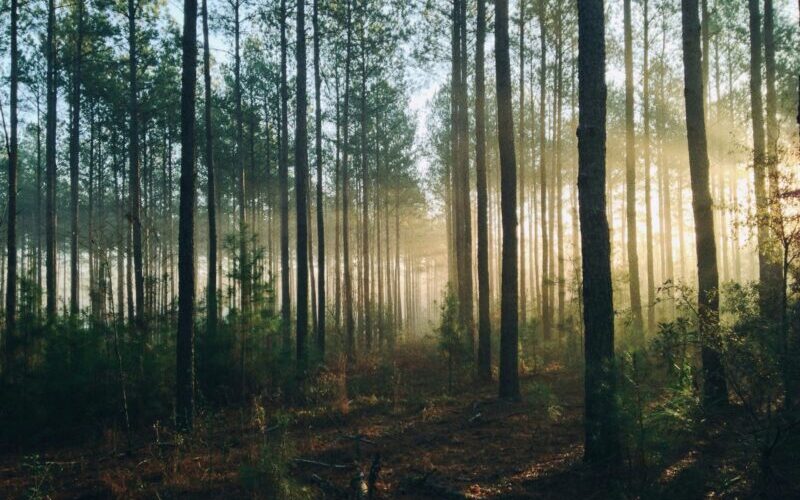
Forest Bathing: Immersing in Nature for Body and Soul
In early 2024, we introduced you to Shinrin Yoku as a quiet counter-movement to the relentless pace of everyday life. What began as a Japanese trend now stands on prescription. A status report.
You need bring nothing but time. No equipment, no route, no destination. Forest bathing means immersing yourself in the woods with all your senses and slowing your pace until your mind follows. What we described in early 2024 as a Japanese mindfulness trend has since become a medically respected practice.
- Shinrin Yoku literally translates to “a bath in the forest atmosphere” and refers to mindful lingering, not a brisk hike.
- The term was coined in 1982 by Tomohide Akiyama, then head of Japan’s Ministry of Agriculture, Forestry and Fisheries, in response to stress in the growing urban population.
- Trees emit terpenes-these messenger substances activate the parasympathetic nervous system, the “rest-and-digest” network.
- A study by Prof. Qing Li at Nippon Medical School in Tokyo showed natural killer-cell counts rising by up to roughly 50 percent after two days in the forest.
- Plan at least one hour, silence your phone, and focus on hearing, smelling, feeling.
More than just a stroll
The difference between a walk in the woods and forest bathing lies in the intention. When you go for a walk, you want to get somewhere. With forest bathing, there’s no destination-just lingering. You move slowly, pause, maybe sit on a log, and listen to the wind in the treetops. The Japanese term Shinrin Yoku translates most closely as “taking a bath in the forest atmosphere.” That’s exactly what it means: immersing yourself, not passing through.
The concept is younger than many realize. In 1982, Tomohide Akiyama, then director of Japan’s Ministry of Agriculture, Forestry and Fisheries, introduced it. Japan was in the midst of rapid urbanization, work culture was grueling, and stress-related illnesses were rising. The forest was meant to serve as a counterbalance-not as esotericism, but as part of national health prevention. This origin explains why, in Japan, Shinrin Yoku is still seen less as a wellness trend and more as serious prevention.
What happens in the body
The calming effect of the forest isn’t just a gut feeling. Trees, especially conifers, release terpenes into the air. These aromatic compounds allow plants to communicate and ward off pests. When you breathe them in, they boost the activity of the parasympathetic nervous system-the part responsible for rest and recovery. Your pulse steadies, and blood pressure drops measurably.
Most renowned are the studies by Prof. Qing Li at Nippon Medical School in Tokyo, who has researched the healing power of forests for decades. In one of his experiments, he sent men recovering from stressful periods into the forest. The activity of their natural killer cells-a key component of immune defense-rose sharply by the first day and was about 50 percent higher by the second. The effect lasted several days. That’s why researchers don’t view forest bathing as a quick mood booster, but as a measurable physical intervention.
The forest asks nothing of you. That’s precisely what makes it the kind of rest no calendar can replace.
How to get started
The beauty of forest bathing is that there are no barriers. You don’t need a course or special gear-a large park will do in a pinch. Four things help ease you in.
Find a quiet spot. A forest that speaks to you and isn’t overrun works best. The fewer voices and paths, the easier it is to switch off.
Give yourself time. Anything under an hour is barely worth it. Only once the rush fades do your senses open up to details you’d otherwise overlook.
Leave your phone behind. On silent in your pocket-or better yet, in airplane mode. Every notification yanks you out of the moment.
Engage your senses. What do you see, hear, smell, feel right now? This mindful inventory is the heart of the practice.
A different forest for every season
Forest bathing isn’t tied to summer. Spring brings fresh green and birdsong, autumn warm colors and the scent of damp leaves, winter a silence almost tangible. Each season has its own allure, and the shift across the year keeps the practice fresh. Standing in a snow-covered forest in January offers a different kind of quiet than a May walk.
In Japan, this idea has long been embedded in the healthcare system. Certified forest therapy trails exist, and doctors routinely refer patients to the woods. Across Europe, similar offerings are growing-from guided sessions to designated health forests. What we wrote about as a trend in 2024 has become an established form of prevention.
Next time the noise gets to you, you don’t need a flight or a retreat. A nearby forest, an hour, and the deliberate choice to slow down are enough. If you’d like inspiration for crafting your own retreats as conscious luxury, see Silence as Luxury: Three Havens Off the Beaten Path. And if you’d rather bring the calm home, find ideas in Wellness at Home.
Quick Answers
▸What’s the difference between forest bathing and a regular walk?
A walk focuses on movement and a destination. Forest bathing is about mindfully lingering with all your senses, without a set route or pace. The mindset makes the difference, not the number of steps.
▸How long should a session last?
Set aside at least one hour. Only once everyday hustle fades does the relaxing effect truly kick in. Longer stays deepen the impact, but aren’t mandatory.
▸Do I need a real forest, or is a park enough?
A dense mixed forest with old trees has the strongest effect, since it releases the most terpenes into the air. A larger, quiet park works just as well to start with.
▸Is the health benefit scientifically proven?
There’s solid research, especially from Japan led by Prof. Qing Li, showing positive effects on the immune system, blood pressure, and stress hormones. Forest bathing doesn’t replace medical treatment but complements it meaningfully.


