
Fine Dining Takes Time, Craft and Risk
The Michelin Guide has awarded new stars to top restaurants in Germany. The article informs about Michelin-starred cuisine, including hats and dress codes.
In 2022, we reported on new Michelin stars in Germany. What remains? Michelin-starred cuisine is not just a pretty label, but a system of craftsmanship, pressure, service, waiting time, wine pairing, and the question of whether a dinner can last four hours.
- The Michelin Guide included a total of 327 German restaurants in its star selection in 2022.
- One 3-star restaurant, eight new 2-star restaurants, and 31 new one-star restaurants were newly named.
- The text explains the difference between red and green Michelin, Bib Gourmand, and hats or caps in Gault-Millau.
- Michelin-starred cuisine typically means multi-course menus, amuse-bouches, long waiting times, and prices well over 100 euros.
What a Star Really Means
A Michelin star sounds small, almost casual. In the kitchen, it’s the opposite. The original article reminded readers that a star stands for a kitchen with special finesse, one worth stopping for. Two stars justify a detour. Three stars are worth a journey. This hierarchy may seem outdated, but it explains very well why the Michelin Guide doesn’t just categorize restaurants-it sets expectations.
The red Michelin is the restaurant guide, the green Michelin the tourist guide. There’s also the Bib Gourmand for restaurants offering carefully prepared and reasonably priced meals, named after Bibendum, the Michelin man. The text plays with this figure but stays grounded in a sober point: going to a starred restaurant isn’t about getting stuffed. You go there to experience precision.
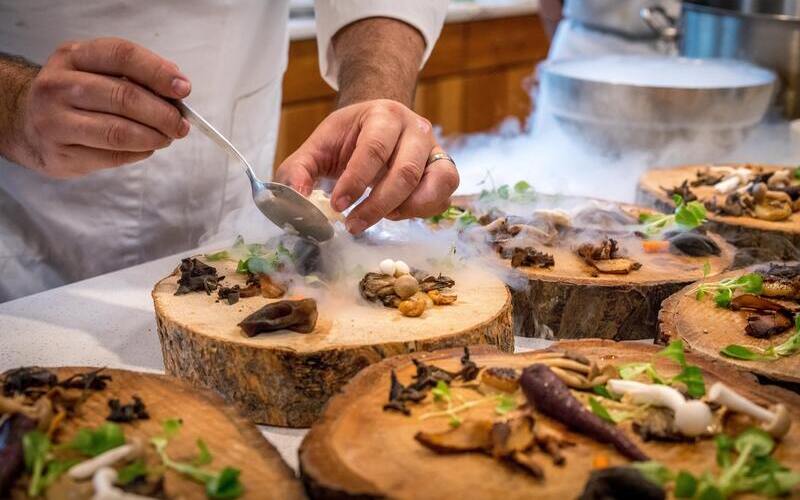
It starts with small courses, essences, spoons, even homemade bread and amuse-bouches or amuse-gueules. It often doesn’t end until four to five hours later. A five- to eight-course menu requires time, attention, and the willingness not to treat every dish like a main course. Someone who comes hungry and only looking for quantity is at the wrong table.
The financial risk comes with it too. The old article clearly stated that starred cuisine is pure stress. Some chefs have voluntarily given up their stars because they could no longer handle the pressure. Others have experienced bankruptcy. Maintaining such a high standard while still being economically viable isn’t easy at prices often well over 100 euros per menu. Wine pairing is often part of that bill.
A star is not a decoration on the door. It is a promise that must be fulfilled every evening anew.
From Bocuse to Witzigmann
The historical section leads to Paul Bocuse and Nouvelle Cuisine. For Germany, the article names Eckart Witzigmann as a defining figure. He elevated the Munich Tantris in the early 1970s and added a third star to the gourmet spot in 1974, then under a different rating system. Later, he opened Aubergine, which was described as the first German three-star restaurant in 1979.
Witzigmann, crowned chef of the century by Gault-Millau, is not alone in the text. He is the starting point of a network. Many later star and starred chefs learned from him or cooked in his kitchens. Heinz Winkler is also mentioned, whose residence in Aschau im Chiemgau held three stars for a long time and later gave one up. The old text explains this with doubts about whether a very large restaurant can sustain its service level permanently.
It’s interesting to look at Munich and the Chiemgau region. The Les Deux, Heinz Winkler’s residence, Es:senz in Grassau, and names like Edip Sigl or Johann Rappenglück show how small this world is. Kitchen chefs move around, learn from each other, and pass on their signatures. The article doesn’t claim to know everything about starred cuisine. That very fact makes it pleasant. It approaches with respect, experience, and a touch of skepticism.
What Are You Wearing?
The old question about dress code remains valid. Many starred restaurants have become less formal, but the text rightly warns against carelessness. A nice watch, a neat shirt, clean shoes, and clothing that fits the space aren’t submission. They show you take the evening seriously. Not overdressed, not in casual panic. Just enough so that service, kitchen, and accompaniment don’t have to compete with your hoodie.
Starred cuisine is thus less luxury than focus. You pay for ingredients, craftsmanship, staff, time, and the calm of a process that only works when many people in the background work very precisely. Those who understand that order differently. And those who, despite that, feel like having a doner or schnitzel with fries, at least understand that both can coexist.
Key Takeaways
Asteria restaurant demands not only money, but attention. This article describes the long menu offerings, homemade bread, small thank-you messages from the kitchen, and wait times at a table. It is not an evening that you can shift between two events. You arrive on time, let the kitchen’s pace run, and accept that not every step needs to be explained why it exists. Some plates open up only when combined with the next.
The wine service in the old text was more than just a sales point. It helps many households economically, but it is also part of the day. Whoever takes it makes a choice, and whoever does not should choose wisely. Asteria kitchen has become less democratic, but more relaxed in its appearance. The core remains: service and kitchen build a meal, and you don’t disturb it much.
This author marked his own boundaries, which helped the article well. He didn’t measure himself against everything, but told stories about experiences in Munich, Taiwan, Austria, and the Chiemgau. That’s the right attitude for this topic. Asteria kitchen needs experts, but not expertise. Those who remain open enjoy more.


