
Dolomites Dialogue: Alpine Interiors After Milano Cortina
The Milano Cortina Winter Olympics turned the spotlight on the Dolomites. What remains once the glare fades is a conversation about wood, stone and the pared-back language of alpine homes in high summer.
An Olympic TV image rarely lingers. What endures are the mountains themselves, and the question of how to build there when no one is watching. This summer the Dolomites have drawn more eyes than usual. Look closer and you’ll find an architectural idiom that has followed the same principle for decades: strip everything back until only material and light remain.
- The Milano Cortina Winter Olympics took place across two host cities, Milan and Cortina d’Ampezzo in the Dolomites
- The Dolomites have been a UNESCO World Heritage Site since 2009, spread across nine areas in South Tyrol, Trentino and Veneto
- Alpine premium interiors rely on regional larch and Swiss stone-pine, dolomitic limestone and granite instead of imported materials
Two cities, one shared stage
Milano Cortina was the first Olympic edition with two official host cities. The opening ceremony took place at Milan’s Stadio San Siro, the closing at Verona’s Arena. Between them, alpine events were scattered across multiple mountain regions, with Cortina d’Ampezzo as the central hub for alpine ski disciplines and additional venues in Veneto and South Tyrol.
This geographical spread is more than an organisational footnote. It shows the Alps were never treated as a single homogeneous backdrop, but as a network of distinct regions with their own identities. That same nuance matters when examining alpine architecture.
South Tyrol is not Cortina
Geographically, Cortina d’Ampezzo sits in the heart of the Dolomites, yet administratively it belongs to the Province of Belluno in Veneto. South Tyrol, the Autonomous Province of Bolzano, shares the same mountain chain but is a separate tourism region with its own administration and craft traditions. When talking about Dolomites architecture, this distinction deserves respect; lumping the two together under one label does both a disservice.
The Dolomites themselves have been a UNESCO World Heritage Site since 2009, their protected area stretching across nine districts in South Tyrol, Trentino and Veneto. That recognition is not a tourist badge; it is a binding framework for building and landscape protection in one of Europe’s most sensitive cultural landscapes.
What “reduced” alpine homes actually reduce
Typical alpine premium interiors in South Tyrol and the Dolomites favour local materials: larch and Swiss stone-pine, natural stone such as dolomitic limestone, granite or gneiss, crafted by regional joiners and stonemasons. This material choice is not a design whim; it follows the logic of what grows and is quarried on site.
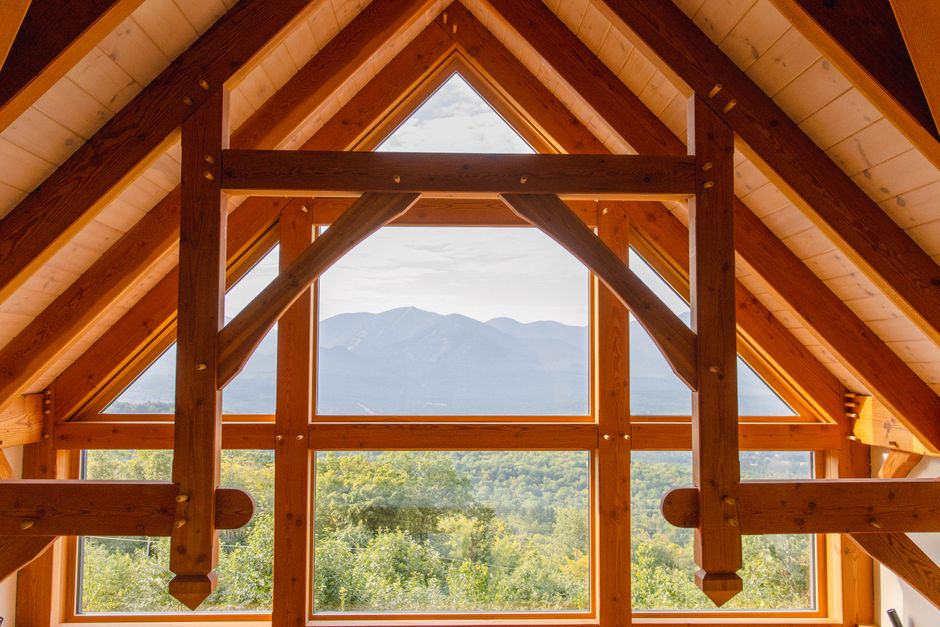
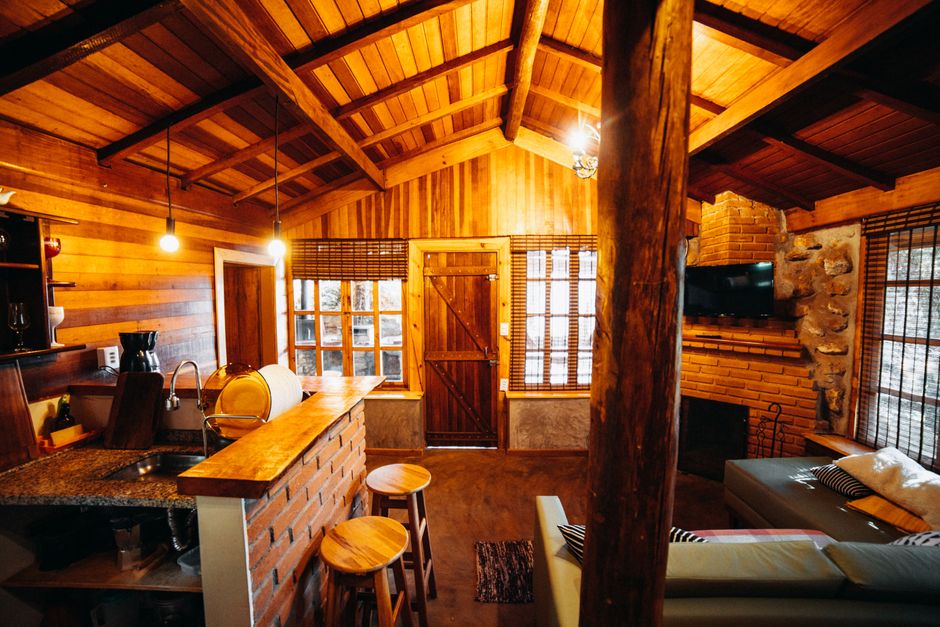
Minimalist alpine-lodge aesthetics in the luxury segment usually mean exposed timber frames, roughly hewn stone walls, deep window recesses and muted colour palettes. To dismiss this style as plain on first glance is to overlook the discipline required: every visible material must withstand the elements yet still look cared-for, a far tougher challenge than decorative excess.
In the Dolomites, we don’t reduce because less is more. We reduce because otherwise the mountain always takes centre stage.
Swiss pine, limestone and a scent that lingers
In many South Tyrolean saunas and parlours, Swiss pine fills the air with resin and warm conifer fragrance, an olfactory trademark of alpine wellness interiors that regional woodworking workshops have long employed. Dolomite limestone on interior walls appears matte and cool, with irregular fracture edges and pale grey tones that almost take on a chalky sheen in the valley-window backlight.
In Cortina d’Ampezzo itself, perched at around 1,200 metres above sea level, low-set timber beams and broad window sills shape the urban mountain village, framed by views of the Tofana massif. Such details cannot be copied without grasping the context. They are answers to a specific light, a specific cold, a specific altitude.

Craftsmanship that does not wait for the Olympics
Local manufactories and artisans are institutionally anchored in South Tyrol. Woodworking, furniture and interior-fitting firms have operated here for generations, whether or not a major event is spotlighting the region. That is the real difference to many other Olympic venues: the craft tradition long predates the Games and endures long after the cameras have moved on.
The summer travel season in South Tyrol and the Dolomites peaks between June and September, with hiking, alpine wellness and design hotels as the main draws. Visitors this summer will encounter less Olympic aftermath than the normal, dependable season that has unfolded here for decades.
What actually remains of the Olympics in architecture
Whether individual competition venues are ultimately converted into residential or hospitality projects is a legacy question the organisers themselves have yet to quantify. What can be said with certainty, however, is that the media spotlight has made the Dolomites more visible to an audience that may previously have known the region only by name.
This visibility is both an opportunity and a risk. When attention fuels rapid growth, the very restraint that has long distinguished alpine architecture here comes under pressure. The real test does not arrive in February with the Games, but in the years that follow, when it becomes clear whether developers continue to think in larch wood and regional craftsmanship or whether the rush to expand takes over.
Quick facts
▸Is Cortina d’Ampezzo in South Tyrol?
No. Cortina d’Ampezzo lies in the Dolomites but administratively belongs to the Province of Belluno, Veneto. South Tyrol is a separate, neighbouring region with its own government.
▸Which materials define alpine premium interiors?
Chiefly larch and Swiss pine plus natural stone such as dolomite limestone, granite or gneiss, crafted by regional joiners and stonemasons in South Tyrol and the Dolomites.
▸Since when have the Dolomites been a UNESCO World Heritage Site?
Since 2009. The World Heritage area spans nine sites in the provinces of South Tyrol, Trentino and Veneto and sets binding rules for building and landscape protection.
Image credits: cover and article images Pexels.


