//Living · Objects
Design objects that lead a room
One strong object replaces ten accessories. Weight, material and authorship determine whether something remains decoration or becomes a protagonist.

 Design Objects
One strong object replaces ten accessories. Weight, material and authorship determine whether something remains decoration or becomes a protagonist.
You enter the room and immediately know who is speaking. Not the wall colour. An object with weight and surface.
Design objects are quiet protagonists. Treat them as decoration and you lose. Place them like characters and you gain calm.
Three things: mass, an honest surface, authorship.

The brain connects texture with effort. Flat surfaces often look like templates.
A protagonist does not have to fill the room. It has to give it order.
The Vitra Design Museum holds thousands of pieces of furniture and lighting as cultural artefacts. Take the same filter home.

An edition helps with provenance. The form must still stand on its own.
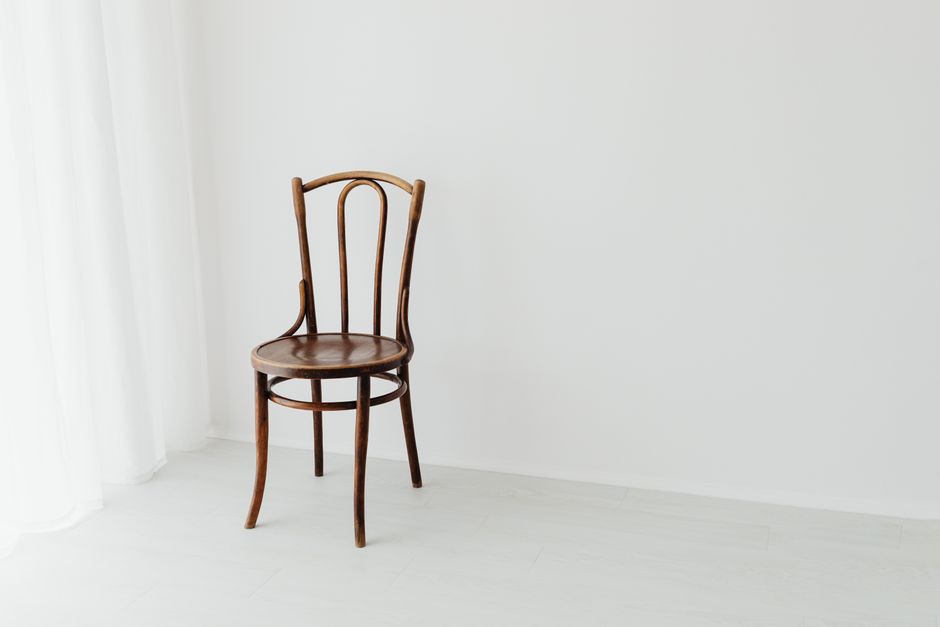
One strong piece against a quiet wall. Space. Breath. Then you see whether it leads.
Interiors are often treated as a soft subject. Yet they are hard: every mistaken purchase remains in view. Every weak object costs you calm each day. That is why the discipline of protagonists is not an aesthetic pose. It is self-protection.
A room with one strong piece feels larger. Not because it contains less. Because the eye has an anchor. Without one, it wanders and finds no hold. Even an expensive interior then feels unsettled.
Material lies less often than colour. You can change colour. Mass and surface remain. That is why I examine objects by hand whenever possible. Cold or warm. Rough or smooth. Heavy or hollow. The body decides faster than taste.
Curating also means saying goodbye. Sometimes one piece has to go so a better one can lead. Keep everything and you do not have a collection. You have baggage.
In the evening, when the light softens, you see the truth. Protagonists remain clear. Noise disappears into shadow. If you still know which object holds the room together, you have chosen well.
An object leads the room or merely fills it.
Noise arises when every shelf is meant to look complete. Protagonists emerge when you leave things out.
Verdict: Decoration calms the impulse to buy. Protagonists calm the room.
Criteria: weight, surface, provenance. If two are missing, leave it.
In the end, what matters is which piece stays in your mind as you leave.
Closeness matters. From a distance, much looks alike. Up close, you see whether someone has worked on it or merely arranged it.
That is why a second look matters, whether at sheet metal, stones, chairs or objects in a room.
Standards are not about volume. They are precision in places you might overlook.
Authorship, depth of material and the ability to hold a room on its own.
Not necessarily. An edition helps. The form must stand on its own.
Usually one, no more than two per room.
More pieces that give rooms order rather than fill them.