Corsica: A Paradise on Earth
There are travel destinations that make your heart beat faster. Corsica is one of them. A paradise located just two flight hours from Germany.
In 2018, we reported on Corsica with an editor who lived in the Balagne region and experienced the island between mountains, bays, and port towns. What became of it? The text remains an invitation not to underestimate Europe: Corsica is close, yet doesn’t feel small.
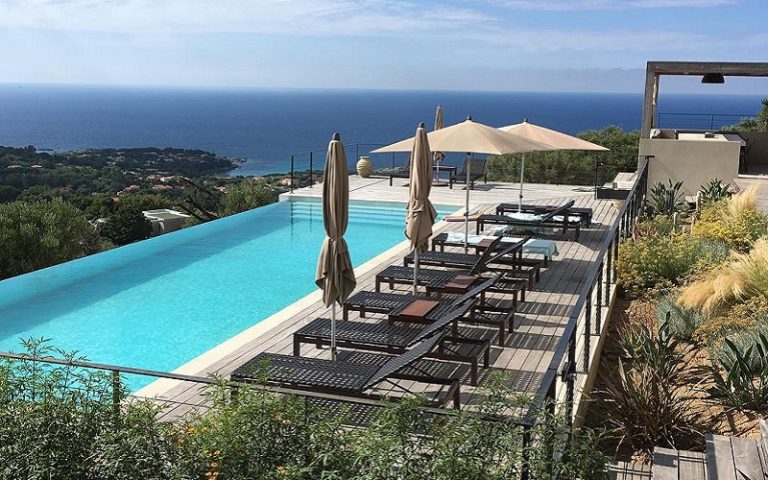
- Corsica combines turquoise-blue seas, sandy beaches, secluded bathing coves, rugged coastlines, and steep mountains.
- The Balagne region between Calvi and Ile-Rousse was the ideal starting point for the trip.
- Calvi, Bastia, and Algajola were highlighted as particularly worthwhile stops.
- Polyphonic chants in Corsican churches remained a vivid memory.
- Stand-up paddling in Algajola cost 12 Euro per hour and person, according to impressions at the time.
Corsica is close, but not easily told
The original article began with a small correction of our wanderlust reflex. We travel to distant destinations to find paradise, overlooking what lies just about two flight hours from Germany. The sentence is a bit grand, but the thought holds true. Corsica is not an island that can be reduced to a postcard motif.
Turquoise seas, white sandy beaches, and secluded coves meet rugged coastal sections and steep mountains. It is precisely this tension that makes Corsica interesting. The island caters to beachgoers and mountain lovers alike, without fully committing to one side. Those seeking only the beach will find it. Those wanting landscape with edge will find that too.
This distinguishes Corsica from many smoother destinations. The island does not feel like a backdrop tidied up for visitors. The old text describes nature, animals, free-roaming sheep and cows, abundant greenery, and open locals. You sense: this was not about a list of the best photo spots, but about a region that stayed in memory.
Corsica is not a beach with mountains behind it. It is an island that breathes between both.
The Balagne is a good start
The ideal starting point in the original text was the Balagne, that hilly and fertile region between Calvi and Ile-Rousse, often also called the “Garden of Corsica.” Exactly there, mountain worlds and beach paradises meet. For a first trip, this is smart. You do not have to choose between coast and hinterland, but can see both.
The editor stayed there, explored the area, and was thrilled. Secluded coves with turquoise water, nature and animals in harmony, free-roaming sheep and cows. Such details carry the text stronger than any grand judgment. They show that Corsica is not just beautiful to look at, but has a certain calmness.
There was also a cultural moment: Corsican polyphonic singing in the churches. The old text spoke of goosebumps and a clear recommendation. This is important because an island trip otherwise quickly stops at looking at sea and mountains. But Corsica also has a voice. Whoever hears it understands the place differently.
Calvi, Bastia, and Algajola give the island shape
Calvi was described as Corsica’s fourth-largest city, with a marina and picturesque old town. According to the article, the city exudes the flair of an old port town. This is a good contrast to the nature of the Balagne. Suddenly, it is about alleys, boats, walls, and the feeling that history does not lie in a museum, but runs along the water.
Bastia was named as the capital of the Haute-Corse department and, for many, the entry gate to Corsica. The old text described Bastia as perhaps the least touristy city on the island, and precisely for that reason worth seeing, with alleys and viewpoints. This is a nice recommendation because it does not rely on maximum polish. Sometimes a city is appealing because it does not try too hard.
Between Ile-Rousse and Calvi lies Algajola, a small seaside resort with a citadel and a beautiful sandy beach. There, the editor rented a stand-up paddleboard for 12 euros per hour and person and explored the beach from the sea. This detail makes the place tangible. You do not just see the bay; you move within it.
The south of the island remained open in the article. From the Balagne, it is too far for a day trip, but with its rugged rocky coasts, it is also worth a visit. Just for that, the editor wanted to return. That may be the best ending for a travel report: not everything done, not everything seen, but enough experienced to want to come back.
The island rewards slow travel
Given how many contrasts Corsica has, it would be a shame to treat the island like a checklist. The old article shows this unconsciously very well. The editor stayed in the Balagne, explored coves, places, and nature from there, listened to singing, and consciously left the south open. This is not a flaw. It is a smart way to travel.
Corsica seems strongest in the text when you do not want everything at once. A day by the water, an excursion to Calvi, a quiet look at Bastia, a stand-up paddleboard in Algajola. Plus the animals, the greenery, the voices in the church. From these moments arises an image of the island that lasts longer than an overloaded route.
Why the Balagne is so crucial in the text
The Balagne holds the article together because it serves not just as a starting point, but sets the mood. Hilly terrain, fertility, coastal towns, bays, wildlife, and greenery: these elements give the travel report a calm center. From there, Calvi, Bastia, and Algajola don’t feel like obligatory stops, but rather natural excursions.
This is key for Corsica. The island can quickly seem overwhelming if you try to see everything. A good base makes it manageable. It allows for repetition, familiar routes, and yet still new impressions. That’s exactly why the Balagne remains memorable as a recommendation.
Not everything has to happen right away
The open south mentioned in the original article isn’t an unfinished task, but a promise. An island you want to return to has done more things right than one you check off after three days. Corsica can continue living on in your mind, even long after your suitcase is back home.
Good to Know
▸Where is a good starting point for exploring Corsica?
The Balagne between Calvi and Ile-Rousse was described in the article as the ideal base, since mountains and beaches are close together there.
▸Which places were recommended?
Calvi, Bastia, and Algajola. Calvi for its harbor and old town, Bastia for its narrow streets and viewpoints, Algajola for its citadel and beach.
▸What stood out as a special experience?
Corsican polyphonic singing in churches. The original article describes this as a goosebump-inducing moment and a clear recommendation.