
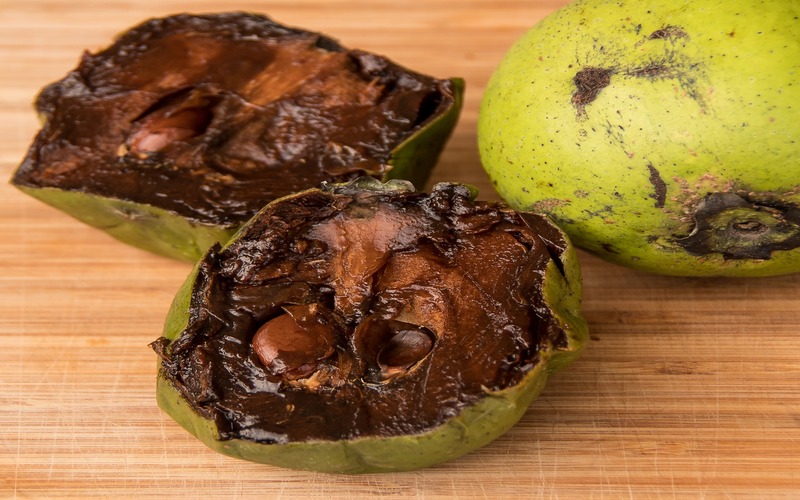
Black Sapote – Sweet Temptation Meets Superfruit
The dream of healthy, low-calorie chocolate becomes reality-and its name is black sapote! The taste of this superfruit? Chocolate pudding!
In 2020 we reported on black sapote: a fruit said to taste like chocolate pudding yet not arrive on the plate like a dessert from the confectionery aisle. What became of it? Above all, a reminder that the best food trends aren’t loud-they sit on a plate and work without fanfare or empty promises.
- The black sapote was described in the original piece as a low-calorie fruit with the character of chocolate pudding.
- According to the alt text, it contains vitamin C, calcium, potassium and phosphorus.
- The flesh is sweet to mildly nutty and, in texture, resembles plum purée.
- You can enjoy it straight, in bowls, desserts, smoothies, muffins or as a spread.
- The catch remains availability: in Germany, it’s more likely to be found in delicatessens, farmers’ markets or home-grown.
The idea back then was simple and rather seductive: chocolate flavour without the usual chocolate moment. No bar, no cream, no jar you dip into too often. Instead, a fruit whose dark flesh softens to the point of almost being pudding-like. It’s that small twist that makes black sapote intriguing. From the outside it looks more like a persimmon or green apple, but inside waits a texture the original piece compared to plum purée.
It sounds like a food fad, yet it’s actually a very quiet topic. Black sapote doesn’t aim to replace anything you love. It simply offers another option when you crave something sweet without automatically landing in Nutella, chocolate spread or dessert territory. In the IBL sense, that’s the better luxury: not more of everything, but choosing more precisely.
Why it was so irritating back then
The old youDRESSED article called the black sapote “Schokofrucht” or “chocolate-pudding fruit.” It’s not elegant, but it’s remarkably accurate. The fruit hails from Central and South America; the original post cited Mexico, Guatemala, and the Philippines. Its appeal doesn’t lie in complicated preparation, but in ripeness. The darker the skin, the riper the flesh inside. Only then does it turn soft, sweet, and faintly nutty.
Cut it too soon and you’ll miss the magic entirely-all you get is an exotic shape, not the pudding moment. Ripe, it can be eaten straight from the spoon, spooned into a bowl, or folded into a dessert. That’s its strength: it asks for no grand kitchen, only a little patience.
The black sapote isn’t chocolate stand-in. It’s the quieter answer to the same craving.
How to eat black sapote without fanfare
The old article suggested Nutella swaps, breakfast smoothies, bowls, desserts, muffins, or as a sandwich spread. That direction still holds. You don’t need a shopping list longer than the moment itself. Scoop out the ripe flesh, stir until smooth, and blend with fruit or yogurt if you like. Sweeter? Add banana or dates. Clearer? Leave it alone.
As a spread it’s especially interesting because it lacks the heavy fat of classic creams. That doesn’t make it austere-it simply feels lighter. On toasted bread, with nuts, or in a dessert glass, it reads less like a compromise and more like a quiet discovery. Muffins are the playful version; smoothies are the pragmatic one. Both were in the original text and both still make sense.
The catch is availability
The old article was honest: German supermarkets don’t stock black sapote on autopilot. Finding it takes luck, a good greengrocer or deli, a farmers’ market with exotic produce, or the patience to grow your own. That single point brings the trend back to earth. Not everything that sounds exciting lands in your basket tomorrow.
And that’s fine. The black sapote suits people who explore food deliberately instead of chasing every new product. If you find it, try it ripe and plain. If not, the thought remains: sometimes the most exciting sweetness isn’t in the candy aisle.
How to place the hype in context
The old post called the black sapote a “superfruit.” The word is big; the practical truth is smaller and better: it’s a fruit with an unusual texture and a sweet, subtly nutty flavor. Treat it that way-not as a miracle, not as a diet promise, but as an ingredient that elegantly satisfies a dessert craving.
If you track one down, don’t buy a whole box at once. Take one fruit, wait for perfect ripeness, and taste it plain first. After that you’ll know whether bowls, smoothies, muffins, or spreads suit you. It’s the calmest way to test a food trend: taste first, decide later.
That’s why the archived text fits right into the IBL world. It never inflates the product. The black sapote is exciting because it reframes a familiar pleasure in a new shape. Whoever seeks sweetness gets a gentler path to it. Whoever distrusts food trends can still try it, because the method stays refreshingly simple.
The best moment is probably not the grand dessert plate, but the first spoonful from a perfectly ripe fruit. That’s when everything is decided.
Good to Know
▸Does black sapote really taste like chocolate?
The original article describes the flavor as sweet to lightly nutty and compares the ripe flesh to chocolate pudding. It’s not a chocolate bar, but the dessert-like impression is why it’s earned that reputation.
▸How can I tell when it’s ripe?
The alt text states: the darker the fruit appears on the outside, the riper it is. The flesh then softens and scoops out easily or blends well into recipes.
▸How can I use black sapote?
Enjoy it plain, in bowls, desserts, smoothies, muffins, or as a spread. Those uses were already highlighted in the original piece and fit because the fruit is creamy and sweet.
▸Where can I find black sapote?
The old article names specialty fruit and gourmet shops as well as farmers’ markets as realistic sources. Mainstream German supermarkets reportedly don’t stock it reliably.


