Ancient Cities and Impressive National Parks: These Highlights Await You in Georgia
Snow-capped mountain peaks, subtropical rainforests, Mediterranean wine-growing regions, and the Black Sea coast – Georgia has a lot to offer.
In 2023, we described Georgia as a destination for round trips. A look back reveals why this small country makes such a strong impression: It quickly shifts between ancient cities, wine regions, Caucasus mountains, the Black Sea coast, and healing springs.
- Tbilisi, also known as Tiflis, is usually the first stop and, according to the article, dates back to the 4th century.
- The name Tbilisi means “warm springs,” which remain one of the main attractions today.
- Kakheti stands for fruit, vegetables, honey, and the country’s best wines.
- The Greater Caucasus offers peaks over 5,000 meters, while the Lesser Caucasus reaches around 4,000 meters in height.
- Batumi shows Georgia’s other side: beaches, high-rises, casinos, and excursions into the hinterland.
Tbilisi starts with warm water
Georgia is described in the original text as a rather unusual travel destination, a hidden gem south of the Caucasus. Snow-capped peaks, subtropical rainforests, Mediterranean wine-growing regions, and the coast on the Black Sea are all found within one country that is well-suited for a round trip. Additionally, there is a rich cultural heritage and a cuisine that is explicitly highlighted as a reason for enjoyment in the archive article.
For many travelers, Georgia begins in Tbilisi, the capital, also known in Germany as Tiflis. Due to its international airport, it is often the first stop. The original text traces its origins back to the 4th century AD. The name means “warm springs.” Exactly these springs were likely the reason why the Persians settled there at the time and founded a settlement.
To this day, the thermal springs remain one of the city’s main attractions. This is complemented by the old town, largely preserved in its original state, featuring Georgian, Persian, Byzantine, Ottoman, and Russian influences. The Nariqala Fortress on a ridge, the large botanical garden, and the amusement park on Mtatsminda Mountain accessible by funicular complete the picture. Thus, Tbilisi is not just an arrival point but a small concentrate of the country itself.
Georgia works as a round trip because every stop has a different temperature.
Kakheti tastes like landscape
East of the capital lies Kakheti, described in the original text as a region of agricultural products. Fruits, vegetables, honey, and the country’s best wines are mentioned. The landscape and climate resemble the Mediterranean more than the Caucasus. This explains why Kakheti acts not just as a layover but as a primary reason for the journey.
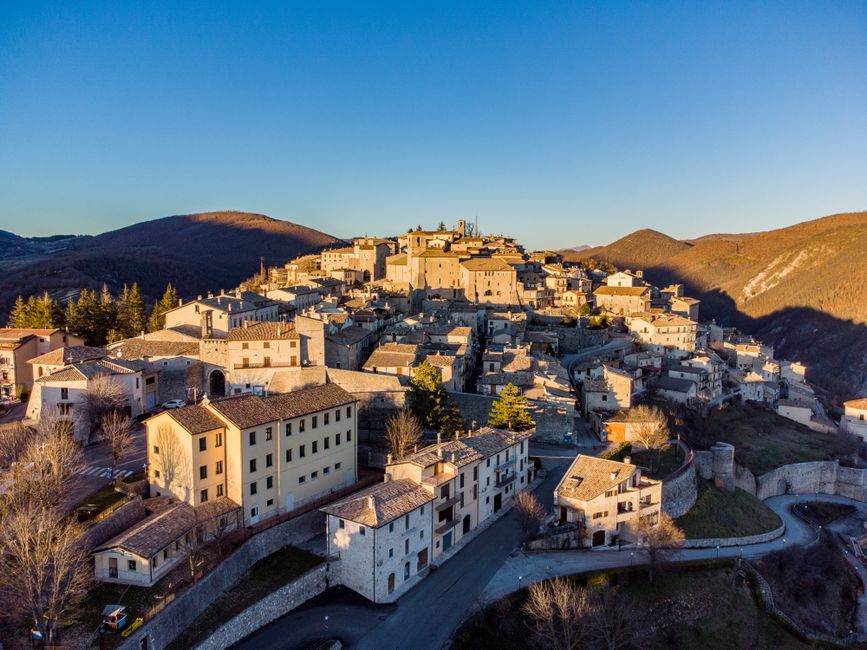
Sighnaghi is presented in the article as the ideal starting point for excursions in the surrounding area. The town sits on a hill, overlooking almost the entire region, and boasts a charming old town with city walls. Due to its beauty, Sighnaghi is considered a popular wedding backdrop in the country and bears the nickname “City of Love.” It is a romantic phrase, but here it fits perfectly. Some places feel like an invitation simply through their location and light.
Afterward, the Caucasus brings the great verticality. The mountain range borders Georgia to the north, with peaks over 5,000 meters high and snow year-round. Stretching over 1,100 kilometers from the Black Sea to the Caspian Sea, it offers routes for serious hikers. For those who find the peaks too high, the Lagodechi National Park is an option, founded as early as 1912. Well-signposted trails lead up to 2,000 meters in altitude, through subtropical climates, waterfalls, rainforests, and rich flora and fauna.
Batumi and the Lesser Caucasus
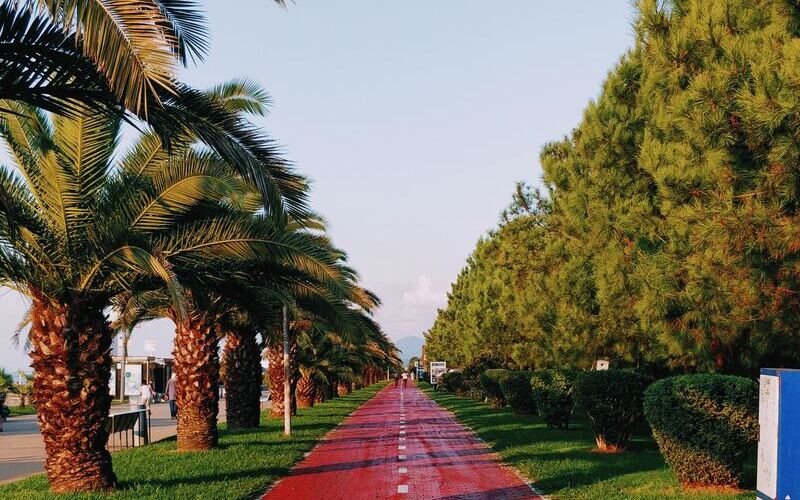
Batumi shows a different side. After several hours of driving, you leave the nature of the Caucasus behind, according to the archive text, and suddenly stand in the Las Vegas of the Black Sea. Georgia’s second-largest city is a hub for tourists from Russia, Turkey, and the Arab world. Hotels and casinos line the coast, while skyscrapers made of concrete, steel, and glass glow brightly at night.
This doesn’t sound quiet, but it belongs to the country’s diversity. During the day, the beaches invite swimming, while the hinterland offers excursion destinations like Mtirala National Park. Batumi is thus not a counterargument to Georgia’s nature but a break in the rhythm. After mountains, old towns, and wine, suddenly concrete, light, and sea appear.
The final stop in the original text leads to the Lesser Caucasus. With heights around 4,000 meters, it is smaller than the northern mountain range but equally scenic. Extending over 600 kilometers, it forms the southern conclusion of the country. The Borchomi-Kharagauli National Park features ten well-developed hiking trails.
The main town of the region is Borchomi, a renowned spa town. Russian tsars and guests such as Pyotr Ilyich Tchaikovsky and Leo Tolstoy spent their holidays there at the healing springs; later, Joseph Stalin visited his homeland there. To this day, travelers can visit the Tsar’s baths and experience the water that earned the town its reputation.
The original article concludes with the recommendation to view Georgia as an interface between Orient and Occident. The image is grand, but the route makes it tangible. Warm springs, wine, high mountains, casino lights, national parks, and spa towns. Not every country changes scenes so quickly while remaining readable.
The Journey Thrives on Sharp Contrasts
It is precisely these contrasts that make Georgia so compelling in the original text. Tbilissi begins with history and warmth, Kakheti tastes of wine and agriculture, the Caucasus draws you upward, Batumi suddenly shifts to coastal light and casino facades, and Borjomi returns to spa traditions. In a larger country, this would be a long journey. In Georgia, it feels more compact and therefore more intense.
This diversity isn’t just claimed; it’s evident at the locations mentioned. Persian, Byzantine, Ottoman, and Russian traces in Tbilissi. A seemingly Mediterranean climate in Kakheti. Subtropical forests in Lagodechi National Park. Rows of high-rises along the Black Sea. Tsarist-era baths in Borjomi. Each stop brings a different tone, without the country feeling fragmented.
For a round trip, this means: You shouldn’t try to reduce Georgia to a single image. It’s not just mountainous terrain, not just a wine region, not just a Black Sea coast, and not just an old town. The appeal lies in seeing these images one after another and enduring the transitions. That’s exactly where the feeling of truly being on the move emerges.
Good to Know
▸Which stops does the Georgia article mention?
Tbilissi, Kakheti, the Caucasus, Batumi, and the Lesser Caucasus around Borjomi.
▸What does Tbilissi mean?
The name means warm springs, described in the article as the city’s origin and attraction.
▸Why is Kakheti worth visiting?
For its fruit, vegetables, honey, wine, Mediterranean-style landscape, and places like Sighnaghi.
▸What makes Batumi different?
Batumi stands for the Black Sea coast, skyscrapers, hotels, casinos, beaches, and excursions into the hinterland.