For the McMenu: a pair of McJordans in size 38 to go, please!
In 2020, McDonald’s Germany raffled off five numbered Air Jordan 1s designed by BornOriginals. Five years later, Nike is selling the first official McDonald’s sneaker in stores. We take stock.
In February 2020, McDonald’s Germany launched an Easter campaign offering five pairs of Air Jordan 1s hand-customized by the label BornOriginals in the fast-food chain’s aesthetic: mustard-yellow laces, a bag of golden fries on the heel, each pair individually numbered. A quirky giveaway with a three-day window, then gone. What became of it? Today, Nike sells the first official McDonald’s sneaker in stores. What started as a playful stunt has become strategy.
- BornOriginals crafted the McJordans in 2020 as one-off custom pieces, not Nike. It was a marketing campaign, not a retail product.
- Five numbered pairs were raffled from February 17 to 19, 2020, as part of the app-based Easter campaign #eieieiersuche.
- In June 2025, Nike released the first official McDonald’s sneaker: the Nike Book 2 in Sedona’s turquoise Arches.
- Fast food and sneakers have long been their own discipline. Brands now stage shoes as events, not footwear.
- The real value lies in scarcity: what few can get, everyone wants.
On February 19, 2020, McDonald’s Germany kicked off its Easter campaign. App users could expect a surprise every day for 35 days, the tagline: 35 days, 35 surprises. Through March 24, discounts and freebies rolled out-a Big Mac for one euro, a 20-piece Chicken McNugget box for four euros. Promoted under the hashtag #eieieiersuche, complete with Instagram filters featuring golden Easter grillz and reach amplified by creators like Sonnyloops and Kelvinfiti. Run-of-the-mill promo, so far. But then came the twist.
What the McJordans Really Were in 2020
The real highlight happened even before the Easter countdown. From 17 to 19 February 2020, McDonald’s raffled off five pairs of Air Jordan 1s that the label BornOriginals had custom-designed exclusively for the chain. Crucial for context: this was not a Nike product. BornOriginals specializes in custom work-painting and redesigning already-produced shoes. The McJordans were handcrafted one-offs, each numbered individually. That’s precisely what makes them both a footnote and a harbinger: a brand discovers that a shoe can be a better advertisement than an ad.
The Air Jordan 1 was predestined for this role. No other shoe carries as much cultural weight: launched in 1985 as a basketball shoe for Michael Jordan, banned by the NBA for its color scheme, and thereby elevated into myth. If you wanted to send a message to young, style-conscious people in 2020, you didn’t pick just any sneaker. You picked the one that already stood for desire.
A brand discovers that a shoe can be a better advertisement than an ad.
From Gimmick to Business Model
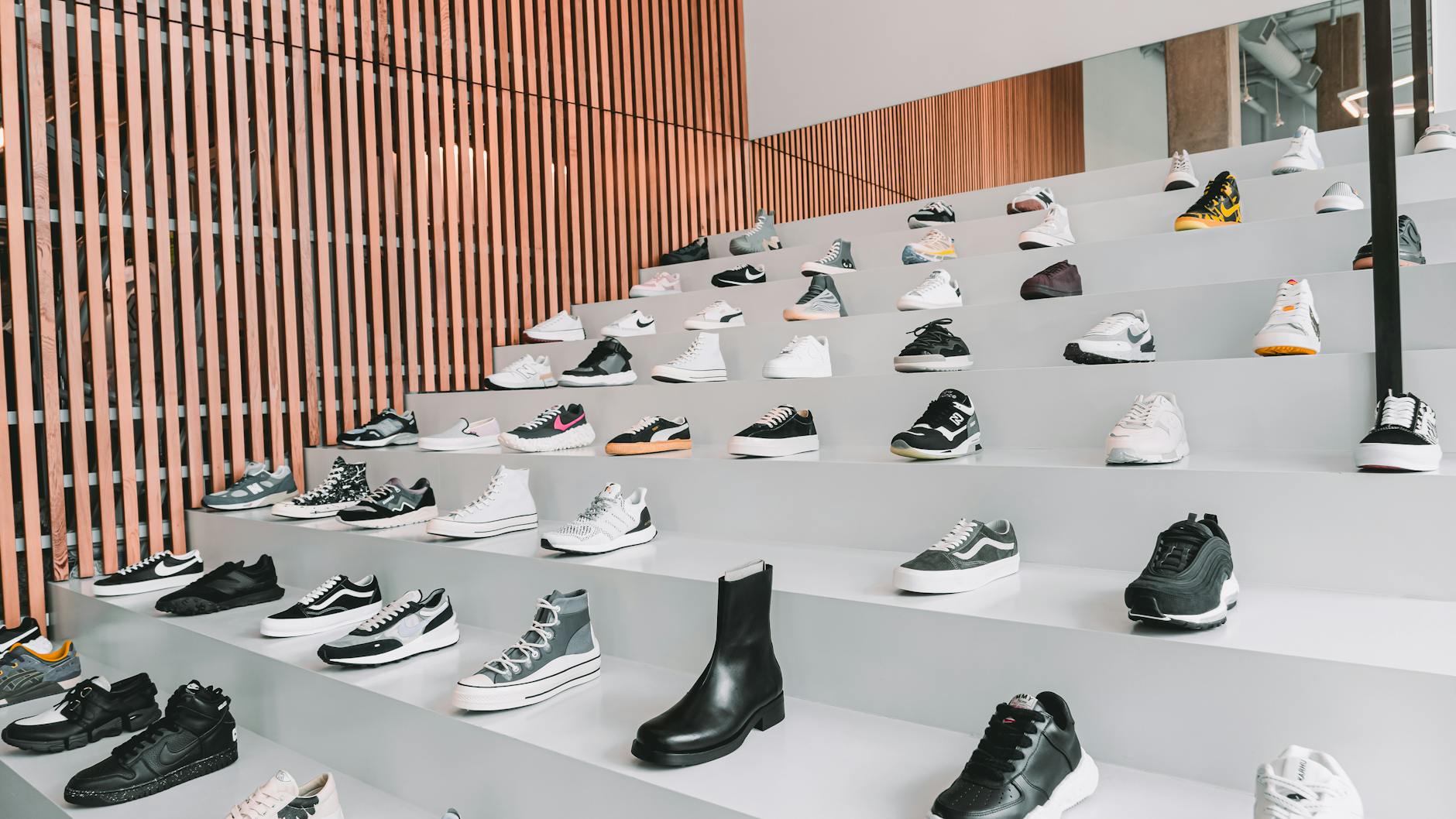
The idea of telling a brand’s story through sneakers is not new. In 1986 Run-D.M.C. sang about their Adidas, earning the first major outfitter deal in music history-long before “collaboration” became an industry buzzword. What smelled like a stunt at McDonald’s in 2020 is today its own discipline. Brands from luxury and cuisine, from sport and street no longer merely manufacture shoes; they stage them as events.
The decisive leap came five years after the McJordans. In June 2025 Nike and NBA star Devin Booker released the first officially licensed McDonald’s sneaker, the Nike Book 2. The colorway is clever: it doesn’t echo the familiar golden arches but instead references the world’s only McDonald’s with turquoise arches-a Sedona, Arizona location whose signage was adjusted to harmonize with the red rock landscape. The shoe dropped through Nike retail at around €150; a Friends-and-Family edition was pre-released via the McDonald’s app. Five hand-painted one-offs had become a street-priced product.
Beyond the arches, the game continues. BMX pro Nigel Sylvester-who started his career as a McDonald’s crew member-closed his story in August 2025: as part of the McDonald’s platform “1 in 8” (highlighting that one in eight U.S. workers began their careers at the chain), he teamed up with Jordan Brand to launch the Air Jordan 1 Low “Better With Time.” Twenty current McDonald’s employees received pairs. The gesture says more about today’s strategy than any commercial: the shoe isn’t the product; it’s the narrative.
Why Scarcity Is the Real Luxury
Five pairs. That number in 2020 already revealed where things were headed. It’s not availability that creates desire; it’s the opposite. A shoe anyone can buy is just a shoe. A shoe of which only five exist becomes a story people talk about. McDonald’s didn’t sell anything in 2020 yet still won, because scarcity did the outreach for them.
Luxury houses and sneaker brands have perfected this mechanism. An object’s value today is measured less by materials and craftsmanship than by how hard it was to obtain. It isn’t necessarily pretty, but it’s honest: we’re buying the story along with the shoe. The McJordans were an early, almost naive attempt at that. What makes them special isn’t the shoe itself; it’s that, in 2020, printing a fries bag on a Jordan heel counted as a quirky ad idea-and five years later, it’s part of the regular lineup.
Quick Answers
▸Could you buy the McDonald’s McJordans in 2020?
No. There were five numbered pairs that McDonald’s Germany raffled off from 17 to 19 February 2020. Nothing was sold; it was a pure promotional campaign tied to the Easter campaign.
▸Did Nike design the McJordans?
No. The shoes came from the custom label BornOriginals, which took finished Air Jordan 1 silhouettes and re-styled them in the McDonald’s look. Nike as the manufacturer had nothing to do with the campaign at the time.
▸Is there now an official McDonald’s sneaker?
Yes. In June 2025 Nike released the Nike Book 2 in a McDonald’s edition with Devin Booker, inspired by the Sedona store with turquoise arches. It launched through Nike for around €150.
▸Why do brands raffle so few pairs?
Scarcity fuels desire. Five pairs generate more buzz than 5,000 because rarity sparks conversation. The real win is the reach, not the sales.
If unexpected brand mash-ups like this intrigue you, check out two related stories: Prada meets Adidas, where luxury collides with sport, and the experiment when IKEA teamed up with Virgil Abloh to turn furniture into a hype object. Both follow the same logic as the McJordans.