//STYLE

What Really Matters in Your First Pre-Owned Watch
13 June 2026
Your first great pre-owned watch isn’t bought for the brand on the dial. It’s bought for what you can verify: condition, papers, service history, and a source that stands behind its pieces. Thinking in that order lets you shop with more calm, more intelligence, and far less regret.
- Condition first: Case, crystal, and crown reveal more than any logo. Original edges beat high-gloss polish.
- Papers and service: Box, warranty card, and documented maintenance are value, not extras.
- Check the source: Chrono24 with authenticity and buyer protection, plus independent authentication, skip the anonymous flash purchase.
There’s that moment when a watch sits in the display case and everything looks right. The dial glows, the bracelet clinks, the price feels fair. That’s exactly when the mind is easiest to persuade. A watch is a small mechanical promise, and promises aren’t bought on first sight. They’re inspected. The good news: you don’t need a watchmaker’s diploma to spot the essentials. You only need a sequence you refuse to break.
Condition beats brand, every single time
Before you even consider the name on the dial, look at the case. A watch worn daily for two decades is allowed to show its age. The question isn’t whether it’s untouched, it’s whether its substance has survived. Are the edges between the planes still crisp, or has over-enthusiastic polishing softened the case into something smooth as a river stone? Original edges are rare now, and that’s precisely why they’re valuable. A lightly scratched but unaltered case is worth more than a mirror-polished one stripped of its form.
Next, the crystal. Scratches in acrylic can be buffed out; a cracked sapphire crystal betrays a hard impact that may have reached the movement. Turn the crown gently: does it sit snug, or does it wobble? On screw-down crowns, the resistance should feel clean, without any grit. And give the dial a second look. Even patina is character. Uneven staining can hint at moisture, and moisture is the silent enemy of any movement.

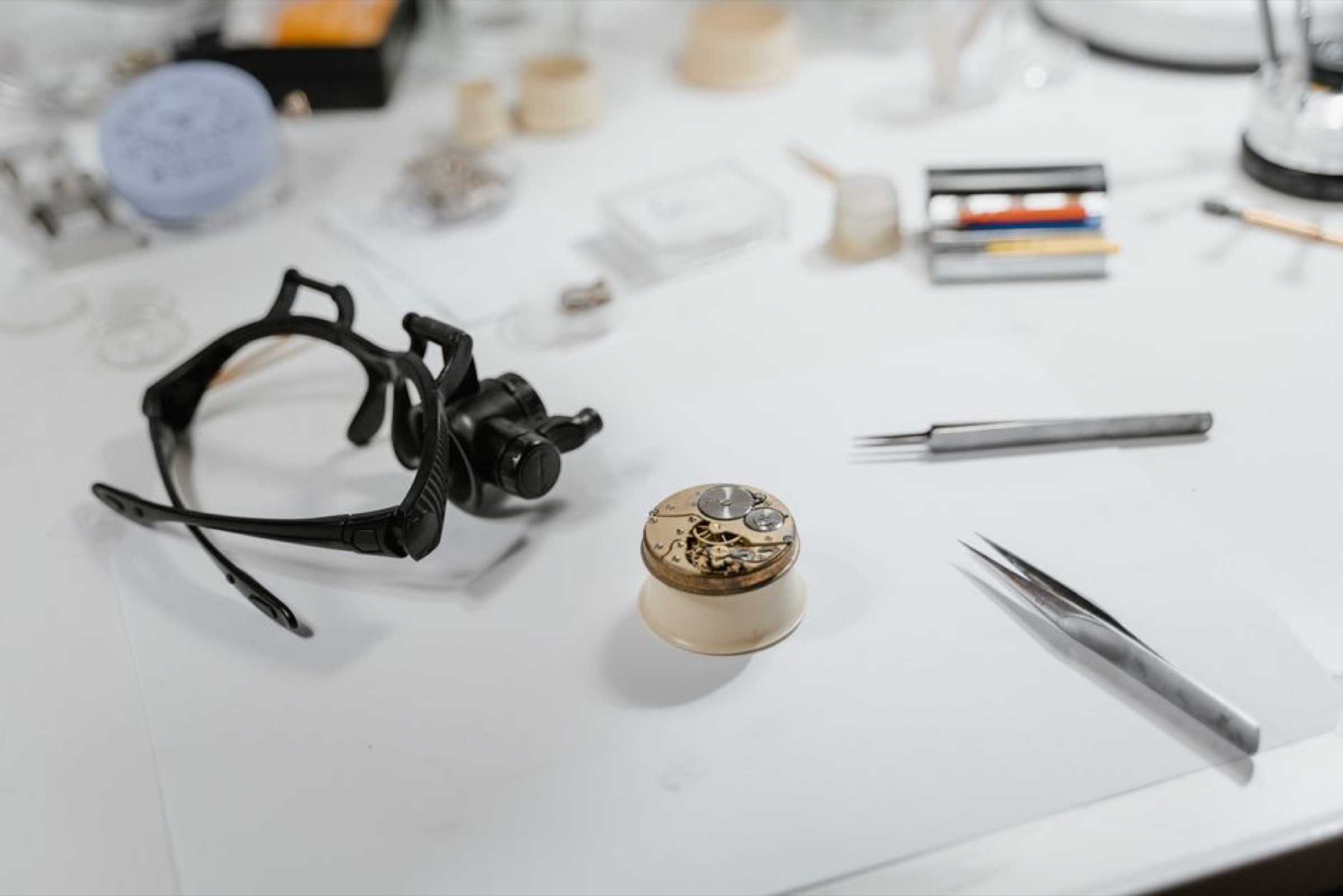
If you want to be absolutely sure, and the watch is worth the effort, have the movement opened by a watchmaker. What’s inside tells the real story: does the calibre match the reference, are the parts original, any signs of water or a repair no one mentioned? Those thirty minutes on the bench cost little and protect you from the costliest mistake of all: a watch whose inside doesn’t match its outside.
Papers and Service History Are Part of the Value
Collectors talk about a full set when box, warranty card, manual and receipt are all present. It sounds like bookkeeping, but it’s substance. The original papers prove origin and purchase date, and they rule out an entire class of fakes and grey imports. A watch with an unbroken chain from the first owner to today carries a story you can trace. One without papers isn’t automatically wrong, but it demands more trust, and trust should have a reason.
Even more important than the papers is the service history. A mechanical movement needs a service every few years: oiled, inspected, re-adjusted. A documented service tells you the watch was cared for, not just worn and forgotten. Ask for invoices from the last overhaul. If every trace of service is missing, budget for it now, because it’s coming, and depending on the complications it can run four figures. An honest invoice that already includes the next service is better than a supposed bargain with zero history.
A well-maintained watch without a big name almost always beats a big name without care.
That order is the real trick. Whoever looks first at the brand pays for the name and overlooks the rest. Whoever looks first at condition, papers and service often ends up with the nicer watch, sometimes even the rarer one. Material honesty before label. A watch that can prove its origins and has been properly maintained keeps its value and its dignity, no matter how loudly or quietly the name rings.
The Source Decides Your Peace of Mind
Where you buy is as important as what you buy. A faceless direct purchase from a stranger may seem tempting, but it leaves you alone with every risk. On established marketplaces like Chrono24, buyer protection kicks in: the funds are held in escrow for a few days after delivery until you’ve inspected the watch and are satisfied. There’s also the Certified programme, which subjects higher-priced pieces to an authenticity check and issues a certificate. That’s not a luxury; it’s the difference between a purchase and a gamble.

For costlier or rare pieces, a second, independent look is worth it. Specialist authentication services like WatchCSA examine a model against hundreds of detail features, from the engraving on the case back to the geometry of the hands, and issue an authenticity report that even major dealers rely on. Such a report isn’t standard for every entry-level watch, but once the price tag climbs, it’s the quietest investment you can make. A reputable source plus an independent certificate, and the thought of having been cheated vanishes from your mind.
How to Turn Your First Buy into the Right One
Take your time. A watch that’s gone today will reappear tomorrow, often in better condition and with better papers. The pressure to strike now is almost always a sales tactic, rarely the truth. Set a clear line: check condition, demand papers and service records, secure the source. Only when those three align should the name enter the picture and truly impress you.
Once you’ve felt that harmony between substance and story, the path almost inevitably leads onward, to the houses that have turned this discipline into an art. You don’t just buy a Vacheron Constantin or a Rolex; at some point you acquire a piece of provenance. But that journey starts right here, with the first watch you chose not by the logo but by its condition. Whoever understands that never again wears merely a watch. They wear a decision.
Quick Clarification
▸Is a used watch without papers always a bad purchase?
No, but it demands more scrutiny. Without papers, you lack proof of origin, so condition, a trustworthy source, and, if in doubt, an independent authenticity report carry more weight. For rare or expensive models, missing papers are a real drawback; for simpler pieces, they become a bargaining chip.
▸How can I spot an over-polished watch?
Look for rounded edges and a soft-looking case. Original transitions between brushed and polished surfaces are sharp. If everything appears worn smooth and mirror-glossy, material has usually been removed, lowering collector value. Light wear that preserves the shape is better than flawless high-gloss.
▸Does Chrono24’s buyer protection really pay off?
Absolutely for your first purchase. The amount is held in escrow for several days after receipt, letting you inspect the watch before the money is released. In the Certified program, high-value pieces also come with an authenticity check and certificate, removing the biggest risk from your first buy.