Between Melk and Krems on the Danube lies a landscape that has been a UNESCO World Heritage Site since 2000. Here grows a wine that tastes of its slope, is hand-picked, and whose finest tier may contain only two grape varieties. A look at the Wachau, its Grüner Veltliner, and why a single vineyard here means so much.
Some river valleys you pass through; one you remember. The Wachau stretches about thirty-five kilometres, a ribbon of Danube between Melk and Krems, its slopes lined with terrace upon terrace held by dry-stone walls mortared by no one. Arrive early enough in autumn and you’ll still see river mist hovering above the water while the first rays of sun catch the rows of vines. This is where a white wine grows that carries its own voice in the world. And it bears a name that, for a few years now, has been more strictly protected than ever: Wachau DAC.
Quick Facts
The Wachau cultural landscape was inscribed on the UNESCO World Heritage List in 2000. It includes Melk Abbey, Göttweig Abbey, and the town of Krems.
The Danube valley between Melk and Krems measures about thirty-five kilometres. In a narrow space, river, rock, and vineyard press together.
The Wachau DAC designation has applied since the 2020 vintage. It recognises three tiers: Gebietswein (regional wine), Ortswein (village wine), and Riedenwein (single-vineyard wine).
Riedenwein may consist exclusively of Grüner Veltliner or Riesling. 157 single vineyards are defined for this purpose.
All origin-protected Wachau DAC wines must be hand-harvested. Machines remain at the foot of the slope.
You can describe the Wachau through its postcard views, the apricot blossom in spring, Dürnstein with its blue church spire, the ruin above the village. Yet the essence lies in the soil and the labour embedded in these slopes. It is one of the few European wine landscapes where geography, history, and craft are so tightly interwoven that they can scarcely be told apart.
A Landscape Under Protection
In 2000 UNESCO inscribed the Wachau cultural landscape on its World Heritage List. What is protected is not a single building but a living whole: the valley, the villages, the abbeys, the terraced vineyards. At the western gate stands Melk Abbey, Baroque and visible for miles above the Danube. At the eastern end lies the town of Krems, and above it, on the heights, Göttweig Abbey. Between them flows the river that has carved its way through the bedrock for millennia.
World Heritage in the Wachau does not mean stagnation. The terraces are farmed, the walls maintained, the wine sold. What is safeguarded is the way humans and landscape interact here. It feels abstract until you stand on one of the narrow terraces and realise every row of vines was planted, tended, and harvested by hand-because no tractor could squeeze between the walls.
Thirty-five kilometres that never repeat
The Danube Valley between Melk and Krems stretches for roughly thirty-five kilometres. For a wine region, that’s short-and that’s the point. Along this compact stretch, everything is in constant flux: the angle of the slopes to the sun, the elevation above the river, the bedrock of ancient stone or loess, the proximity to the cooling water. No slope mirrors another, and no wine from here tastes interchangeable.
The Danube itself plays a dual role. By day, its waters bounce light back onto the steep banks, driving ripeness. By night, cool air flows down from the side valleys-the so-called “graben”-into the main valley. This daily seesaw between warmth and cool is what lends the wines their tension: fruit and freshness, pressure and clarity, without one drowning out the other.
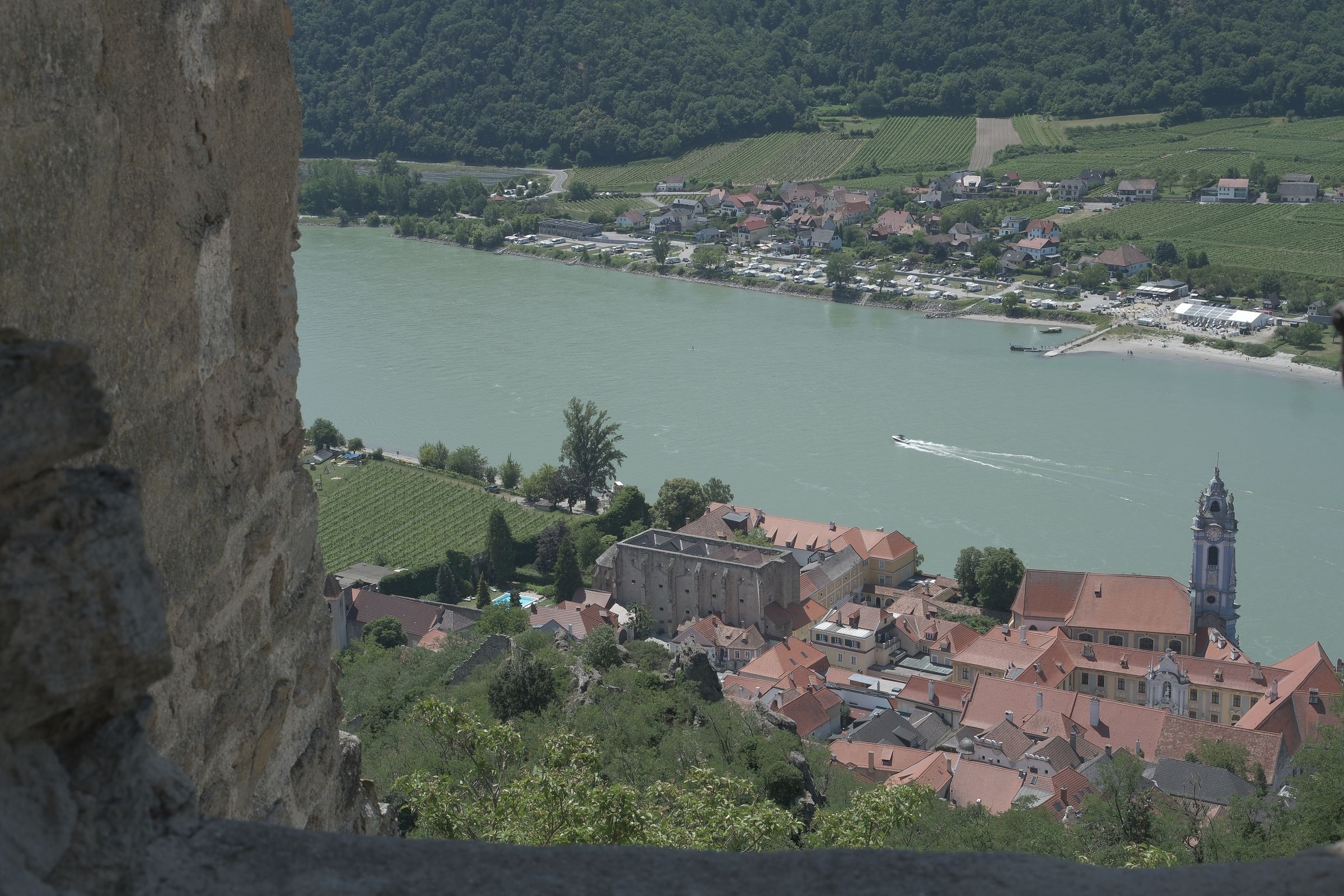
Dürnstein above the Danube, framed by the ancient ruins’ wall: along these thirty-five kilometres river, village and vineyard sit so close that no kilometre mirrors the next. Image: Pexels / Tom Jurman
What Wachau DAC has meant since 2020
For decades the Wachau organised itself through its own local designations. Since the 2020 vintage, however, it has been a Districtus Austriae Controllatus-DAC for short-the Austrian system of protected origin. The name Wachau no longer simply denotes a place; it now stands for a promise about grape variety, origin and style.
The system recognises three tiers, each acting like a zoom lens over the map. The Gebietswein carries only the Wachau origin and offers the reliable entry point into the region’s style. The Ortswein hails from a specific village-Spitz, Weißenkirchen or Dürnstein, for example – and already tastes more tightly of its birthplace. At the top sits the Riedenwein, drawn from a single, named vineyard site.
The three tiers of Wachau DAC
GebietsweinWachau overall origin, the reliable entry point into the regional style.
OrtsweinFrom a single village, already more tightly shaped by its origin.
RiedenweinFrom a single, named Ried, made exclusively from Grüner Veltliner or Riesling.
This pyramid is more than label lore. It forces the winemaker to account for every decision and hands you, the drinker, a map in a glass. The higher the tier, the sharper the address, the clearer the picture of the slope in your glass.
The Ried as the smallest truth
Ried is the Austrian term for a single, delimited vineyard site-akin to a Burgundy cru. In the Wachau, 157 such Rieden are defined for Riedenwein. Names like Achleiten, Kellerberg or Singerriedel have long become shorthand among wine lovers, almost like addresses behind which a distinct character is expected.
One hectare in the wrong spot remains table wine. A few ares in the right spot become a Ried whose name you remember.
On the geometry of the Wachau
For the top tier there is a strict rule: a Riedenwein may be made only from Grüner Veltliner or Riesling. No blending with other varieties, no concessions to fashion. This rigour is intentional. It ensures the Riedenwein reveals what a site can say through precisely these two grapes – and nothing else.
Grüner Veltliner is the region’s face: peppery spice, the famed Pfefferl, combined with drive and freshness. The Riesling, planted on the rockiest Urgestein terraces, often emerges mineral and taut. Both need time; both age well; both ultimately taste most of all like the place they stood.
Hand-picked on the slope is no label
There’s one rule in the Wachau DAC that tells you more about the region than any tasting note ever could: every wine protected by its origin must be hand-picked. Elsewhere that phrase might be marketing fluff, but here it’s simply the requirement. On the terraces held up by dry-stone walls, a harvester would have no chance anyway. The human carries the grapes from the slope, bucket by bucket.
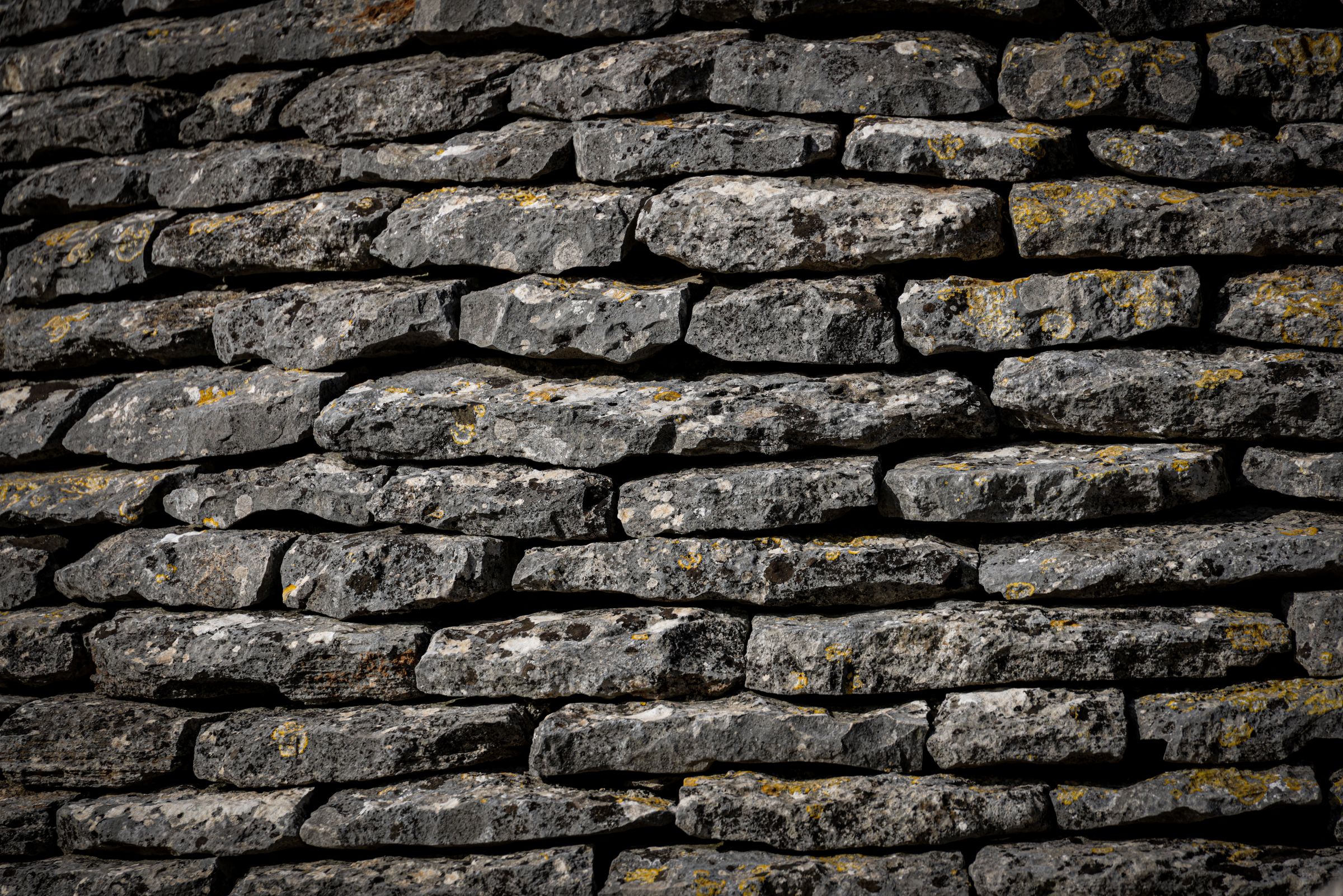
Those walls are the quiet backbone of the landscape. By day they store heat, returning it to the vines at night; they hold the thin soil against gravity; and they give the Wachau its face. Stand close enough to see the dry, mortar-free layers and you grasp why nothing here happens in a hurry.
Laid without mortar and maintained by hand across generations, the dry-stone walls hold the terraces on the slope, store warmth and shape the Wachau’s identity. Image: Pexels / Magda Ehlers
Why Grüner Veltliner feels at home here
Grüner Veltliner is Austria’s flagship variety, and nowhere does it feel more natural than along the Danube. In the Wachau wine-growing region, official figures from 2015 show roughly 765 hectares planted to Grüner Veltliner-an emphatic statement for such a small area: this grape isn’t one option among many, it’s the keynote.
The fascination lies in its range. From the loess soils of the gentler sites comes an open, juicy Veltliner that’s ready to drink young. From the crystalline terraces high above the river come denser, long-lived wines that reveal their full depth only after years. Both are unmistakably Wachau, and both benefit from a region that never tries to make the variety louder or bigger than it is.
That fits a place that measures value not in decibels but in what it shows. The Wachau doesn’t need to explain why its wines cost what they do; it simply demonstrates it-in the steepness of the slopes, in the handwork, in the patience a great single-vineyard wine demands. What remains is a wine that tastes of a precise place, and a landscape that has preserved that place for centuries so it will still be there tomorrow.
2000
Inclusion of the Wachau cultural landscape on the UNESCO World Heritage List
157
defined vineyard sites from which a Wachau DAC single-vineyard wine may originate
~765 ha
area planted to Grüner Veltliner in the Wachau wine-growing region, as of 2015
Next time you hold a Wachau bottle in your hand, read the label like a map. “Wachau” alone is the entry point. A village name brings you closer. A vineyard name puts the top floor of this landscape in your glass-hand-picked on a steep slope, held by a wall that someone long ago laid without mortar. Pour it cool, give it air, and let the wine tell you the story of the valley.
Good to know
▸What’s the difference between Wachau DAC Ortswein and Riedenwein?
Ortswein comes from a single Wachau village-think Spitz, Weißenkirchen or Dürnstein-and carries its name. It’s narrower than Gebietswein, which simply covers the entire region. Riedenwein goes one step further: it hails from a single, named vineyard site (the Ried) and may only be made from Grüner Veltliner or Riesling. In short: Ortswein names the village, Riedenwein names the exact slope.
▸Since when has the Wachau DAC designation existed?
The protected Wachau DAC origin has been in force since the 2020 vintage. DAC stands for Districtus Austriae Controllatus, Austria’s controlled-origin system. It governs three tiers-Gebietswein, Ortswein and Riedenwein-defining what may carry the Wachau name on the label.
▸Why must grapes in the Wachau be hand-picked?
Hand harvesting is mandatory for every Wachau DAC wine. In practice it’s also the only way: many vines grow on narrow terraces held by dry-stone walls, leaving no room for a harvester. So the rule is both regulation and necessity.
▸Which grape variety defines the Wachau most strongly?
Grüner Veltliner. It’s the region’s flagship variety, covering roughly 765 hectares in 2015 according to official figures. Riesling also plays a key role on the stony primary-rock terraces. Both grapes are the only ones permitted for Riedenwein.
❖
Sources: Wikipedia entries on the Wachau and the Wachau DAC designation. Header image: Pexels / Frank Wesneck.
//Taste
More from //Taste
What belongs on your plate and in your glass. Craftsmanship, origin and the art of fine taste. Stay in //TASTE.

 //TASTE