Volvo P1800 Cyan: The One-Off That Refuses to Please
The Volvo P1800 Cyan isn’t a retro toy. Cyan Racing is turning a 1964 P1800 into a razor-sharp driver’s car with 420 hp and unmistakable race-bred character.

 //DRIVE
The Volvo P1800 Cyan isn’t a retro toy. Cyan Racing is turning a 1964 P1800 into a razor-sharp driver’s car with 420 hp and unmistakable race-bred character.
Cyan Racing takes a 1964 Volvo P1800, reinforces it with steel and carbon, and turns it into not a nostalgia object but a razor-sharp driver’s car.
The official Cyan material makes the point instantly: this isn’t just any old Volvo-it’s the very P1800 Cyan this story is about.
You recognise the Volvo P1800 straight away: that roofline, that courteous gaze, that narrow waist. Yet something is off the moment you look closer. The Cyan doesn’t stand there like a classic someone has gently polished. It stands there like a classic that has decided to risk something again.
That’s exactly where its appeal lies. Cyan Racing hasn’t turned the P1800 into a museum piece; it has answered a question the restomod world too rarely asks: how much present can an old car absorb before it loses its soul?
The official starting point is a 1964 Volvo P1800. Cyan reinforces the structure with ultra-high-strength steel and bonds carbon components to the body. It sounds technical, yet the idea is simple: an ageing body gets a spine that can carry the load once more.
Add a 2.0-litre turbo engine from the race world-Cyan quotes 420 hp-a kerb weight of roughly 990 kg and a fully adjustable suspension, and you have numbers that must be stated, yet they still don’t tell the whole story. What matters is that Cyan didn’t design for comfort. The car is meant to be precise, not nice.
The P1800 Cyan isn’t an attempt to drag the old Volvo into today’s mass market. It’s too uncompromising, too costly in effort, too much a one-off in spirit. Cyan itself stresses that the project runs independently of Volvo Cars, and that matters because it sets the tone. This isn’t a manufacturer expanding its heritage division; it’s a race team building its own interpretation.
That’s precisely why the car doesn’t read like merchandise. It isn’t selling memory; it’s extracting the feeling from it: small windows, long bonnet, light body, mechanical clarity. No nostalgic polish-just a clean cut.
Luxury here isn’t leather, rarity, or a safe nod on a concours lawn. The luxury is that someone dared to build a car that isn’t tailored to everyone. The P1800 Cyan speaks to those who see a steering wheel not as an interface but as a handshake.
You don’t need to own such a car to understand it. It’s enough that it exists. It reminds us that progress doesn’t always have to be quieter, heavier, and smoother. Sometimes progress is an old car that suddenly looks awake again.
With the P1800 Cyan, the goal isn’t to drag an old shape into the present until it looks like a new car. That would be the cheap way out. The good way is quieter: let the proportions speak for themselves and change only where driving demands it. That’s why the car doesn’t look costumed. It doesn’t play at being classic; it uses memory as its starting point.
The long hood, the narrow greenhouse, the almost courtly side line-all remain legible. But beneath them works a different understanding of stiffness, weight and response. The body looks familiar; the body thinks anew. This is the kind of modernization you only take seriously once you stop seeing it immediately.
Many restomods fail because they try to be every era at once. The Cyan doesn’t have to. It accepts that a P1800 hails from the nineteen-sixties and simply asks what it would need to do today if it had already been finished by a racing team back then.
Cyan Racing comes from motorsport. You feel it in the numbers, but more in the attitude. A car with 420 hp and roughly 990 kilograms can be fast-no question. What matters is that this power isn’t presented as a status flex. It serves a very specific idea of directness.
A light car forgives less and gives back more. It needs no digital theatrics to feel important. When the structure is stiff enough, the suspension works cleanly and the engine revs freely, a conversation arises between driver and machine. It’s exactly that conversation that people who understand such cars are seeking.
So it would be wrong to read the P1800 Cyan merely as an expensive conversion. It’s more a study of how much racing logic can live in a road car without turning it into a racing-car costume. The answer isn’t in wings or noise. It’s in response.
Cyan’s explicit refusal to build a Volvo factory project helps the car. A manufacturer would have to consider brand architecture, warranty thinking and internal politics. Cyan can afford a different freedom: respect for heritage without a duty to corporate harmony.
That doesn’t make the car feel any less Volvo. On the contrary. Because it’s independent, it can pursue a line a big manufacturer would scarcely dare today. No infotainment as the centerpiece, no weight as an unavoidable side effect, no comfort promise for everyone.
What emerges is a rare kind of credibility. The P1800 Cyan doesn’t need to prove Volvo likes it. It needs to prove the idea holds. And for a restomod, that’s the more honest test.

The Volvo P1800 Cyan isn’t a retro compliment. It’s an old promise, re-tensioned for today.
Collectors rarely buy just a car. They buy a reading. With the P1800 Cyan, that reading is clear: Scandinavian form, motorsport experience, mechanical focus. It’s a different promise from the many loud showpieces that mainly parade rarity.
The Cyan feels like a car for people who don’t rank their collection by decibels. You have to know what you’re looking at. That doesn’t make it elitist; it simply stays quietly confident. It explains itself to those who look closely enough.
Perhaps that’s its finest quality. It’s not a car trying to convince everyone. It’s a car that speaks precisely to the few who truly understand. Sometimes, that’s all the luxury required.
With the P1800 Cyan, there’s a pleasant gap between what can be technically explained and what the car evokes. Of course, you can talk about carbon structure, adhesive techniques, chassis stiffening, and engine provenance. You should, in fact. But that only explains the means. It doesn’t explain why this slender Volvo shape suddenly feels so alive again. For that, you need something that’s become rare in car building: restraint with consequence.

Many modern reinterpretations of classic shapes cross that line. They try to prove they can do everything, and in doing so lose the original line. The Cyan stays closer to the source without surrendering. It takes liberties, but only where it matters. Wheelbase, stance, glass areas, tension over the rear axle: these aren’t decorations; they’re memory anchors.
The result doesn’t feel like a car begging for applause. It feels like a car that already knows why it was built. That confidence is rare. And it’s far more valuable than any loud gesture.
Anyone who lives with classics knows the difference between respect and fear. Fear leaves everything untouched. Respect asks what a car would need today to become its best self. Cyan chooses respect. That’s why this P1800 can be faster, stiffer, and more direct without betraying its origins.
The term “restomod” has stretched so wide it now says almost nothing. A new engine, a new suspension, a different interior: suddenly, the modern icon is supposedly done. With the P1800 Cyan, that’s not enough. This isn’t about an upgrade package; it’s a complete thesis: what if the original P1800 hadn’t been left as a pretty coupé but reimagined as a serious driver’s car?
That thesis makes the car bigger than its specs. 420 hp is impressive, but not the point. The point is the fusion of low weight, structural work, and an engine that isn’t just arbitrarily powerful but deliberately responsive. The best performance in such a car isn’t the number. It’s the confidence that the number fits the body.
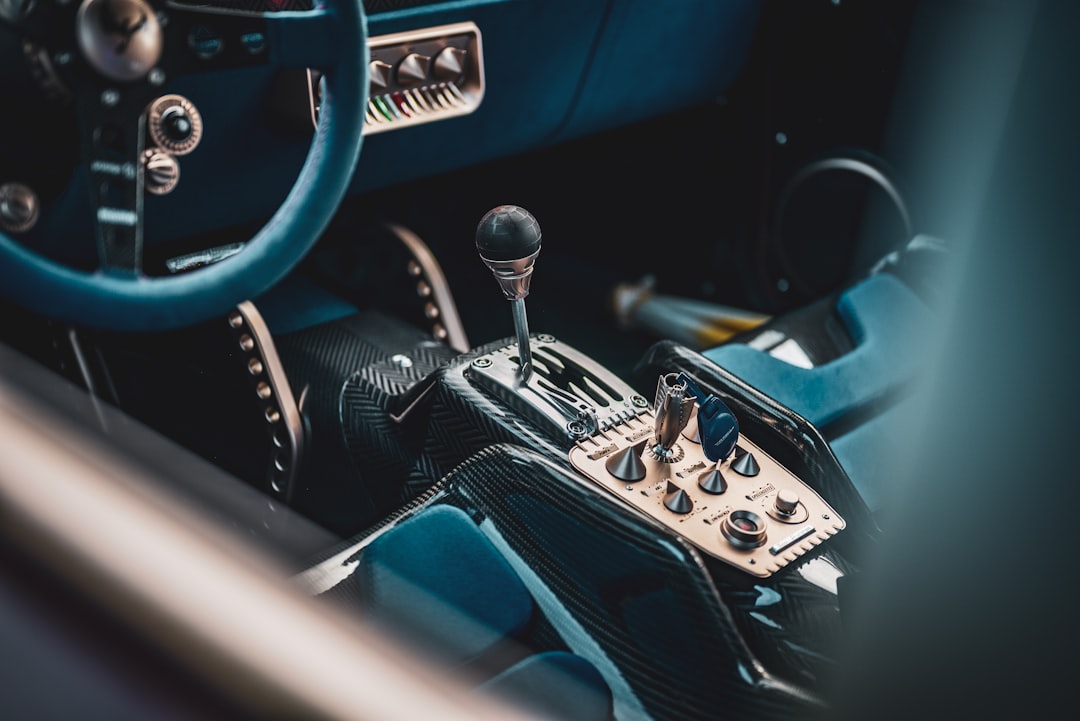
Nor should you picture the interior as a rolling lounge. A P1800 Cyan doesn’t need to be a mobile living room. It needs to be a place where the driver stays alert. Here, luxury isn’t cushion thickness. Luxury is the absence of distraction.
That’s why this car fits the present so well. Not because it looks modern, but because it stakes a position. Against the heavy, isolated, over-assisted automobile. For a driving experience clear enough to remember.
If you’re curious about the craft behind such projects, our piece on hand-formed sheet metal in restomods adds useful context. And if you want to see where rigorous lightweighting can go next: the Eccentrica V12 offers a clear answer.
No. Cyan itself points out that there is no collaboration with Volvo Cars on this project. Volvo and P1800 remain trademarks of Volvo Cars.
Cyan cites a 1964 Volvo P1800 as the starting point. The structure is rebuilt using high-strength steel and carbon.
Because it isn’t merely restored cosmetically. Cyan transfers race engineering, lightweighting, and modern suspension thinking into a classic silhouette.
The P1800 Cyan only works if you see precisely this car: classic Volvo lines, fresh energy, no camouflage. The image isn’t decoration here-it’s part of the argument.
Image sources: Cyan Racing Media Centre (editorial use).