
Txotx: When a Call Echoes Through the Cellar
In the Sagardotegis of Gipuzkoa, natural cider isn’t a trendy drink, it’s a culinary culture louder than any fine-dining experience. A look at a ritual you can’t truly grasp until you’ve lived it.
A ritual where guests rise at a shouted command belongs to no silent Michelin-starred kitchen. In the Basque Country, it’s the beating heart of an entire culinary system: Txotx, a word that is at once command, drink, and communion.
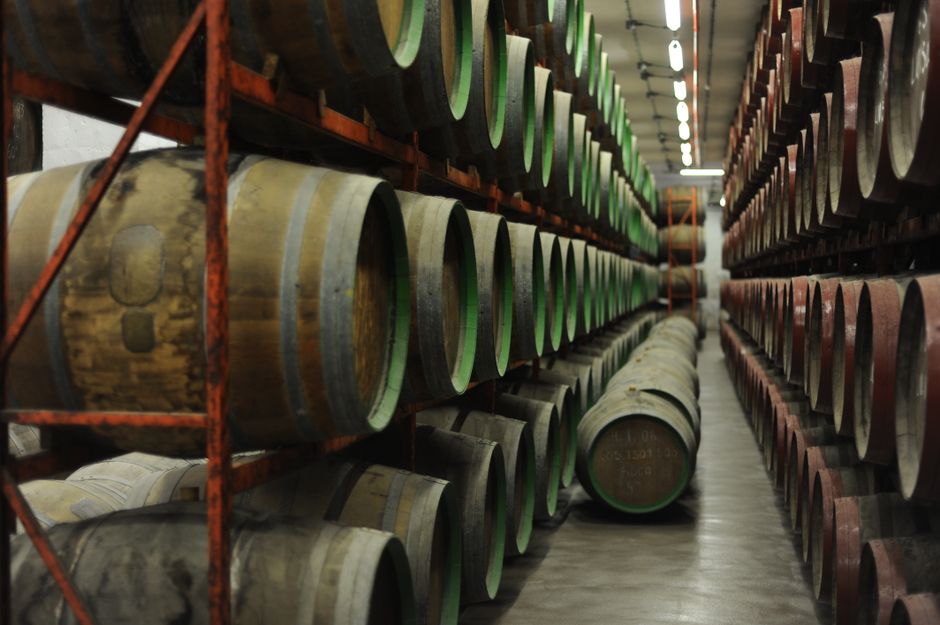
- At the cry of “Txotx!” the cider master taps a spigot in a horizontal oak or chestnut cask; guests catch the stream in their glasses
- The classic menu follows a fixed order: cod omelette, rib-eye steak, Idiazábal cheese with quince paste and walnuts
- Around Astigarraga, the unofficial cider capital, roughly 19–20 cider houses open, with about 70 across the region
A Word with Three Meanings
A Sagardotegi is a Basque cider house where natural cider, sagardoa, is served straight from the cask alongside traditional dishes. Modern venues blend steakhouse and winery under one roof. The Txotx began as a buyer’s ritual: wholesalers tapped the casks with a wooden spigot, the txotx, to sample the quality. Over generations it evolved into the public gastronomic event now celebrated as one of the Basque Country’s most iconic culinary traditions.
The heartland of the Sagardotegi culture is Gipuzkoa, especially around Astigarraga, Hernani, Urnieta and Usurbil. Astigarraga itself, with its 19–20 cider houses and a population of just under 6,000, is the region’s unofficial cider capital. Across Gipuzkoa about 70 cider houses, some revived, some reimagined, produce up to 15 million litres of cider each harvest season, proof that this is no niche craft but an industrial tradition with a soul of craftsmanship.

The Stream That Must Be Caught
In the ritual itself, the cider master shouts “Txotx!” through the cellar. Guests rise, walk to the horizontally stored casks, and catch a thin stream of cider just above the rim of their glasses. The glass is held about thirty centimetres below the flow so the must foams and aerates before the drinkers return to their tables. Basque natural cider is still, not sparkling, typically four to six percent alcohol, and drunk unfiltered straight from the cask.
The culture behind it is deliberately loud and informal: long wooden tables, frequent standing rather than sitting, shared rounds at the cask and shouts that echo through the room. It’s a deliberate counterpoint to the hushed silence of fine dining for which San Sebastián, just a few kilometres away, is world-famous. Two registers, one region, yet they speak different languages.
When “Txotx” echoes through the cellar, it isn’t a command to the waiter. It’s an invitation to stand up and become part of the ritual yourself.
What’s on the Menu
The classic menu follows a fixed sequence: starter Tortilla de bacalao or Bacalao with peppers, main course Txuleta, a hearty T-bone steak usually shared by two, dessert Idiazábal cheese with quince jam and walnuts. Unlimited natural cider is included. Petritegi in Astigarraga, one of the largest and year-round open houses, offers this standard menu including Txotx from €44.50 per person, an eight-hundred-gram T-bone already factored in.
Historically, cider was vital for Basque seafarers. On long voyages they drank it instead of water or wine, carrying up to twelve thousand gallons per ship. The high vitamin-C content is linked to the low scurvy rates among Basque fleets, a practical explanation for why the drink is so deeply embedded in regional identity.

Who Still Walks in Today
The official Txotx season runs from 19 January through late spring. In this peak phase locals mainly visit the cider houses to celebrate the new harvest. Travellers outside these weeks need not miss out: about half of Basque cider houses also open in summer and year-round, some with terraces and bottled cider, others offering limited Txotx on selected barrels. Visits are possible, yet not the same as high season.
Who enters a Sagardotegi today enters a tradition that hasn’t dressed itself up for tourists. There’s no curated version of this ritual, only the real thing: loud tables, wet floors when a jet misses, and a menu unchanged for generations because it works.
The Difference to the Beer Tent
Anyone who knows Txotx only from descriptions underestimates how much precision hides inside the seeming chaos. The angle of the glass, the distance to the stream, the timing of the call, all follow a choreography honed over centuries. The result looks improvised, yet isn’t.

The Echo in the Empty Cellar
At the end of an evening in the Sagardotegi there’s no takeaway to jot down. There’s the taste of Idiazábal and quince, the lingering echo of the last call, and the knowledge that you were part of something that isn’t a show for guests, it’s a culture that happens to invite guests in.
Good to Know
▸What exactly does “Txotx” mean?
Originally, Txotx refers to the wooden spigot used to open a Kupela barrel. Today the word stands for the entire ritual: the cider-maker’s call, catching the cider stream, and the shared return to the table.
▸When is the best time to visit?
The official season runs from 19 January to late spring. Roughly half of the cider houses also open in summer and year-round, though often with a limited Txotx offering.
▸What’s included in the classic Sagardotegi menu?
Starter of Tortilla de bacalao or Bacalao with peppers, main course Txuleta, and Idiazábal cheese with quince jam and walnuts for dessert, accompanied by unlimited natural cider straight from the barrel.
Image credits: Header image Pexels / Piotr Grzankowski; inline images Pexels / Emmanuel Codden, Pexels / Anna Pyshniuk and Pexels / Lucas Gramatica.


