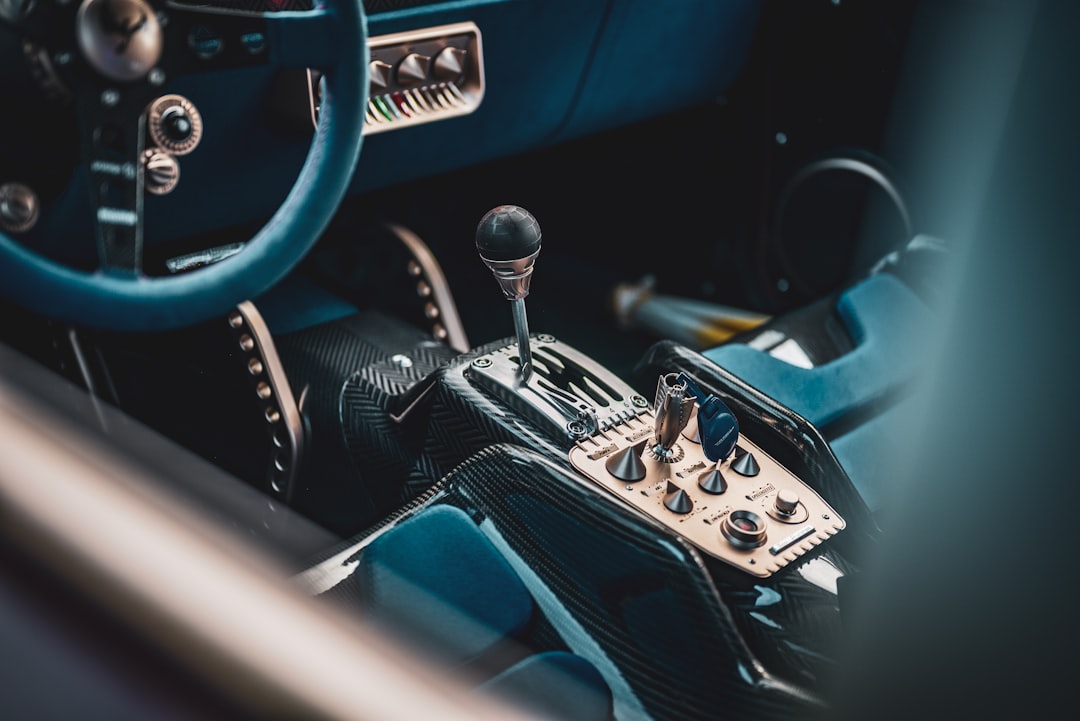
It’s a sound you rarely hear anymore. The door of a Mercedes W140 series doesn’t slam shut-it settles into place: a deep, muted thud, more vault than car. Behind it lay not coincidence, but a billion D-Mark in development and an attitude that’s nearly gone out of style: that something should feel right before it’s clever. You pull the handle once and know: nothing was spared here.
At some point, we stopped building cars that sound like that. Not overnight, not with a single model, but noticeably, in a narrow window between 2015 and 2018. Before that, a car was a machine you understood with your hands. Afterward, it became a screen on wheels, asking for permission with every update.
This isn’t a crusade against the new. We love the new too: a modern flagship is safer, cleaner, quieter, and in many ways smarter than anything that came before. But between “can do more” and “is better” lies a difference – and within that difference lives this story.
Quick Facts
- The claim: Until around 2015/2018, BMW, Mercedes-Benz, and Audi stood at a peak of engineering excellence and restraint with their flagship models. After that, they lost their way in a sea of screens, LED theatrics, and high-gloss plastic.
- The tipping point was a screen: Audi Virtual Cockpit in 2014, Mercedes MBUX in 2018, the first touchscreen Golf in 2019. Suddenly, every function was hidden behind glass.
- The industry is backpedalling: From 2026, Euro NCAP will require physical buttons again for top safety ratings, and VW has publicly called touch controls a mistake.
- The market has already decided: well-maintained classics from this era are in high demand, while electronics in new cars have become the most common source of breakdowns.
The tipping point was a screen
You can almost pinpoint the exact moment. In 2014, Audi unveiled the Virtual Cockpit in the new TT-a fully digital instrument cluster behind the steering wheel that replaced traditional analogue dials. In 2018, Mercedes followed with MBUX, first in the A-Class, and in 2021 with the Hyperscreen in the EQS: a curved display stretching 141 centimetres across nearly the entire dashboard. By 2019, Volkswagen had redesigned the Golf so that even adjusting the volume or temperature required tapping touch-sensitive surfaces.
Technologically, it’s impressive – and it would be unfair to downplay that. The Hyperscreen is a remarkable feat of engineering. But it did something that only becomes problematic on closer inspection: it eliminated the button, that simple thing your hand could find without taking your eyes off the road. The heater, the radio, the hazard lights-everything moved behind glass, into menus that demand your attention to operate.
What longevity feels like
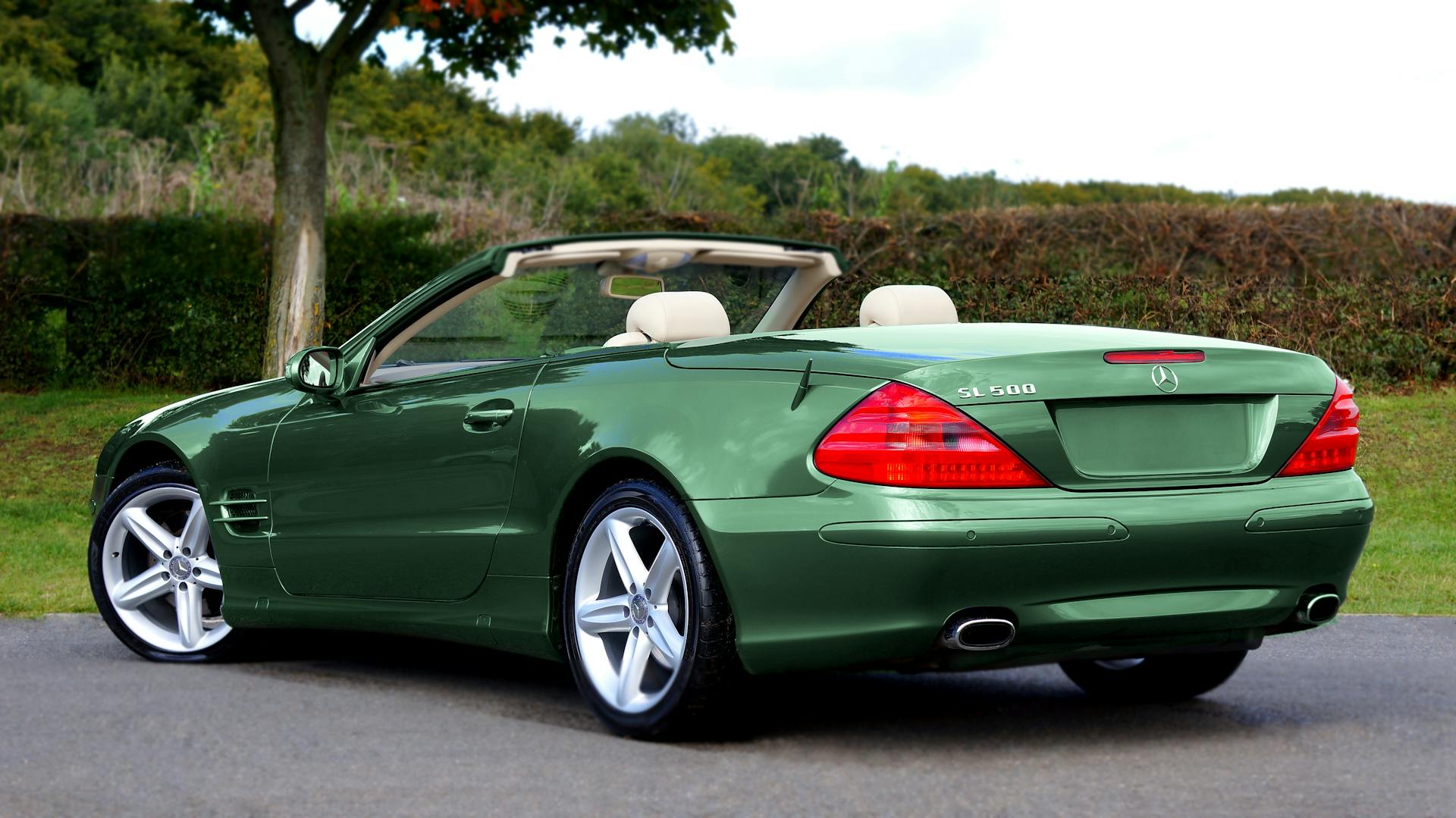
Now consider what came just a few years earlier. The Mercedes SL (R129), built from 1989 to 2001, was the favourite design of Bruno Sacco, the brand’s long-serving chief designer. Sacco followed a principle he called “vertical affinity”: a car should be designed so that its successor wouldn’t render it obsolete. The R129 won the International Car Design Award in its first year of production, 1990. And today, over thirty years later, it still looks timeless. That wasn’t an accident-it was the goal.
The W140, the flagship S-Class from 1991, cost around a billion euros to develop and is still regarded by collectors as the last over-engineered Mercedes, as the British magazine *Hagerty* puts it: the final engineering-driven Mercedes before the brand shifted to market-driven design with the W210. Double-glazed side windows, servo-assisted doors, a 6.0-litre V12-none of these were listed in brochures as selling points. They were sheer defiance against obsolescence.
The BMW 7 Series (E38), produced from 1994 to 2001, was the first European production car with a built-in navigation system and is still regularly hailed in the motoring press as the most beautiful 7 Series ever-largely because its successor was seen as a radical departure. In 1997, James Bond drove a 750iL through a Hamburg car park, controlled from the back seat via mobile phone. Even Audi, which at the time hadn’t yet drowned every interior in piano lacquer, built the first Q7 in 2005-a large, honest SUV, available with the only V12 diesel ever to enter series production: 6.0 litres, 500 hp, 1,000 Newton metres.
What unites these cars isn’t performance. It’s an ethos. They were built to be kept.
A car should be designed so that its successor doesn’t render it obsolete. – The design principle of “vertical affinity,” Bruno Sacco, Mercedes-Benz
It Was a Measurable Mistake
You don’t have to take our word for it-you can measure it. And that’s exactly what the Swedish magazine *Vi Bilägare* did in 2022. Eleven modern cars, plus a 17-year-old Volvo V70 with classic buttons, were put to the test: four simple tasks at 110 km/h-turn on the seat heating, change the radio station, reset the trip meter, dim the display. The old Volvo took ten seconds. The worst-performing touchscreen car needed 44.6 seconds-four and a half times longer. At 110 km/h, every extra second means around thirty meters of driving blind.
And it’s not just a matter of getting used to it. J.D. Power, the major American market research firm, has listed infotainment systems as the most problematic category for years-by a clear margin in its 2024 reliability study. It’s not the engine or the transmission that frustrates drivers the most. It’s the screen.
44.6 s
The worst touchscreen car took 44.6 seconds for four simple tasks; the old Volvo with buttons: 10 seconds (*Vi Bilägare*, 2022)
No. 1
Infotainment is the top complaint category for new cars overall (J.D. Power, 2024)
2026
From then on, Euro NCAP will require physical buttons for a full five-star rating
The Industry Admits It Now
Here’s the real twist: this story is heading toward a happy ending, and it’s not coming from nostalgics-it’s coming from the manufacturers themselves. In November 2025, Euro NCAP announced that from 2026 onward, basic functions (turn signals, hazard lights, horn, windshield wipers, emergency call) must be accessible via physical controls to earn a five-star rating. A dedicated button for reflex actions? That’s now a safety requirement.
Volkswagen was even more direct. Design chief Andreas Mindt stated publicly in early 2025 that the company would never make this mistake again: the steering wheel would once again feature real buttons-tactile, responsive, no guesswork. The updated Golf got them back, and the upcoming ID.2all is set to include five physical buttons below the display. BMW tried selling seat heating as a subscription in 2022-$18 a month for a heating coil already built into the car-only to scrap the model after public backlash in 2023. Hyundai revealed that focus groups showed people reacting with “stress and irritation” when struggling to operate controls in a hurry, prompting the return of real rotary knobs. Porsche even reintroduced dedicated climate buttons in the updated Cayenne.
The shift isn’t complete. BMW, for instance, has moved climate controls entirely to the screen in the new iX3 and is standing by the decision-for now. But the tide has turned. The button, dismissed as outdated a decade ago, is now a selling point.
We will never make this mistake again. The steering wheel will have real buttons again-tactile, responsive, and people love it.– Andreas Mindt, Volkswagen Head of Design, 2025
Why the Classics Endure
But this isn’t just about buttons. A car from 1995 had a handful of control units. Today’s models pack 70 to over 100 of them – and over 100 million lines of software code, up from around 10 million in 2010. Every single line can fail, and every screen can go dark. Replacing a large infotainment display at the dealership can easily run into four figures, while a scratched button used to cost little more than a shrug.
The consequences show up in insurers’ claims statistics: the share of cars declared a total loss after an accident in the U.S. has climbed from 19% to nearly 23%, partly because recalibrating sensors after even minor repairs has become expensive and time-consuming. Fair enough-those sensors save lives, and a modern automatic emergency braking system is worth every cent. But the honest car was built to be repaired. Much of today’s tech is built to be replaced.
Even the surfaces tell the story. The glossy piano-black plastic that now adorns nearly every center console only looks premium on day one. After that, every fingerprint, key, or microfiber cloth leaves its mark in fine scratches. The brushed aluminum and solid wood of classic luxury cars only grew more beautiful with age. That’s called patina – and high-gloss finishes don’t have it.
Key Examples
Mercedes-Benz SL (R129, 1989–2001)Bruno Sacco’s favorite design, Car Design Award 1990, 204,940 built, world’s first automatic roll bar.
Mercedes-Benz S-Class (W140, 1991–1998)around one billion euros in development costs, “the last engineer’s Mercedes.”
BMW 7 Series (E38, 1994–2001)first European production car with navigation, Bond’s ride in *Tomorrow Never Dies*.
Audi Q7 (4L, 2005–2015)offered with the only V12 diesel ever mass-produced: 6.0 liters, 500 hp, 1,000 Nm.
What the Market Already Knows
To see what longevity is worth, just look at prices. The German Classic Car Index, published annually by the German Association of the Automotive Industry, has risen nearly 200% since 1999. A well-maintained SL 500 from the R129 series now sells for €45,000 or more in Germany, and a solid E38 750iL has left its low point behind. The truth remains: this market fluctuates too, and after the pandemic-era highs, many classics corrected by 20–30% in 2024 and 2025. No one should buy an old car as a savings account.
But the trend is clear. A new car loses half its value in the first few years. A truly great car from the era when cars were still cars holds its value-or even appreciates. The market isn’t sentimental. It just rewards what lasts.
Perhaps the best part of this story is that it’s not over yet. The buttons are making a comeback. It just took someone brave enough to say it out loud. Until then, some garages still house a car whose door settles into place instead of slamming shut – and one that never asked its driver to look at it before driving it.
The Details
Does this mean new cars are worse?
No. A modern flagship is safer, cleaner, quieter, and more capable in many ways than any classic. The loss lies elsewhere: in the tactile feel, in repairability, in the dignity with which a car ages. It’s not about better or worse, but about what got left behind along the way.
When exactly did the shift happen?
In a narrow window between 2014 and 2019, from Audi’s Virtual Cockpit to MBUX and the first touchscreen Golf. During these years, basic functions migrated from buttons to glass.
Are the buttons really making a comeback?
Yes. Euro NCAP will require them for top ratings starting in 2026, and VW, Hyundai, and Porsche are bringing them back. Only BMW is holding out-for now-with the new iX3. But the tide has turned.
Which classic from this era is worth it?
The SL R129, the S-Class W126 and W140, the BMW E38: cars built to last and age gracefully. As a passion project for the joy of driving, not as an investment-the market fluctuates, but the pleasure endures.
❖
Source header image: Pexels / Mike Bird
Jakob Bach writes for InspiredByLuxury about what’s worth it-and what endures. This column reflects a personal perspective, not a verdict on the new. The magazine embraces both.
//Drive
More from //Drive
Cars you own, not just drive. Engineering, materials, and the things that last. Stay in //DRIVE.
To the section →

 //DRIVE